

Save with ComEd Rebates
If you're in the Chicagoland area and planning to purchase new home appliances, you may qualify for energy rebates that can help reduce your overall cost. As part of a program to encourage customers to upgrade older, less efficient appliances, ComEd currently offers rebates for ENERGY STAR® certified home appliances and high-efficiency heating and cooling systems. As an added benefit, choosing energy efficient appliances will reduce your monthly energy use! For more information, see the respective sections below, or please contact our sales department at 800-860-3577 for more information.
ComEd Appliance Rebates
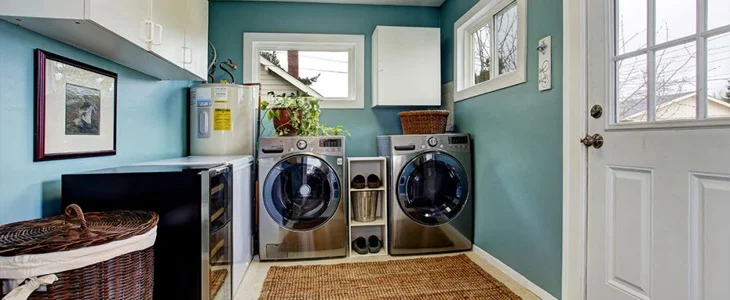
Every appliance comes with two price tags: the purchase price and the cost of operating the product. ENERGY STAR® certified appliances help consumers save money on operating costs by reducing energy use without sacrificing performance. ComEd appliance rebates put the power to save directly into your hands. Rebates are available on these ENERGY STAR® certified appliances when purchased in store or online. View eligibility requirements.
- Refer to the chart above for a list of qualifying ENERGY STAR® certified appliances and rebate amounts.
- Review the complete Eligibility Requirements (pdf).
- Purchase and install the qualifying appliance.
- Complete the ComEd Online Appliance Rebate Application. To submit via email or mail, download and complete the Appliance Rebate Application (pdf).
| ENERGY STAR® Appliances | Requirement | Rebate |
|---|---|---|
| Air Purifier | --- | $50 |
| Clothes Washer | --- | $40 |
| Dehumidifier | Stand alone unit only | $45 |
| Electric Clothes Dryer | ≥ 4.4 Cubic Feet | $40 |
| Heat Pump Clothes Dryer | ≥ 4.4 Cubic Feet | $200 |
| Induction Cooktops and Ranges | Portable, dual fuel, and induction stovetops do not qualify | $100 |
| Smart Thermostat | --- | $75 |
| Water Dispenser | Hot/Cold Combination | $25 |
Rebate Process
ComEd Heating & Cooling Rebates
LIMITED TIME OFFER! Receive a $150 bonus rebate on all central air conditioners installed now through December 31, 2018!
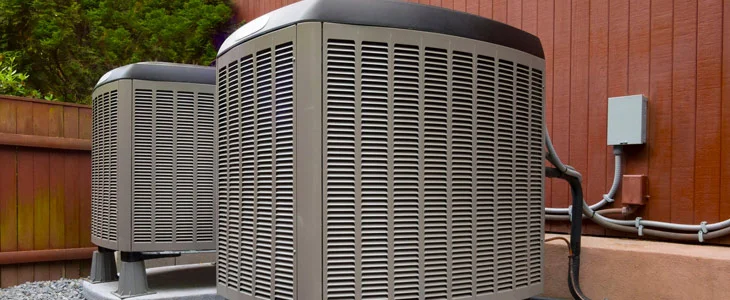
Upgrade your heating and cooling systems to boost your energy efficiency and save with ComEd Rebates when a ComEd Residential Trade Ally, installs these home improvements.
- Review the requirements in the Rebates Eligibility Requirements (pdf).
- Work with a ComEd Heating & Cooling Trade Ally to select and install qualifying heating and cooling equipment.
| Equipment | Type | Maximum Rebate Amount* |
|---|---|---|
| Central Air Conditioner | ≥ 15 SEER | Call 800-860-3577 for more details |
| Furnace Blower Motor (ECM) | Upgraded fan in an existing furnace or air handler | $100 |
| Air Source Heat Pump | ≥ 17 SEER & ≥ 8.5 HSPF | $2,000 |
| Air Source Heat Pump | ≥ 15.2 SEER & ≥ 8.1 HSPF | $1,400 |
| Ductless Mini-Split Heat Pump | ≥ 17 SEER and ≥ 10 HSPF | $1,000 |
SEER = Seasonal Energy Efficiency Ratio
HSPF = Heating Seasonal Performance Factor
*To receive ComEd Rebates for the qualifying heating and cooling systems, installations must be completed by a ComEd Residential Heating and Cooling (or Geothermal) Trade Ally.
Trade Ally Network
You will only qualify to receive a ComEd Rebate if your heating and cooling upgrades are installed by a ComEd Residential Trade Ally. Utilize ComEd's Find an Approved Trade Ally tool to complete your heating and cooling system upgrades.
To learn more on becoming a ComEd Residential Heating and Cooling Trade Ally or Geothermal Trade Ally, visit ComEd's Residential Trade Ally page.
Rebate Process
Refer to the chart above for a list of qualifying home heating, cooling or water heater equipment and rebate amounts.
Apply Online: You may Apply Online for your Heating and Cooling Rebate. You will need to upload supporting paperwork, including your ComEd Residential Trade Ally invoice and AHRI Number (pdf), if applying for a central air conditioner or heat pump rebate.
Apply via Mail or Email: Receive a hard copy (PDF/paper) of the Heating and Cooling Rebates Application from your Trade Ally and submit your completed application via email or mail. You will need to upload or attach supporting paperwork, including your ComEd Residential Trade Ally invoice and AHRI Number (pdf), if applying for a central air conditioner or heat pump rebate.
Receive an Instant Discount: Receive your Heating and Cooling Rebate as an instant discount off your Trade Ally installation invoice. This option is only available from select ComEd Trade Allies.
Can't install the central air conditioning outdoor unit during winter? Please see the Heating and Cooling Rebates FAQs for more information.
Geothermal Heat Pump Rebates
For residential geothermal heat pump installations, contact a ComEd Geothermal Trade Ally for information on rebate requirements and application, including pre-approval process. Call 1-855-433-2700 for more details.
Smart Thermostat Rebates
Save $75 on a Smart Thermostat
Start managing your home's heating and cooling costs with an ENERGY STAR certified smart thermostat. Connected to your Wi-Fi, a smart thermostat lets you monitor and control your home's temperature from any web-enabled device so you can save energy and money wheter you're at home or on the go. Save up to $75 on select smart thermostats with a ComEd Energy Efficiency Program rebate. Some eligibility requirements apply.