Main Content

Range Hood Buying Guide

A comprehensive hood buying guide that will give you all the information you need on how to buy a new hood for your kitchen.
Getting Started
If you are someone who likes to cook and spend a lot of time in the kitchen you will know that using a range, range top, or cooktop can produce a lot of heat and steam. Having a good hood above your units prevents heat, smoke, moisture, odors, and grease from filling your kitchen or home.
Choosing the Right Hood for Your Cooktop or Range
Not all hoods can be used efficiently on both gas and electric ranges. An electric range will require a less powerful hood than a gas range. A hood's power is measured in CFM (Cubic Feet per Minute). This number explains the volume of air that the range hood can filter in a minute. If you have an electric range, a hood that can clean 475 CFM or less should be plenty powerful for your kitchen.
The proper hood for a gas range will depend on the range's power output, as measured in BTUs (British Thermal Units). 1 BTU is the amount of heat needed to raise a pound of water by 1°F. Range hoods should be able to offer 1 CFM for every 100 BTUs their range is capable of producing. Therefore a gas range capable of outputting 45,000 BTUs requires a range hood of about 450 CFM. This assumes the worst-case scenario: all burners running at the same time at their highest setting. Note: Professional style range hoods require greater CFMs.
Range Hood Styles
There are a few different styles of range hoods, ensuring that there's a practical ventilation solution for any kitchen design.
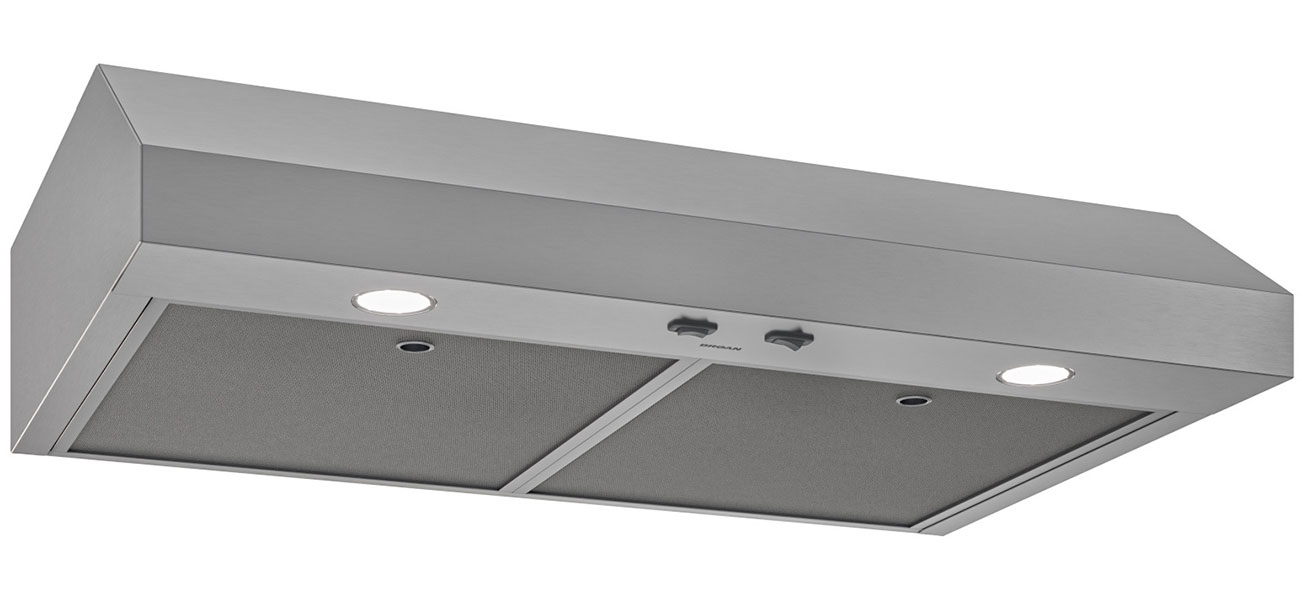
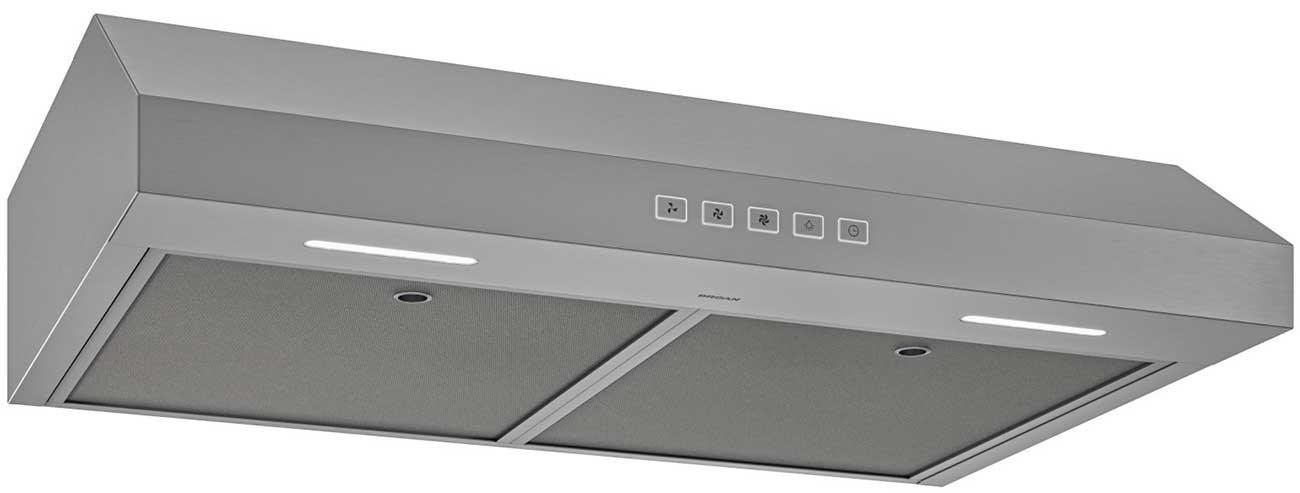
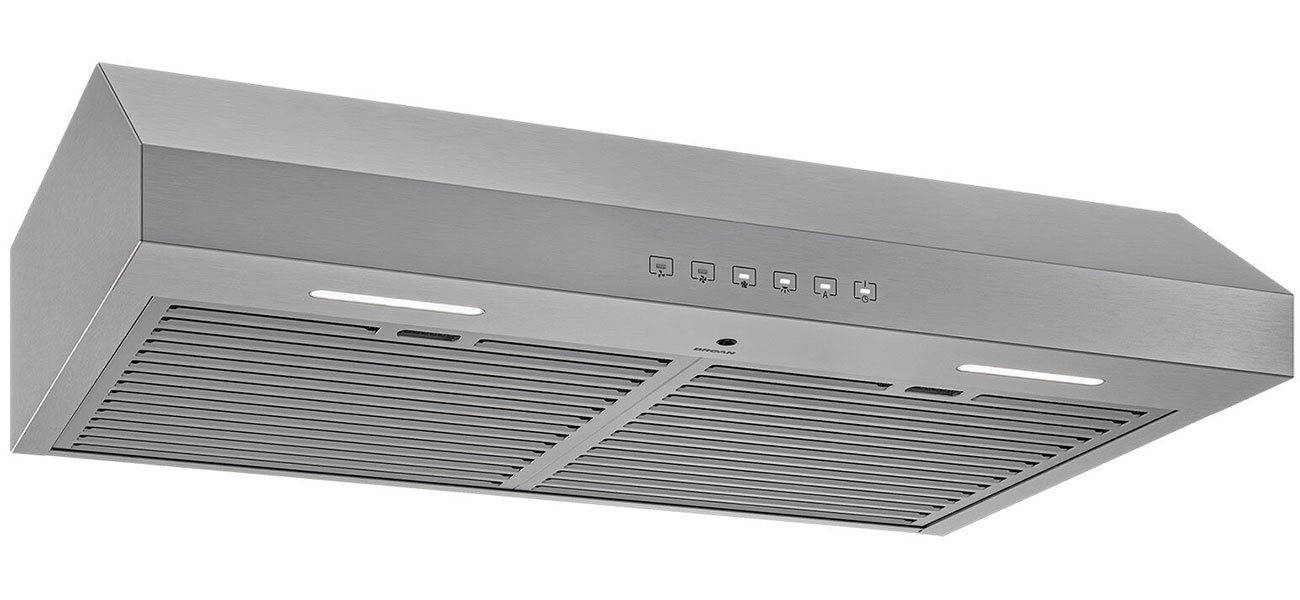
Canopy Style Range Hoods
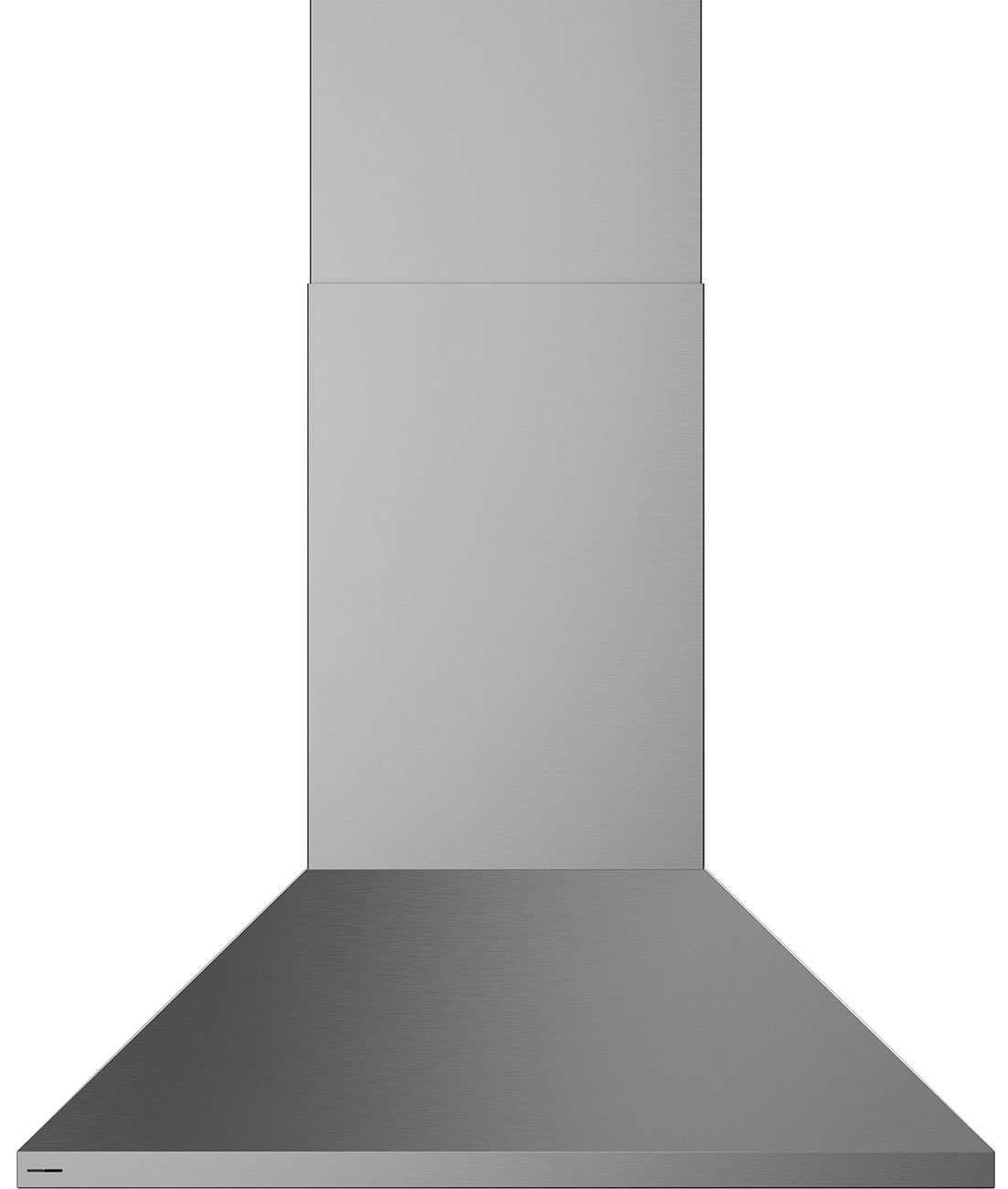
Canopy style hoods are the most common of all hoods. They must either mount to a wall, under-cabinet or soffit. They range in sizes from 21 to 42 inches wide, can be as tall as 10 inches high with blower outputs that can go as high as 1,000 CFMs on a few models but more commonly CFMs range between 300 and 800 with included blowers. These hoods will also have the most flexible price points.
Over the Range Microwaves
Serving double duty, over the range microwaves combine the function of a range hood with that of a standard microwave. Similarly, these units can either vent or recirculate filtered air.
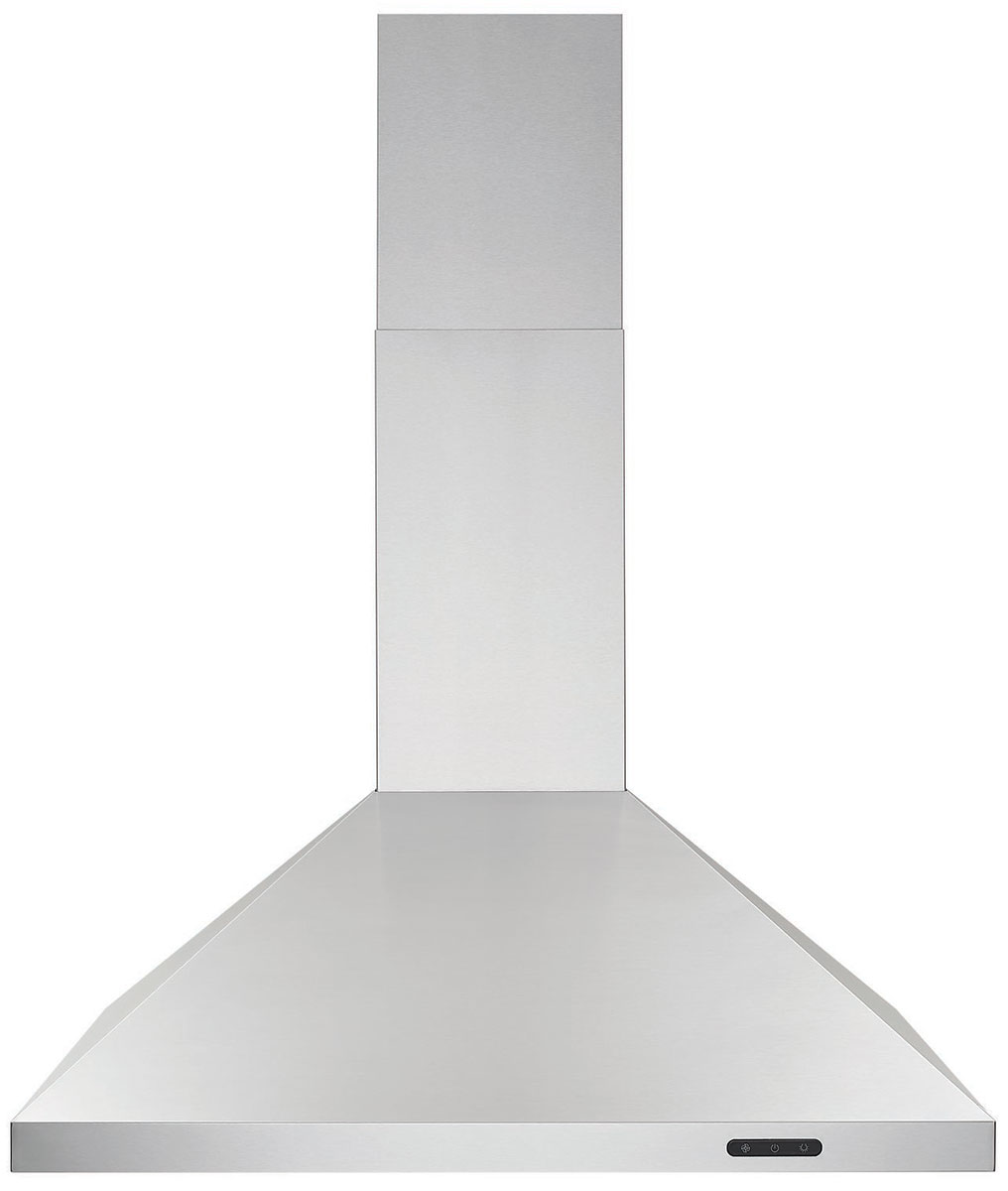
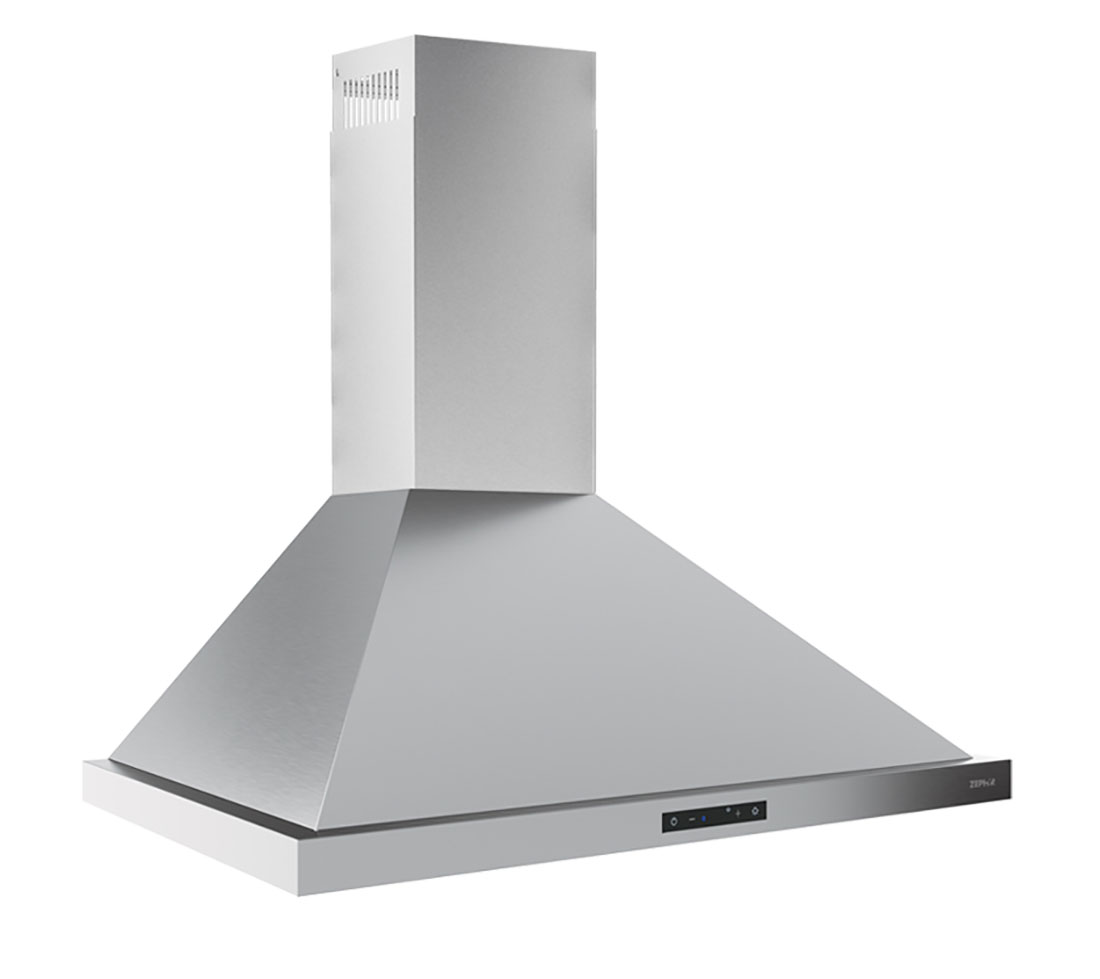
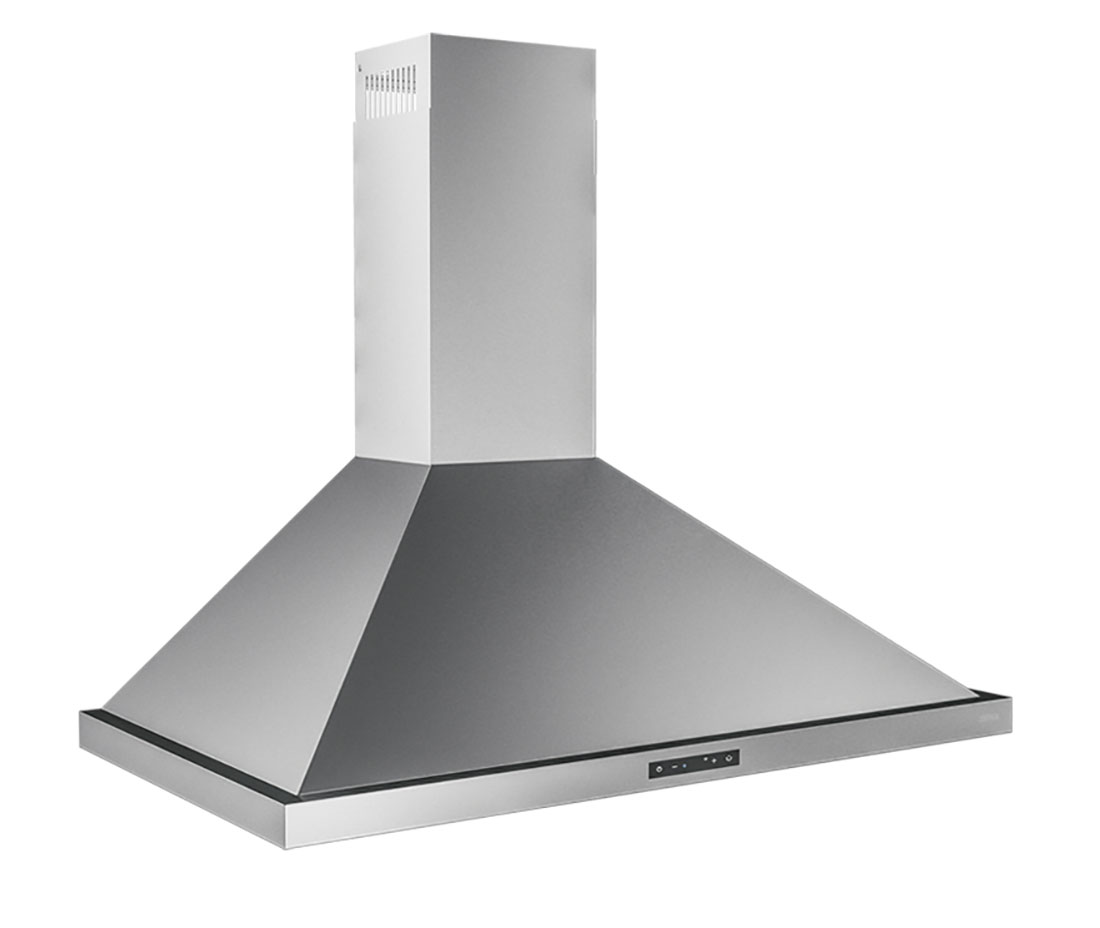
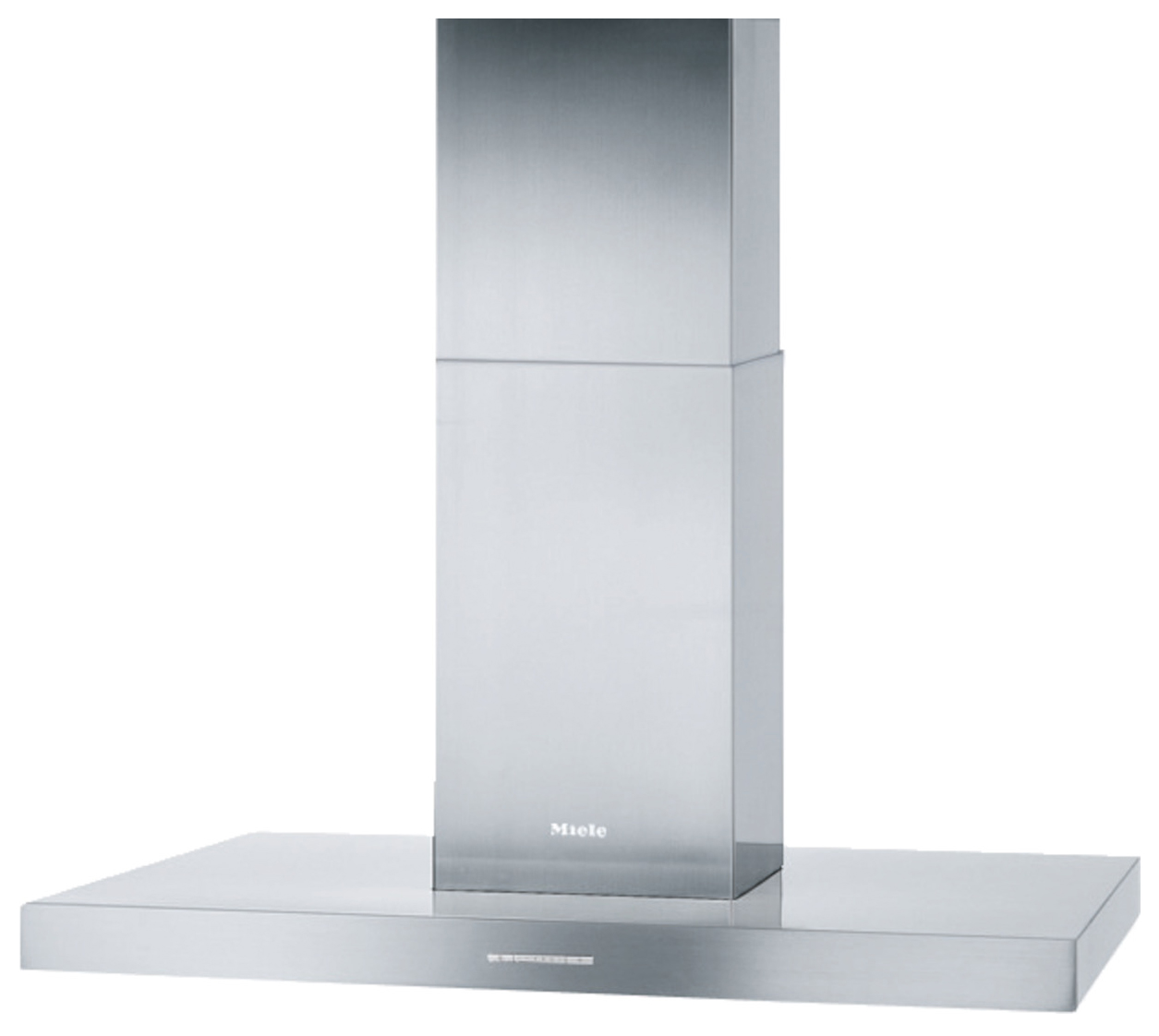
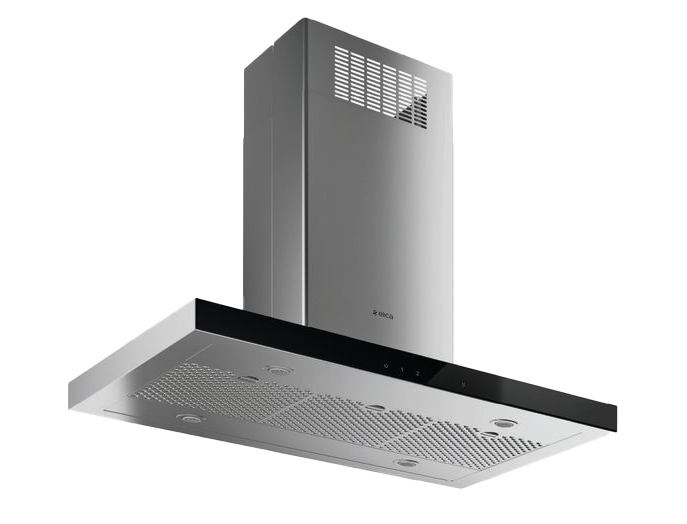
Chimney Style Range Hoods
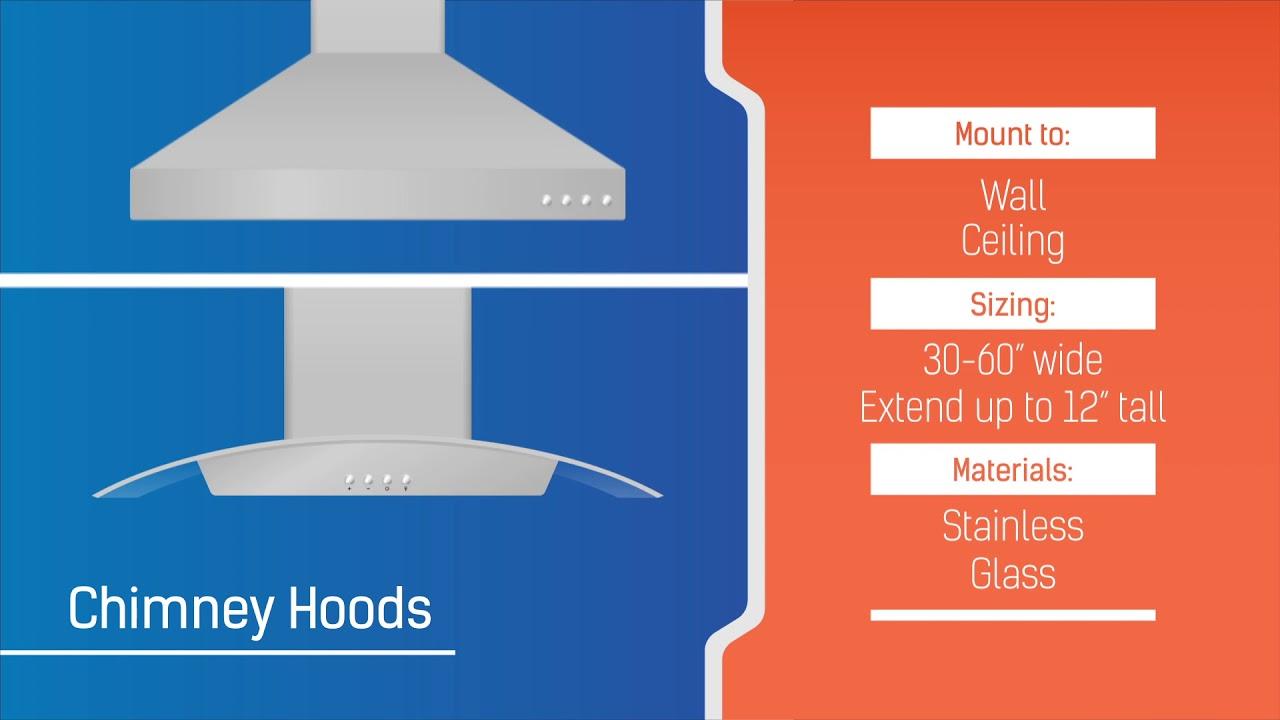
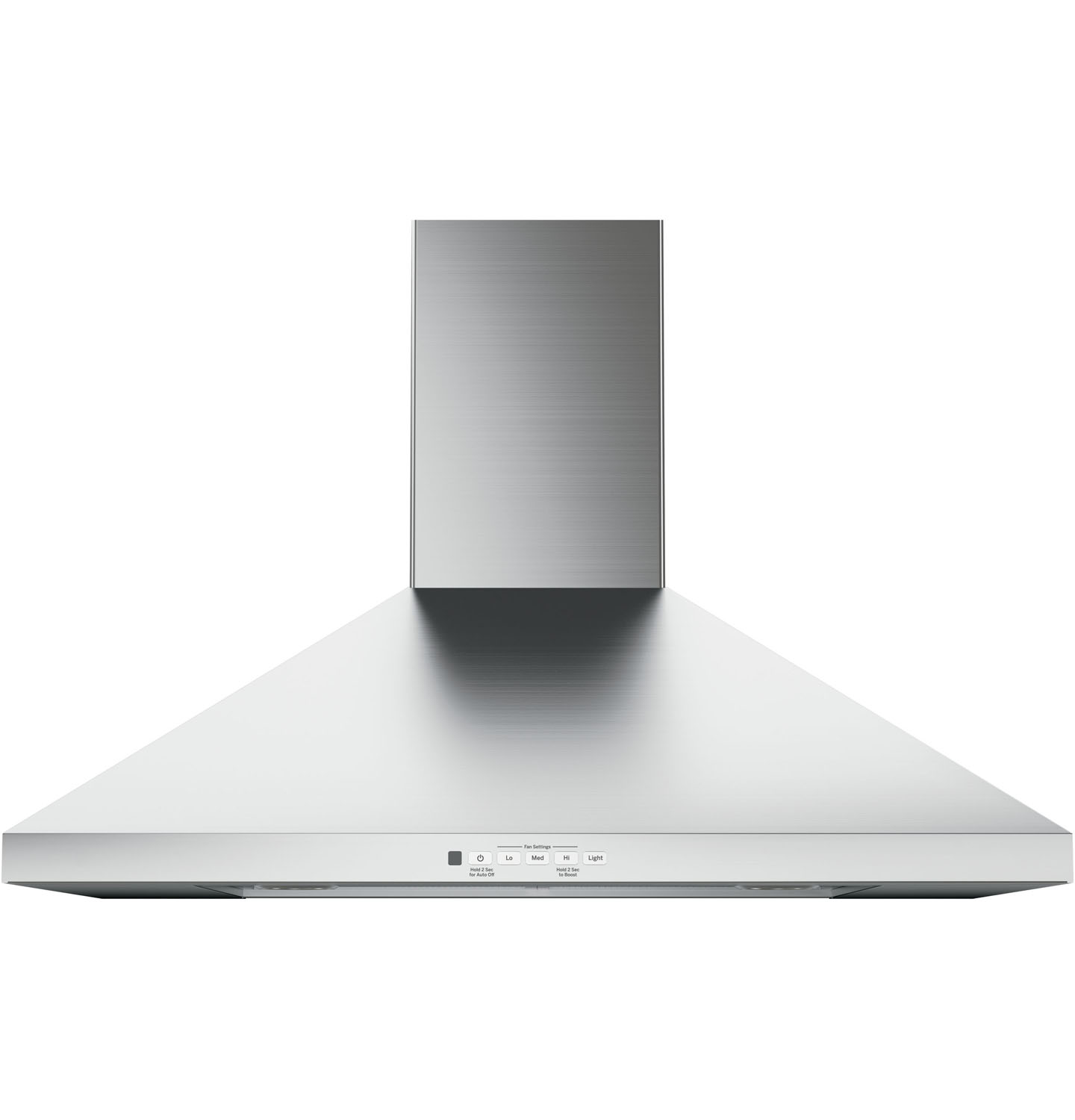
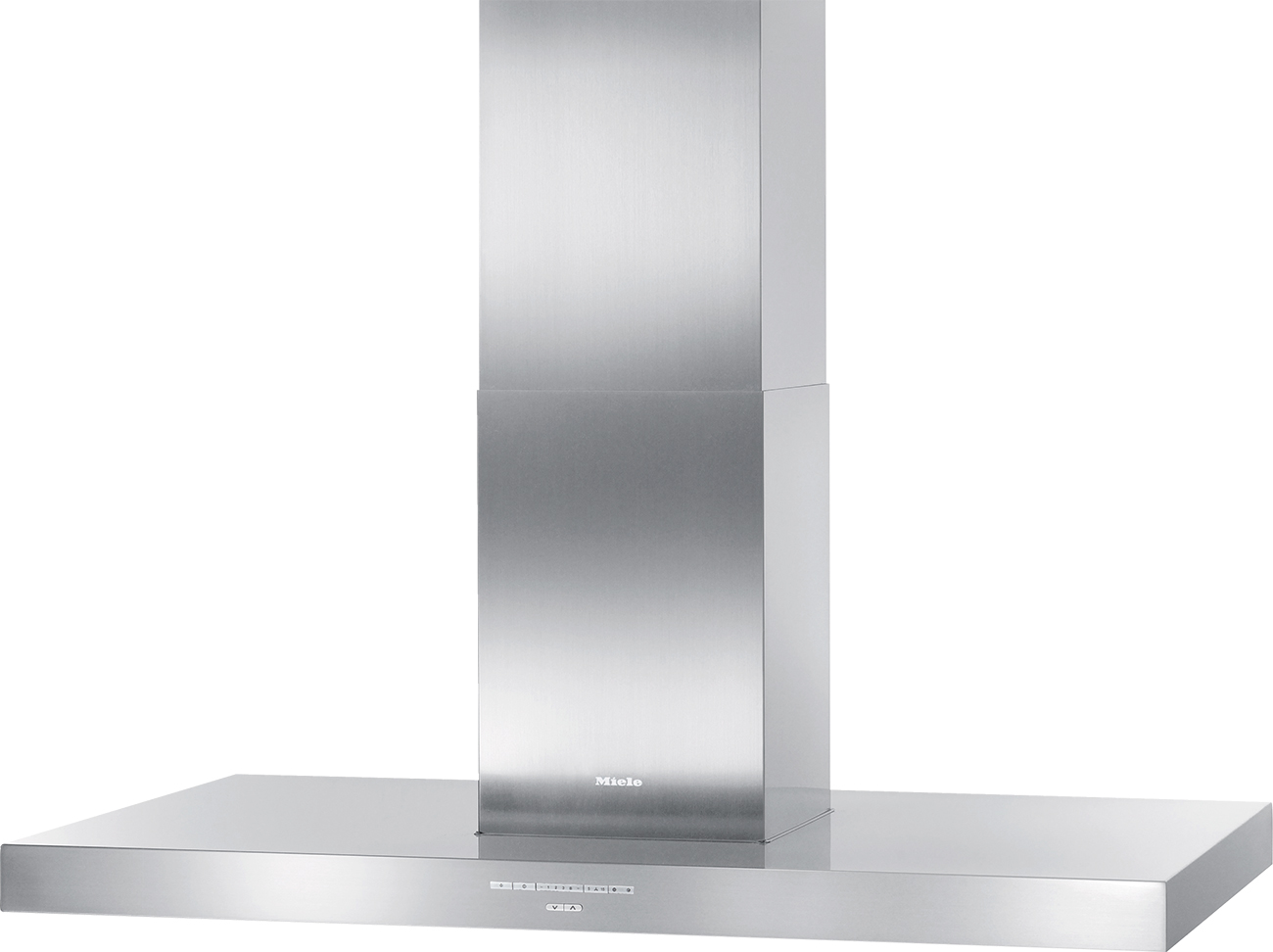
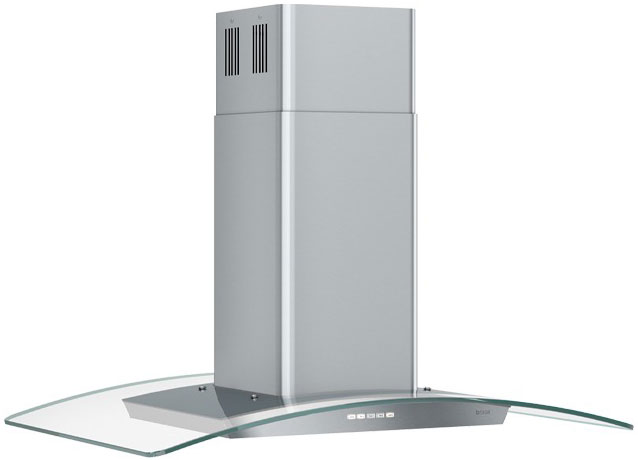
Chimney style hoods consist of a canopy and duct cover that is often mounted to a wall. They can also be mounted to the ceiling if installed over an Island. Whether your range rests against the wall or on a centrally located kitchen island, chimney hoods offer excellent ventilation and often stylish designs. When there are no cabinets above your range to hide the ductwork, a chimney hood is the standard solution.
Chimney style range hoods vary in sizes from 30 to 60 inches in width with the ability to extend the duct cover up to 12 inches high, depending on the model, to accommodate up to 10ft ceilings. The canopies on these models are available in stainless or glass with several decorative styles to accent any kitchen. Like standard canopy style hoods, standard chimney hoods average between 300 and 800 CFMs with their included blowers. A select few models offer 1,000 CFMs or more.
Downdrafts
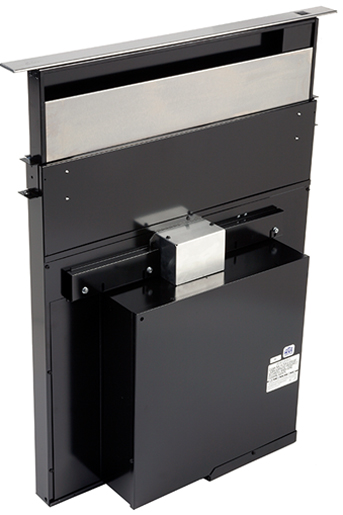
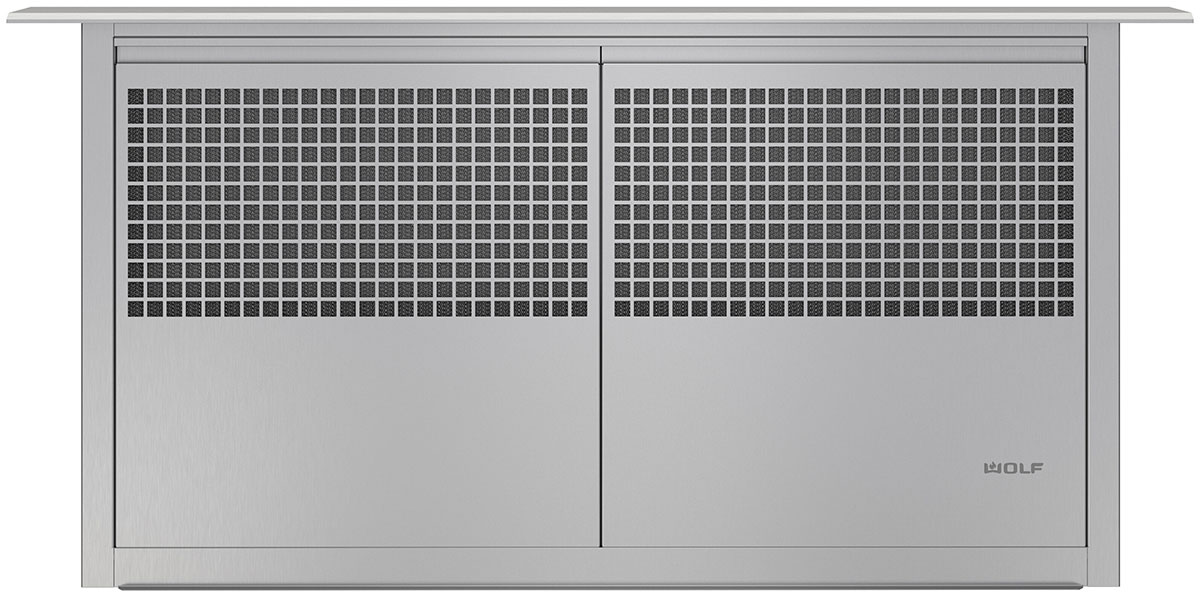
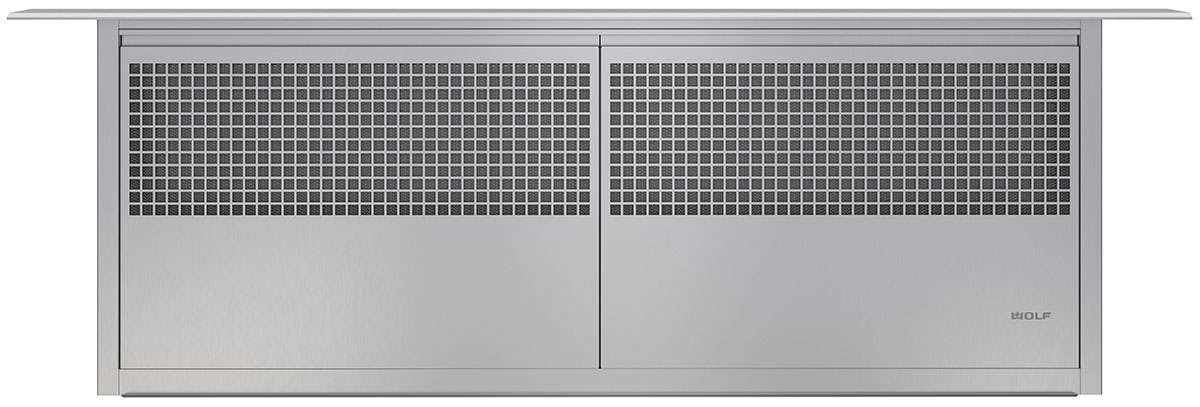
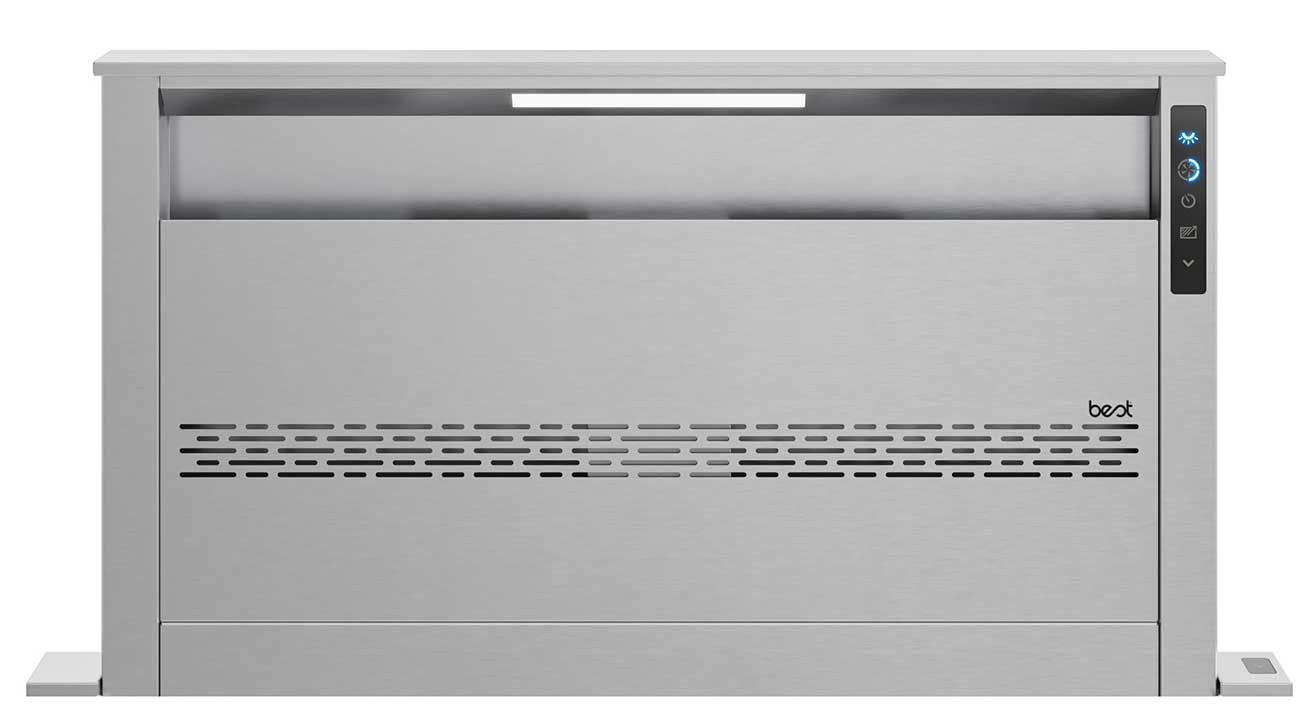
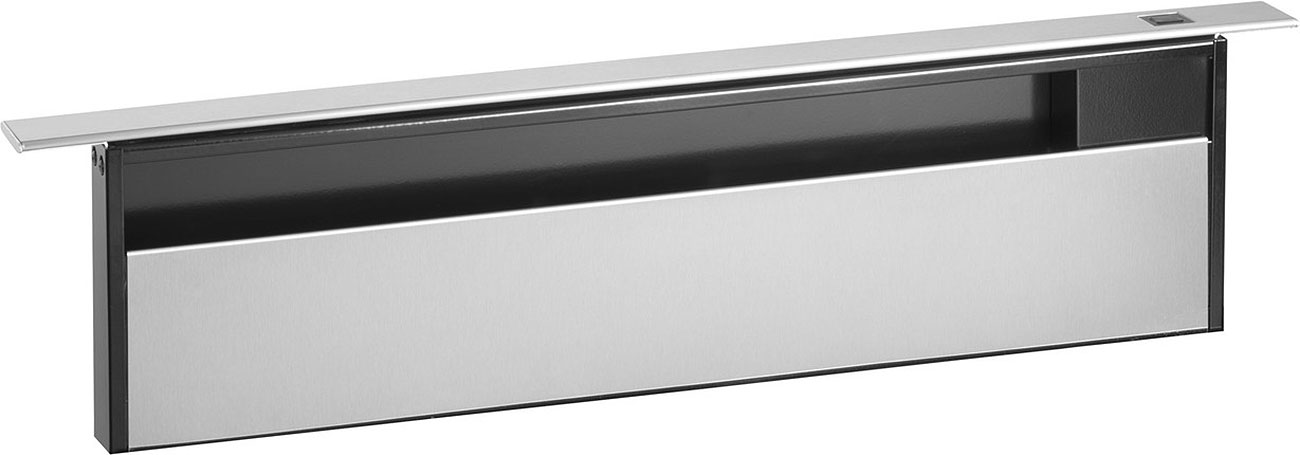
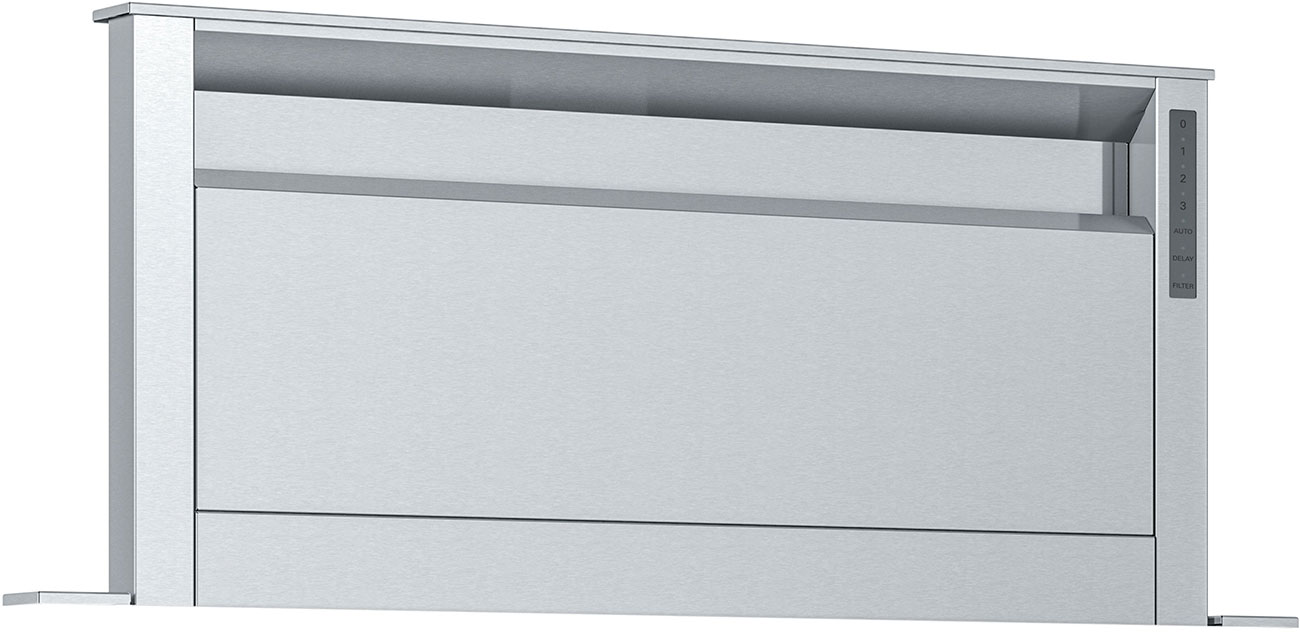
If the idea of a canopy above your range doesn't match with the vision you have for your kitchen, consider a downdraft. Occasionally built into cooktops and ranges, downdrafts differ from ventilation hoods in that they sit beside your cooking area. These hoods will either vent from the rear or sides, drawing the air down through a vent to the outside. A few newer models offer the ability to recirculate air to better serve kitchens in which venting isn't possible.
Usually, the downdraft will pop out of your countertop when in use, extending up 8 - 10 inches to more effectively capture airborne impurities. Although downdrafts are an innovative solution for kitchens that can't accommodate a more traditional hood, they simply aren't as effective as the overhead models. Downdraft hoods range in sizes from 4 to 48 inches wide and have an average CFM range between 300 and 1200 depending on the blower type.
Professional Style Range Hoods
Professional style hoods are available in both chimney and canopy styles. These hoods are much heartier than the standard chimney and canopy models. They are specifically designed to operate over high BTU, pro-style ranges, cooktops and grills. The canopies on these models can be as tall as 18 inches high with blower outputs upwards of 1,500 CFMs. When shopping for this type of hood, keep in mind that not all pro-style hoods come with an included blowers. Some require the blower to be purchased separately.
Size
For the best results range hoods should be at least as wide as the range or cooktop. This allows for the hood to properly manage the vast majority of smoke and steam produced below. Providing proper coverage helps to keep your air clean and protect cabinets from heat and smoke damage. Make sure to measure your cooking surface before choosing a unit. And always read the model-specific requirements for the proper mounting height.
Ventilation
There are three configurations: Vented (Ducted), Non-Vented (Recirculating or Duct-Free), and Convertible.
Vented (Ducted)
Vented or ducted hoods funnel the bad air to the outside of your home through a duct, wall or roof.
Non-vented (Recirculating or Duct-free)
Non-vented or recirculating hoods consist of a fan or blower with a charcoal filter that sucks up grease, heat, smoke, and odors. These models don't have ducts to funnel air outside. Instead, they pass the bad air through the charcoal filter and recirculate the newly cleaned air back into your kitchen. While these models are not as effective as ducted hoods, they are a solid option when venting isn't an option. To remain effective, recirculating range hoods require you to replace or clean their filters regularly.
Combination
Combination hoods can be used with or without ducts.
Features
Before purchasing a range hood you should familiarize yourself with the new and innovative features hoods have to offer. It's important to know that a gas range will require a hood with a higher CFM (cubic feet per minute) than an electric range. For an in-depth explanation of CFM, see below.
Blowers
Many hoods come with a built-in blower, simplifying the installation process. These are known as internal blowers. Although having the blower contained within the hood is rather convenient, this design is also typically the loudest option. If a hood doesn't come with a blower, one must be purchased separately. These separate blowers fall into two categories: in-line blowers and external blowers.
External blowers rest on the outside of your home or business, often mounted on the roof or to a wall. External blowers are typically the quietest option because of their distance to the hood. This separation makes external blowers ideal for more powerful models. So, even though the blower is situated outdoors, its high powered exhaust prevents it from being silent.
In-line blowers rest within the ventilation ducts between your hood and the vent to the outside. These blowers often work independently but can be used to supplement internal blowers that have especially long or winding ventilation ducts. Ideally, in-line blowers are placed in easily accessible areas so that they can be serviced should anything go wrong. Typically, these blowers will be found in attics or basements. Like external blowers, in-line blowers are often quieter than internal models because of their distance from the hood.
CFM
The volume of air a hood is able to move is measured in Cubic Feet Per Minute (CFM). The higher a hood's CFM, the more quickly it will be able to clean your kitchen's air. However, higher CFM ratings usually equate to noisier operation. Though, most range hoods offer two or more fan speeds, allowing you to adjust the CFM according to need at any given time.
If you're remodeling or purchased a new construction, check with your municipality to see if there is a maximum CFM requirement before selecting a hood. When using a hood capable of 400 CFM or more, some municipalities require you to install a makeup air damper. These dampers provide a controlled point for fresh air to make its way into your home to replace the exhausted air. Newer energy-efficient or green homes are built airtight. Without a makeup air damper, their airtight designs make it difficult for fresh air to replace the bad air vented outdoors by the range hood. And hoods can't push bad air out if there is no air in your home to replace it.
Noise
Noise is measured in sones. A sone is roughly equal to the sound of a refrigerator running. Normal conversations take place at about four sones, city traffic rates up to around eight. Use sones to compare different range hoods, but be aware, the higher the CFM, the higher the sone.
Automatic Shutoff
A timer can be preset to shut the fan off after a specific time.
Heat sensors
Sensors automatically speed up the fan or sound an alarm when they detect increased heat.
Lights
Lights are also available on hoods, with one or two incandescent or halogen bulbs.
Q&A Summary
Still left with questions about range hoods? We've answered the most popular inquiries about these appliances below, so you can enjoy a cleaner cooking environment today.
What is a range hood?
Range hoods are kitchen appliances that are designed to remove steam, smoke, grease and other pollutants from the air above your range or cooktop. While these air pollutants naturally happen when you're cooking, if they're not exhausted from your kitchen, they can damage your walls or leave foul odors.
What is a ductless range hood?
Ductless range hoods refer to ventilation systems that do not require ductwork for proper installation or operation. Rather than completely eliminate air pollutants from your kitchen, they filter whatever odors and smoke you have in your environment.
How high should a range hood be?
When deciding how high to place your range hood, you need to consider the type of range hood you purchased, the type of cooktop you have and the design of your kitchen. For gas cooktops, the hood should be 24-30 inches above the cooking surface. For electric cooktops, the hood should be 20-24 inches above the cooking surface.
Do I need a range hood?
If you plan on cooking in your home or using high heat on the stovetop, then a range hood is strongly recommended. This will prevent you from breathing in pollutants while protecting your ceiling, cabinetry and walls from smoke damage. With a range hood, you can preserve your home and promote better health.
What is a ventless range hood?
Ventless range hoods are the same as ductless range hoods, as defined above.
Can you use an island hood against a wall?
Technically, yes, you can physically install an island hood against a wall, but there's no functional reason to do so and it may even diminish your appliance's ability to perform at its best. With a wall blocking one side of the hood, smoke and other pollutants will be forced to bounce off walls and cabinets for them to be properly captured.

Over 90 Years Of Experience


Your recently viewed items:
Boston Acoustics Articulating Wall Or Ceiling Bracket In Black

Boston Acoustics Articulating Wall Or Ceiling Bracket In Black
GE 6.0 Cu. Ft. Spacemaker White Mini Refrigerator

GE 6.0 Cu. Ft. Spacemaker White Mini Refrigerator
Contains 1 Reviews
1
Whirlpool 18.2 Cubic Foot Biscuit Top Freezer Refrigerator

Whirlpool 18.2 Cubic Foot Biscuit Top Freezer Refrigerator
Contains 2 Reviews
2

DCS 48" Professional Wall Mount Ventilation Hood - Stainless Steel Finish

DCS 48" Professional Wall Mount Ventilation Hood - Stainless Steel Finish