Main Content
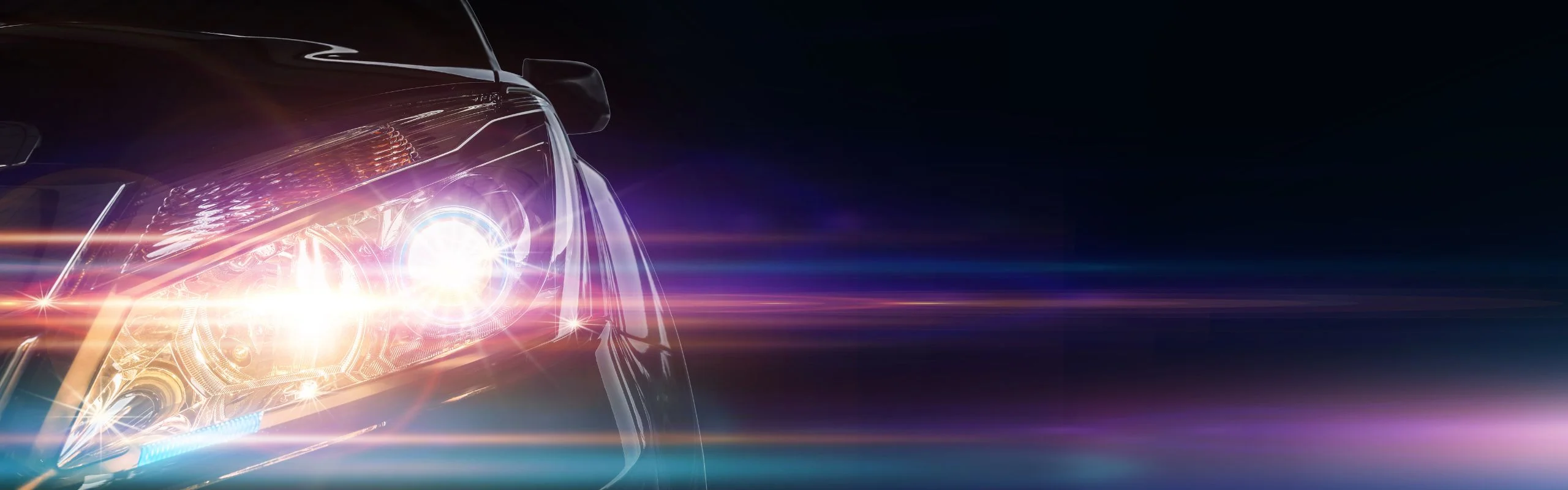
Halogen vs. LED Headlights: What's The Difference?

When it comes to staying safe on the road, there are a few elements that are crucial. Visibility is key: make sure you've got the right lighting for your needs with our guide below. Here, we pick apart the differences when it comes to halogen vs. LED headlights, and which might be best for you.

Headlights: How They Function
Before we tackle the competition of halogen vs. LED headlights, it's important to understand how the different bulb types work. Halogen models have been around for decades, and are noticeably yellower than their competitors. Meanwhile. LED bulbs are whiter and brighter, and have quickly become the more popular version favored by automakers and many drivers. If you come in to Abt's Mobile Installation garage for help with a lightbulb, you'll likely roll out with a bright, shining new LED bulb. We'll let you in on a little secret now—it's because LED headlights are often (but not always) the better choice.
What Are Halogen Headlights?
As mentioned above, halogen headlights have been a staple in autos for decades. Their construction is familiar and similar to a classic incandescent bulb, all while providing much-needed illumination thanks to constructed reflectors and boosted design. They're crafted with a tungsten filament that creates bright light, while halogen gas within the bulb replaces traditional argon gas in an incandescent bulb.

Halogens: The Classic
When it comes to weighing the differences in halogen vs. LED headlights, halogens have a few big perks.
The Pros:
The Cons:
The Pros:
- They're inexpensive. They're both easier and cheaper to replace than other models. You can even replace them yourself.
- They emit a soft light. Unlike LED lights, halogen versions give off a softer, yellow-tinted light at just 900-1,000 lumens. That might seem like a bad thing if your perspective is only from behind your wheel. But when you think about sharing the road, using softer headlights can sometimes have its benefits—like somewhat boosted safety. You're much less likely to shine ultra-bright light into the eyes of other drivers, for one. With that in mind, these are a much safer option on winding roads, especially if those roads are thinner.
- They're extremely compatible. While LED headlights work well with newer vehicles, older models and classic cars are made for halogen headlights.
The Cons:
- They need to be replaced often. With a lack of energy efficiency that LEDs always sport, a classic halogen light bulb has a short lifespan. After around 2,000 hours, they burn out and will need to be replaced. It's a good thing they're budget-friendly. Meanwhile, LED bulbs can last between 50,000 and 100,000 hours before needing replacement.
- They're not very energy efficient. Halogen bulbs aren't energy efficient when compared to LED models. The reason? They create light by using a real filament and heat. Because they require more power to operate, they can use more fuel as well.
What Are LED Lights?
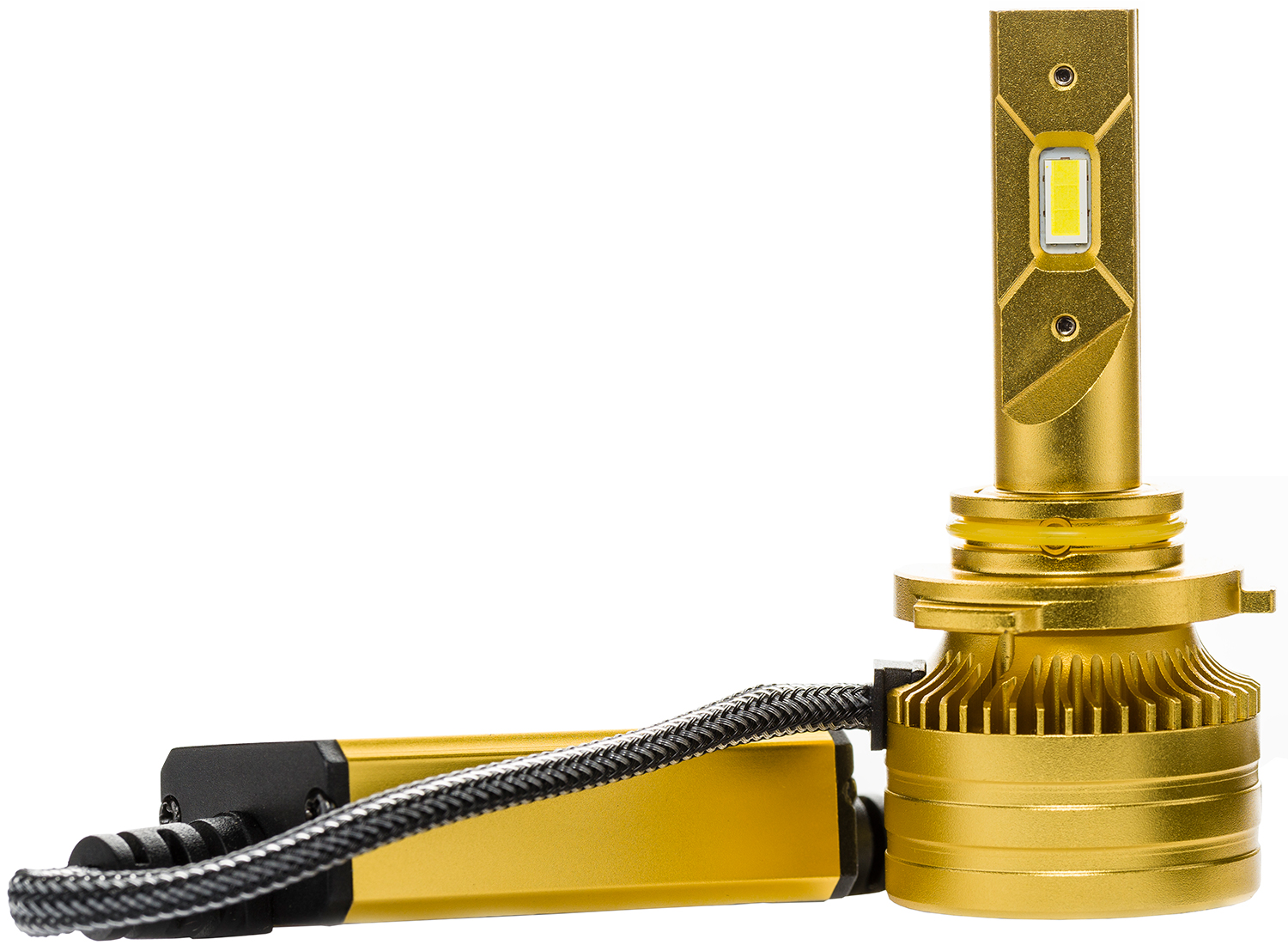
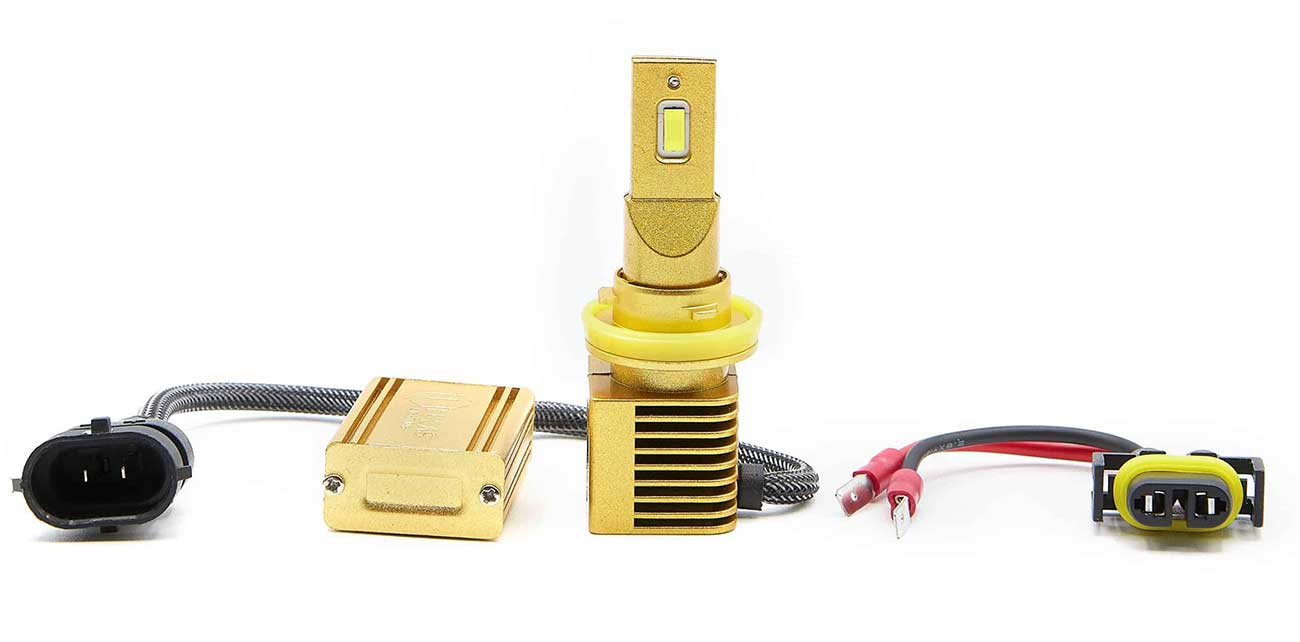
When weighing halogen vs. LED headlights, LEDs are often considered an evolution of the halogen version. When it comes to the battle of halogen vs. LED headlights, many automatically lean towards these newer models, and with good reason. Structure-wise, they're a complete upgrade. With these, an electric current powers through a semiconductor or diode to create bright light, all with less warmth. The result is illumination that's 90% more efficient and much longer lasting. But they have their strengths and weaknesses, too.
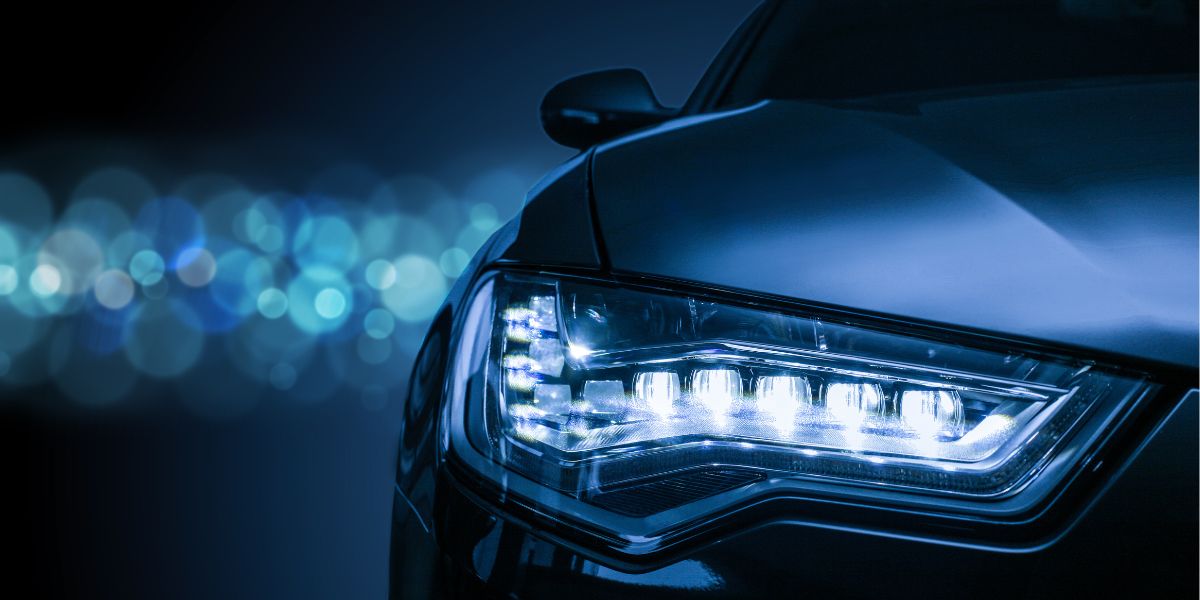
LEDs: The Popular Up-And-Coming
When it comes to measuring halogens vs. LEDs, halogens have certainly had their moment, but LEDs have largely taken the wheel in the eyes of drivers and car manufacturers.
The Pros:
The Cons:
The Pros:
- They're incredibly bright and go farther. At 2,000-4,000 lumens, these babies sport a whiter color, a wider spread of illumination and often a farther reaching "throw". That means you, the driver, can see farther and even along the sides of roads in the dark.
- They're very efficient. Some statistics say that in the battle of halogen vs. LED headlights, LED lights are 90% more efficient. Because they're engineered differently with a diode, they produce less heat and thus, last longer.
The Cons:
- They're more expensive. Like, a lot more expensive. Depending on the car, a complete LED assembly can cost a lot more. Halogen bulbs themselves can cost much depending on the make and model of your vehicle. When you look in the long run, LED users often end up saving in the long run thanks to high efficiency.
- They create glare for other drivers. While they can really help you to see for long distances, drivers heading towards you can sometimes be affected by that same brightness. If improperly installed and reflected, they can impact other drivers' visibility. That being said, a proper auto shop, mechanic or expert should be able to help you install these lights correctly and effectively.
The Verdict
In the battle of halogen vs. LED headlights, drivers are sure to have their preferences, but for most drivers, LEDs are likely to provide the most benefit. That includes energy efficiency, better visibility for long distances and a longer life than other models. However, halogen might be the best choice for you if you spend a lot of your time on thin, winding roads where you need to ensure other drivers can see you well. That being said, in the case of halogen vs. LED headlights, LEDs often win.
That's why we sell them at Abt, and why our Mobile Install studio is happy to replace customers' existing lights with new ones for a safe ride on the road. If you notice your lights are starting to dim, call our team at 847-544-2810 and we can help you pick out the right ones for your vehicle. They aren't always one size fits all, so come to the experts for the perfect pick for your ride. While you're in, take a look at all the newest auto upgrades, from new car audio to upgraded screens.
Q&A Summary
Is it worth replacing halogen with LED?
Yes. Replacing halogen headlights with LED headlights can save energy and reduce costs over time, all while improving performance. They last longer too: 10,000+ hours vs. 2,000 hours for halogen.
Are LED headlights legal for all vehicles?
Yes and no. Factory-installed LEDs are legal everywhere, but in some places there are caveats for aftermarket LED lights. Aftermarket models must be adjusted to comply with federal safety standards to be made legal.
Is there a color temperature difference between halogen and LED headlights?
Yes. LEDs tend towards a cooler, white light (5,000-6,500K) while halogen bulbs emit a warm, yellowish light (3,000-3,500K).
Contact us
Abt's Mobile Install Team
1200 N. Milwaukee Ave.
Glenview IL, 60025
Phone:847-544-2810
Email:[email protected]