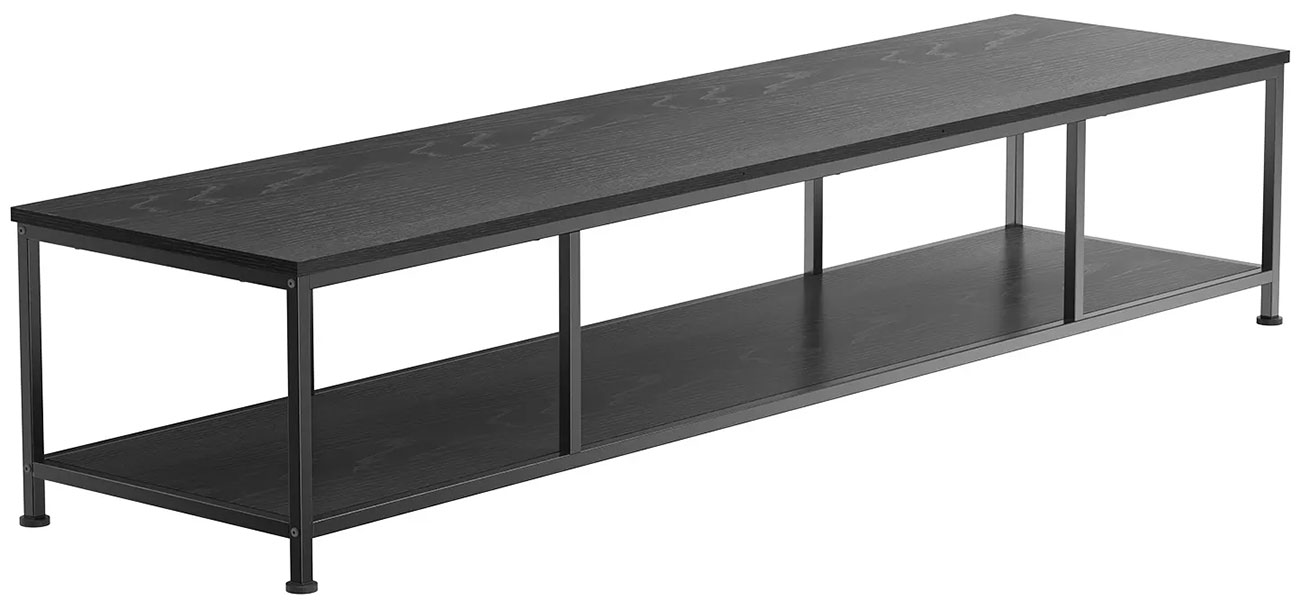
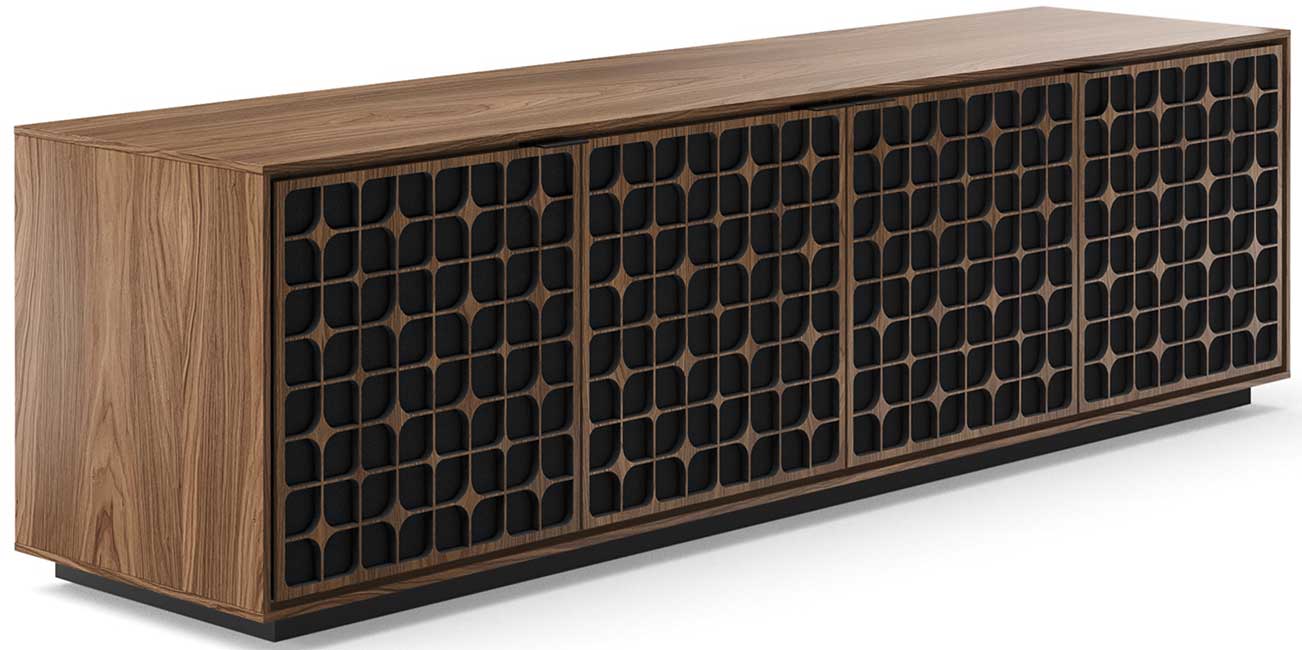
TV Stand Buying Guide: Find Your Perfect Stand or Console

The right TV stand offers not only a secure place to set your TV, but adds additional storage and style to your space. In this guide, we'll help you determine which TV stand is best for your setup.
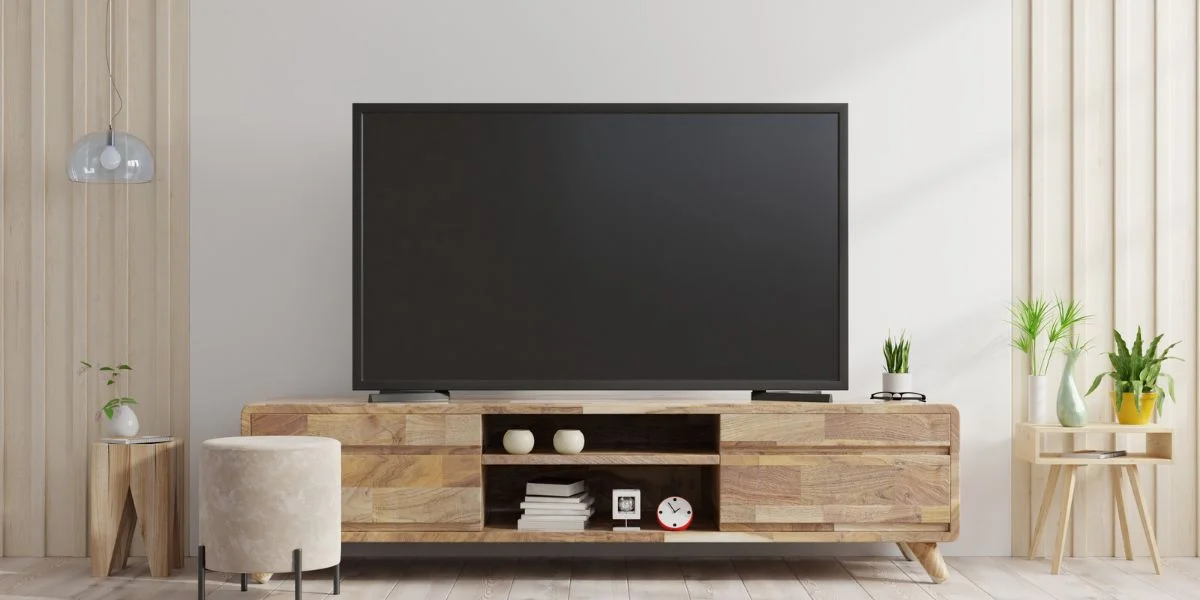
Do I Need a TV Stand?
If you don't want to (or can't) mount your TV on the wall, a TV stand is a must-have. They not only provide a secure place to set your TV, but can also offer storage for games, movies and more. We'll be covering the main factors to consider so you can purchase a TV stand that provides comfortable viewing, durability and aesthetic appeal in your living room or bedroom.
Size
The size of your TV stand depends primarily on the size of your TV. However, you'll also want to consider whether you want the stand to provide additional storage (and what items you'll be storing). As a rule, your TV stand should be about three inches wider than your television on either side. This ensures you have a secure spot for your TV. In a few simple steps, here's how you can ensure you buy the correct size TV stand:
1. Measure the width of your TV. Measure from the left edge of the frame to the right. Make note of this measurement, as it's arguably the most important one to consider when choosing your stand.
2. Find the height of your desired TV stand. You need to know the height of the TV stand to ensure a comfortable viewing experience. As a rule, the center of the TV screen should be at or just below eye level, so you don't want to purchase a stand that's too tall or too short.
3. Find the width of your desired TV stand. As mentioned above, you should allocate at least three inches of space on either side of the television for safe, secure viewing.
Another factor to consider is viewing distance. As a rule, the easiest way to determine the right viewing distance for your TV, double the diagonal measurement (the advertised size) in inches. So, for example, if you have a 60" TV, the ideal viewing distance is 120", or 10 feet. Make sure to also check if the stand you like has a weight limit.
Height
The height of your stand matters because the center of your TV should be at eye level for comfortable viewing. But with so many options available, how do you determine which TV stand height is best for your room and the TV you're putting on it? Start by measuring the average eye level for those watching the TV. If you don't want to sit on your sofa and take out the tape measure, 44" is a safe measurement. Next, you'll find the measurement of the middle of your TV screen. Take this number and subtract it from the eye level measurement. For example, if your TV is 34" tall, the middle is 17". Subtract this from your eye level measurement (in this case, 44-17) and you'll get the approximate height of your ideal TV stand. In this case, the stand's height should be about 27", give or take an inch or two taller or shorter.
Location
Where is your TV located? As when you choose the material of your TV stand, its location has both aesthetic and practical considerations. Will the TV stand or entertainment console be against the wall, or floating in the middle of the room? If you choose to float your stand, make sure it has a finished back. As mentioned above, you'll also need to consider the ideal viewing distance to avoid eye strain or a distorted picture when watching TV.
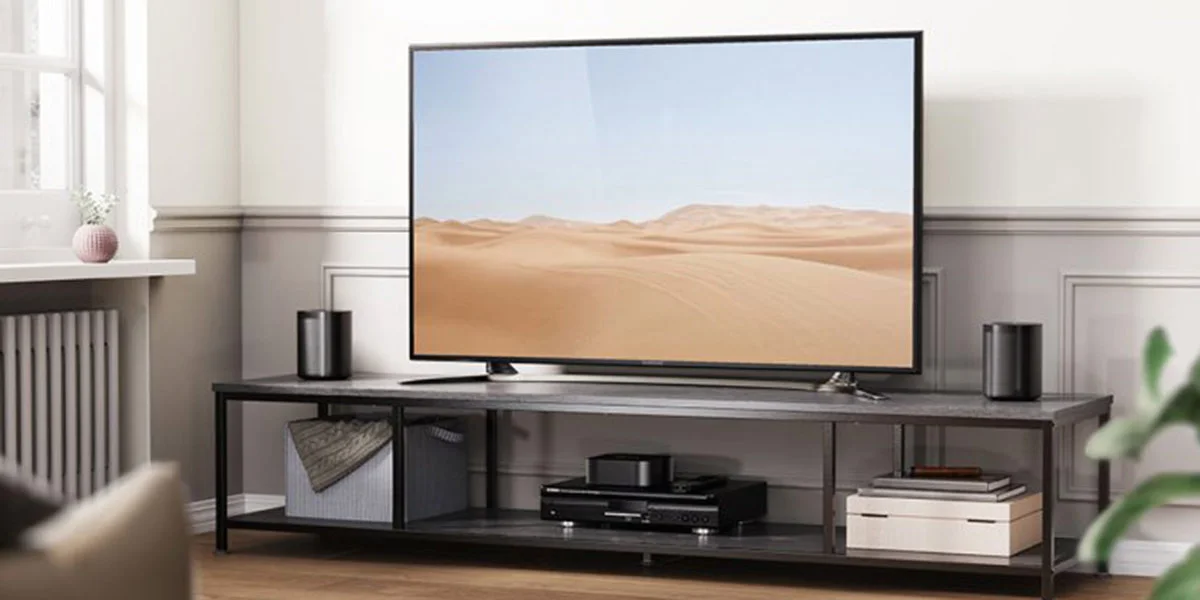
Material
You need to consider the material of your TV stand for both aesthetic and practical reasons. Different materials are better suited to different design tastes and lifestyles, like whether you have kids or need a TV stand for a high-traffic area of your home. How much maintenance like dusting are you willing to do?
Wood
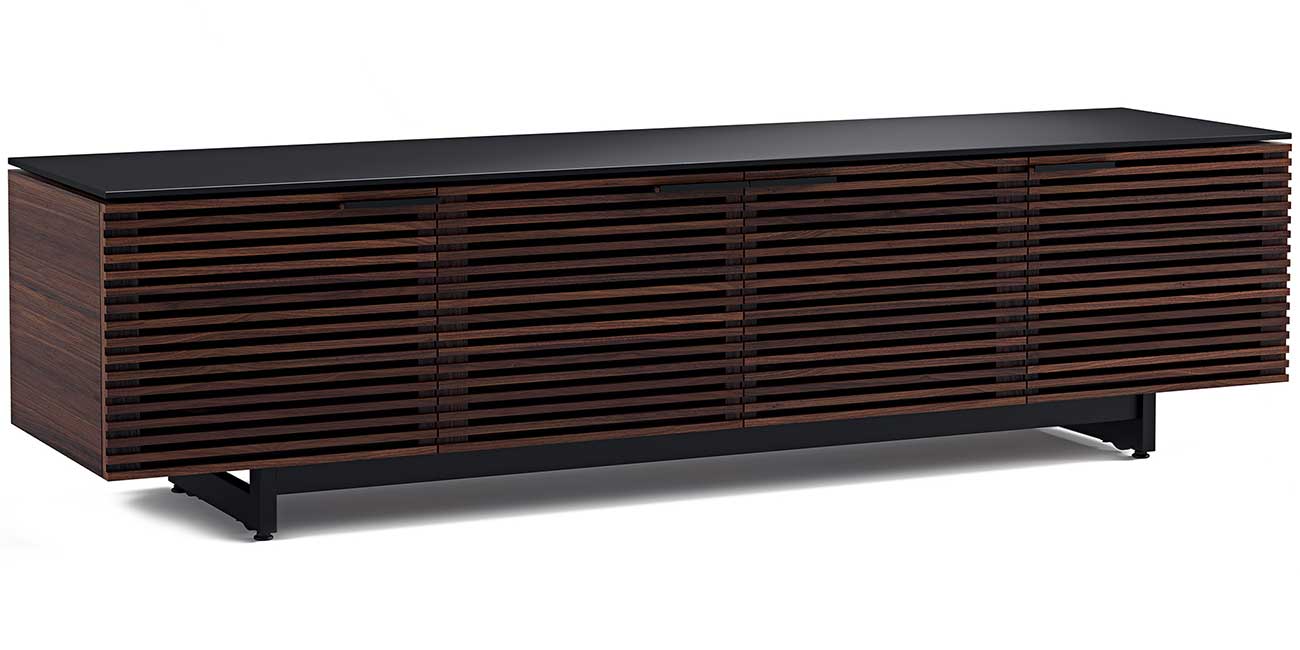
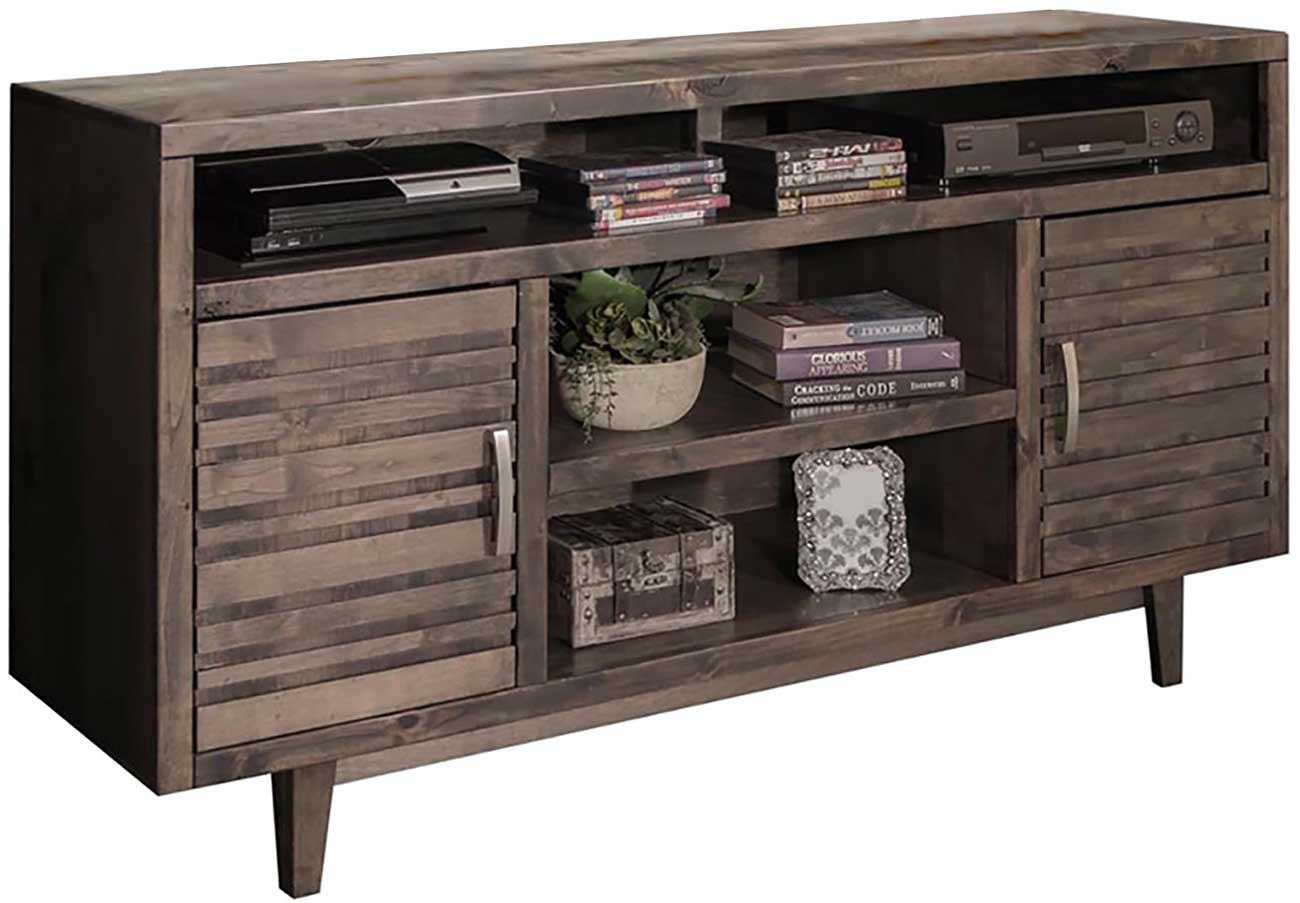
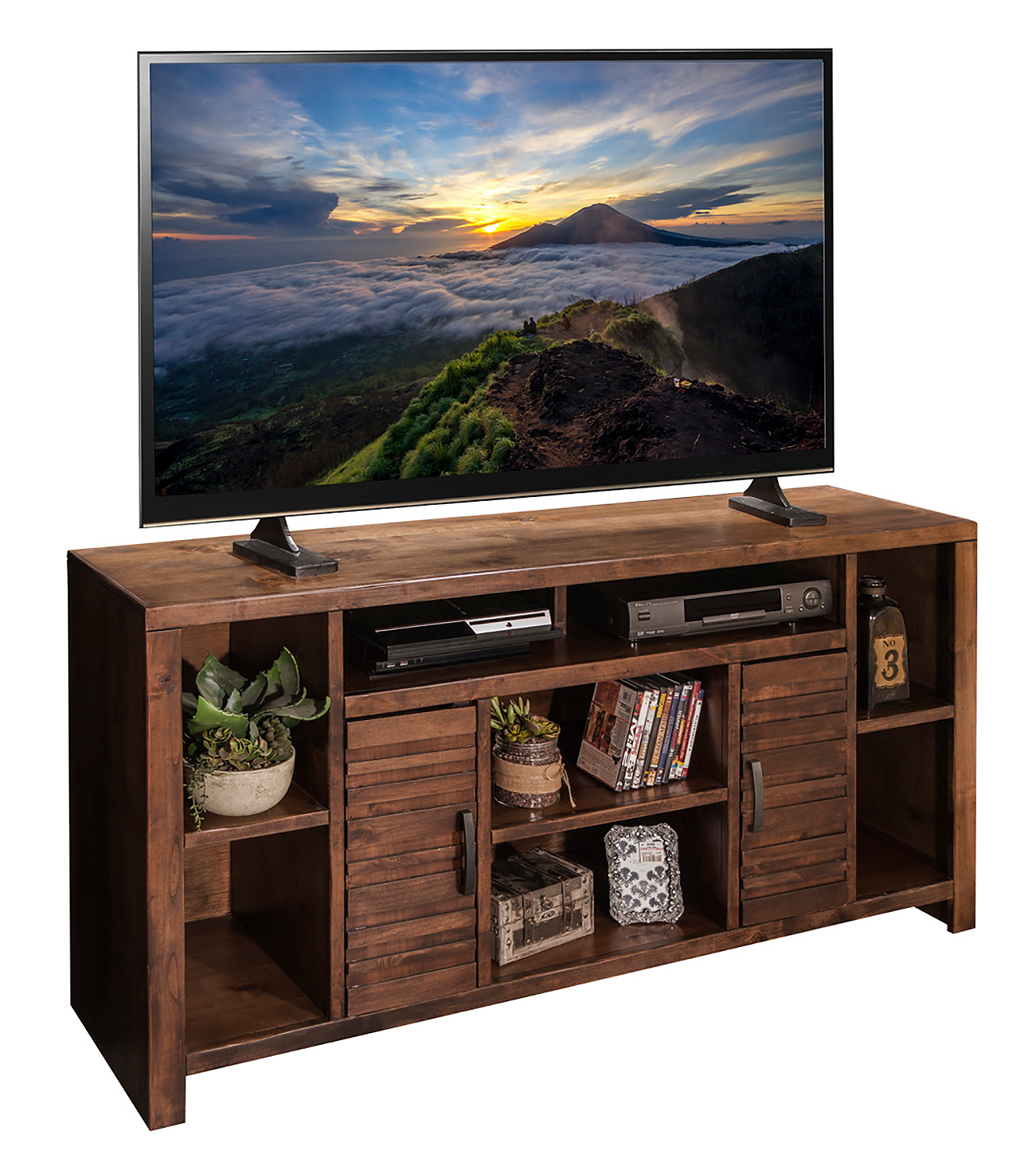
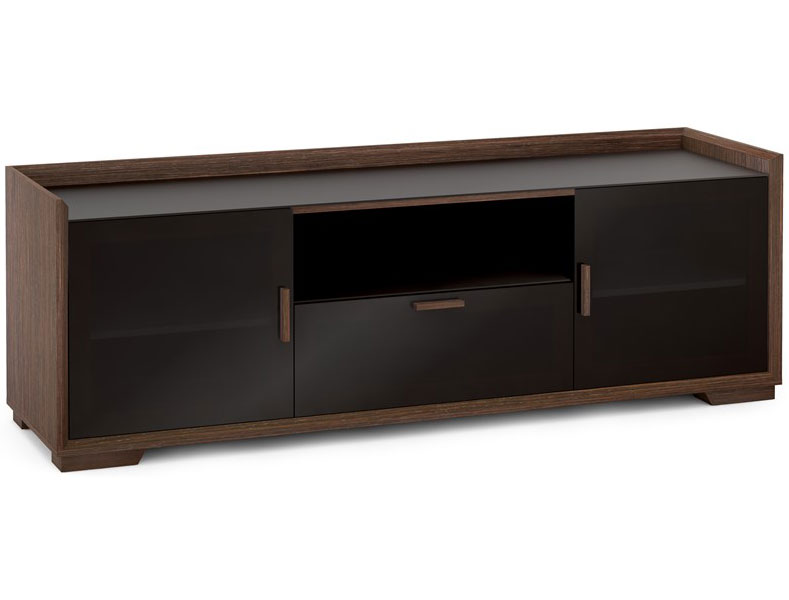
Wood TV stands are very common and are a popular choice because of their durability. It's easy to match wood finishes to other wood in your living room, like the material of the coffee table or the legs on your sofa. If you're looking to invest in a stand you'll have for years or even decades, it's a great choice of material. The main drawback is that solid wood TV stands are often more expensive.
Engineered Wood
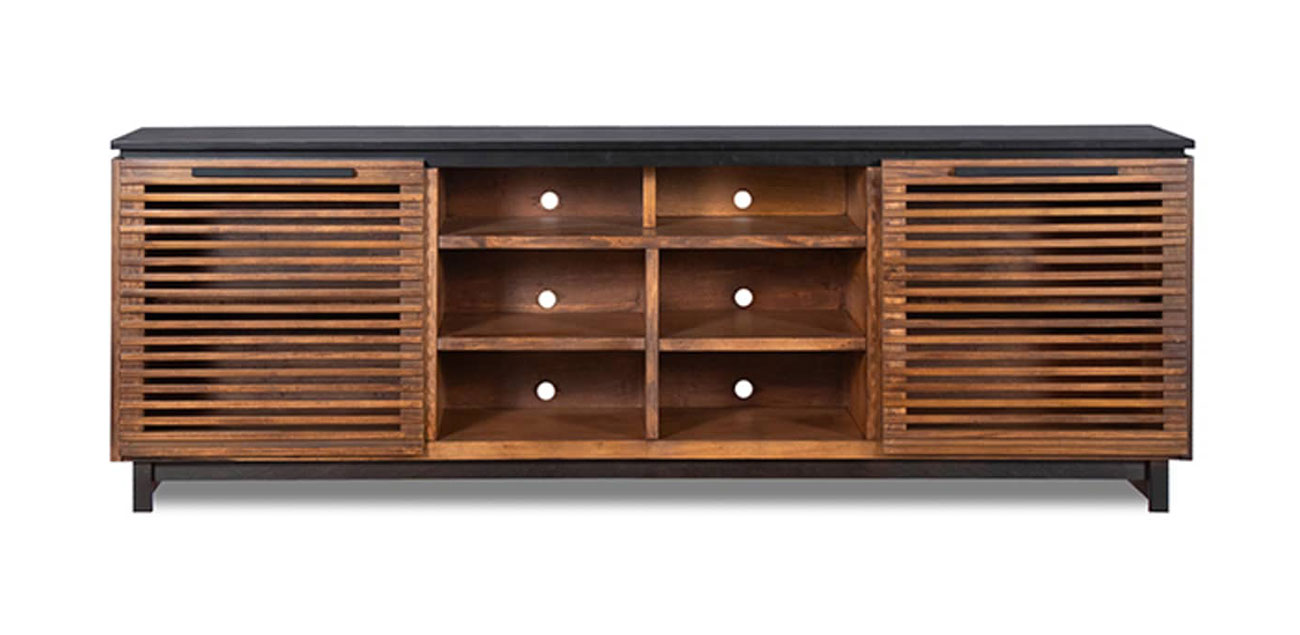
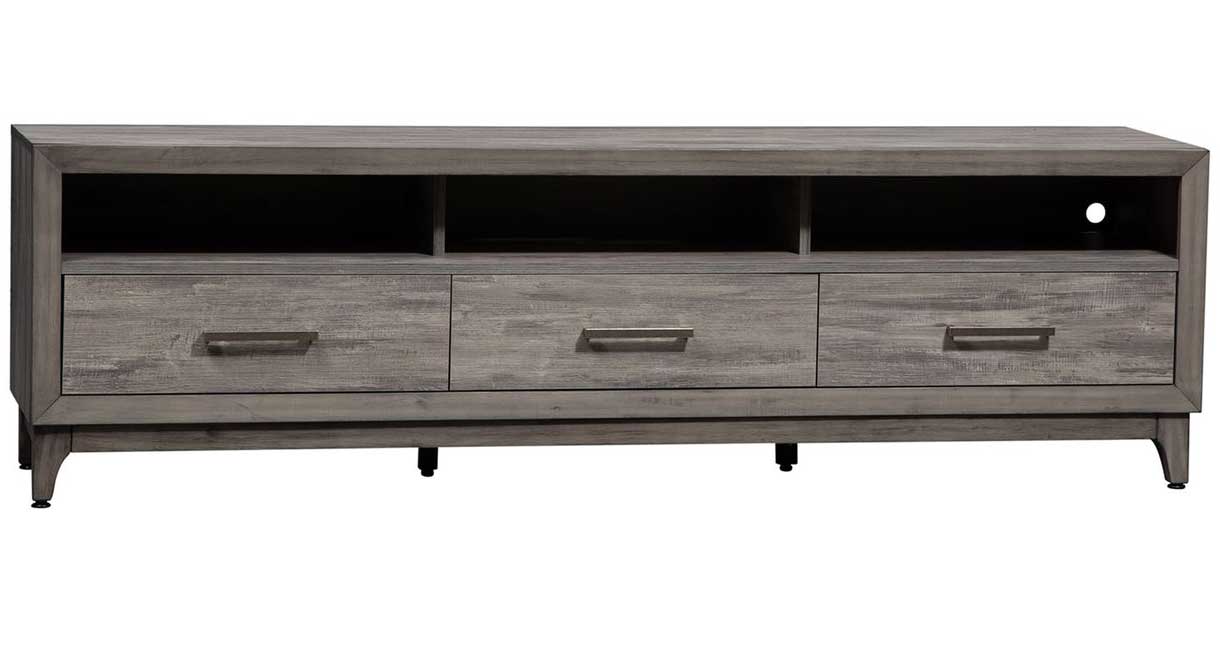
Engineered wood refers to stands made of composite wood, with a veneer applied on top to create the look of a solid wood stand. While not as durable as a hardwood TV stand, engineered wood TV stands are still a durable option that are often more budget-friendly. They're ideal for replicating the timeless look of a wood stand while spending less.
Metal
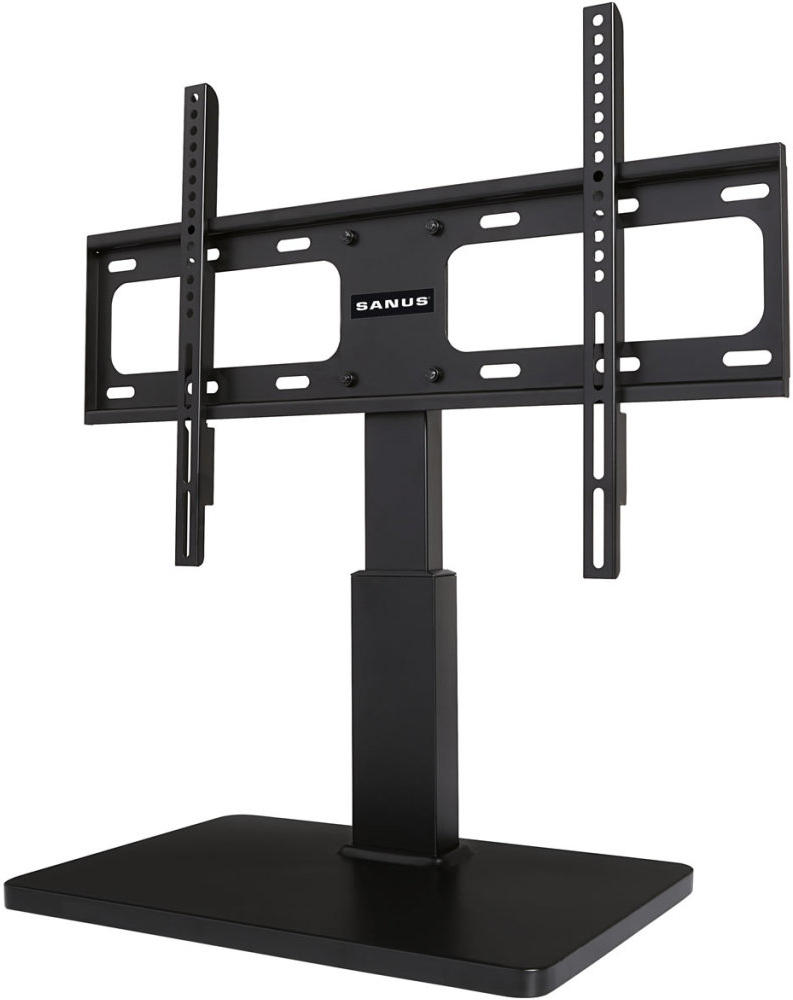
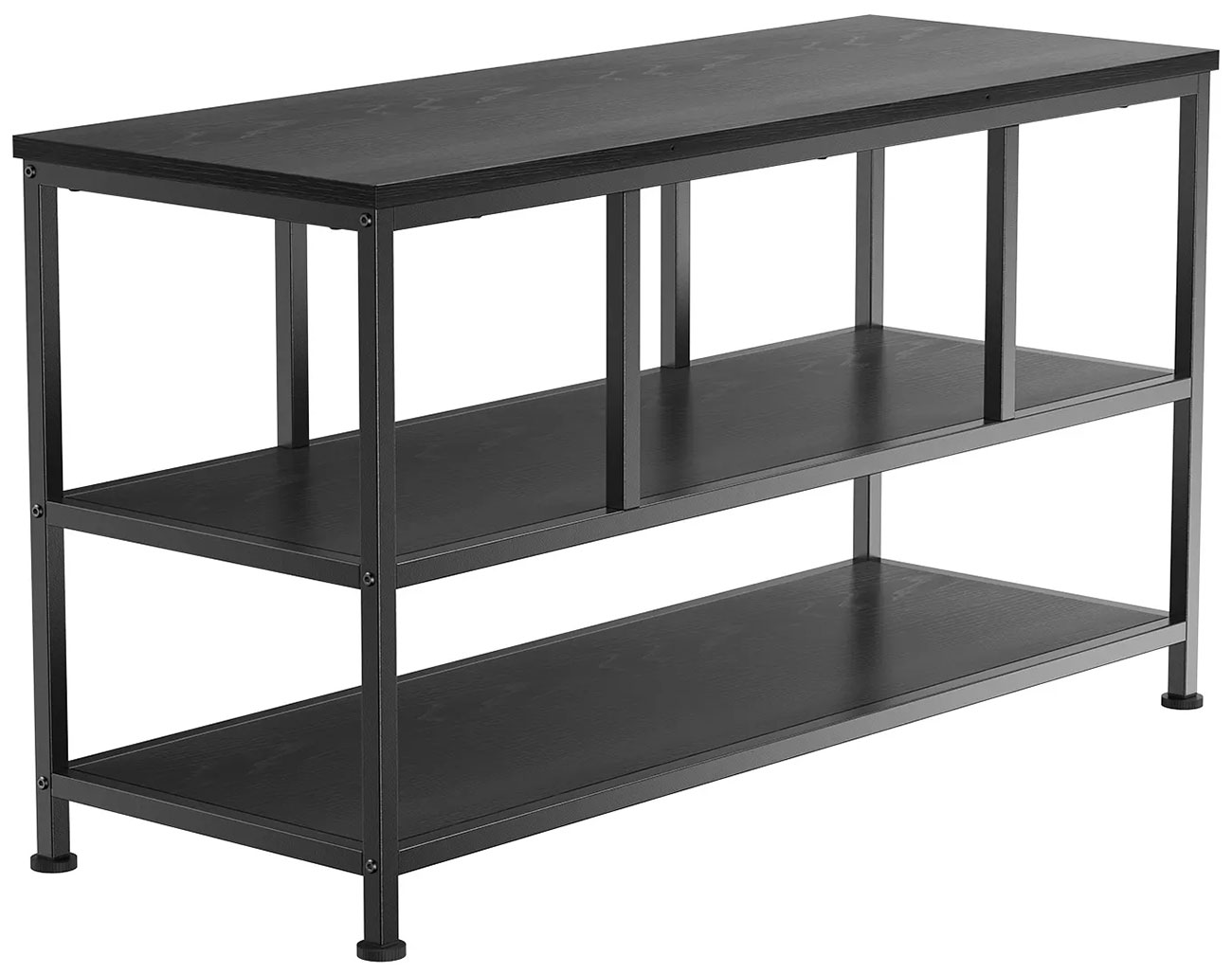
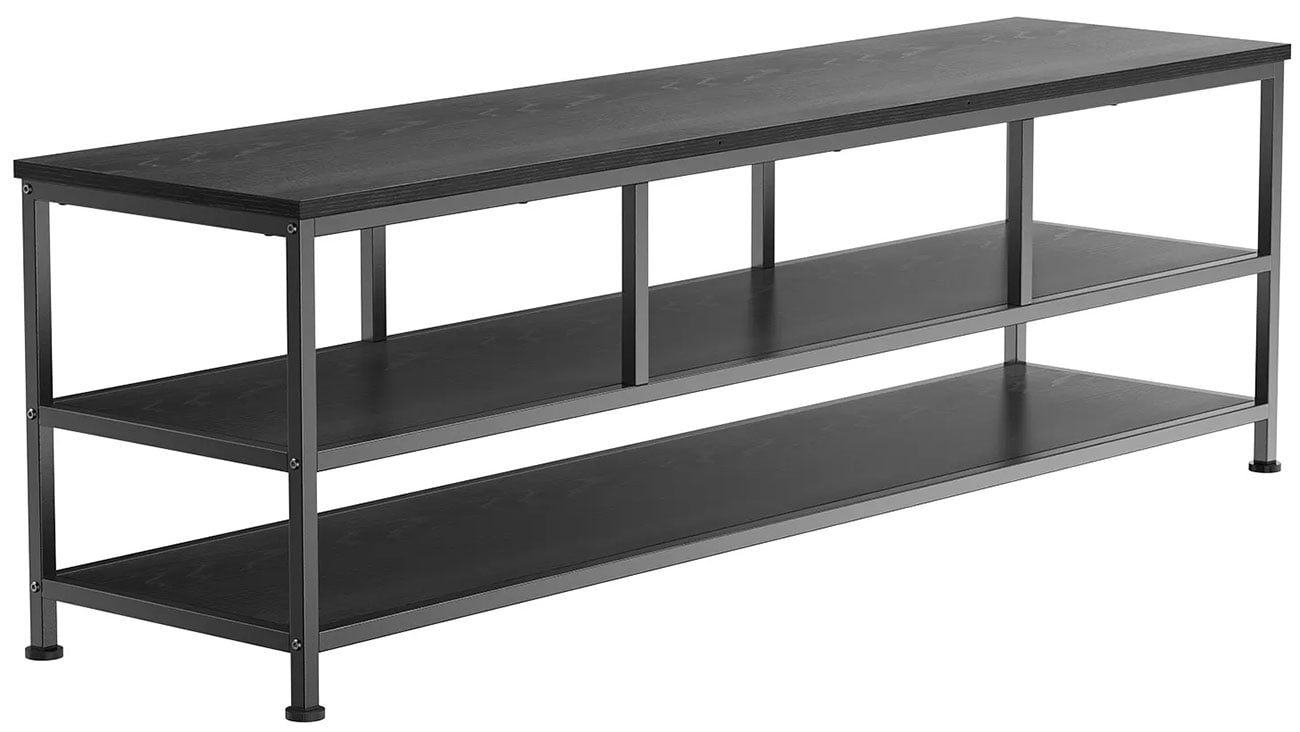
Metal TV stands are durable and ideal for spaces with an ultra-modern or industrial aesthetic. Metal stands usually have either metal or glass shelves. Metal stands are often available at affordable price points, so they're a good option if you're prioritizing durability but don't have a large budget.
Glass
Most glass TV stands feature glass shelves with a metal frame and legs. Glass TV stands look sleek and modern and are great for those seeking a more minimalist look. However, you'll want to dust and use the proper cleaning agent to keep the finish looking shiny and smudge-free. You should also consider your lifestyle; if there are kids playing nearby, you may want to avoid glass shelves that can crack or shatter in an accident.
Aesthetics
While the material of your TV stand or console is one aesthetic factor, it's not the only one. TV stands are available in a variety of design styles. There are options to fit minimalist, eclectic, industrial, mid-century modern and modern farmhouse aesthetics. Be sure you choose a stand that complements your interior design. For example, an ultra-modern all-glass stand will look out of place in a cozy room with lots of wood and soft textures; instead, opt for a wood or engineered wood stand.
Storage
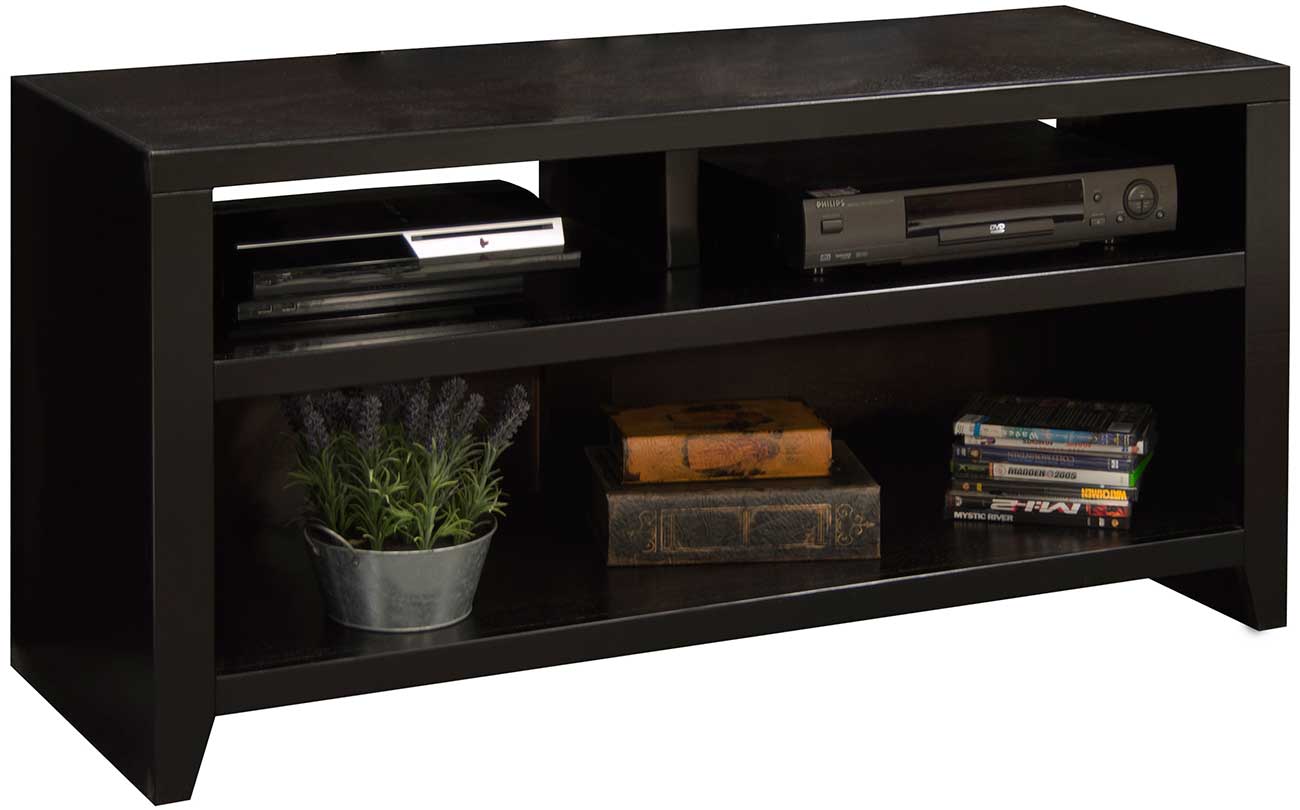
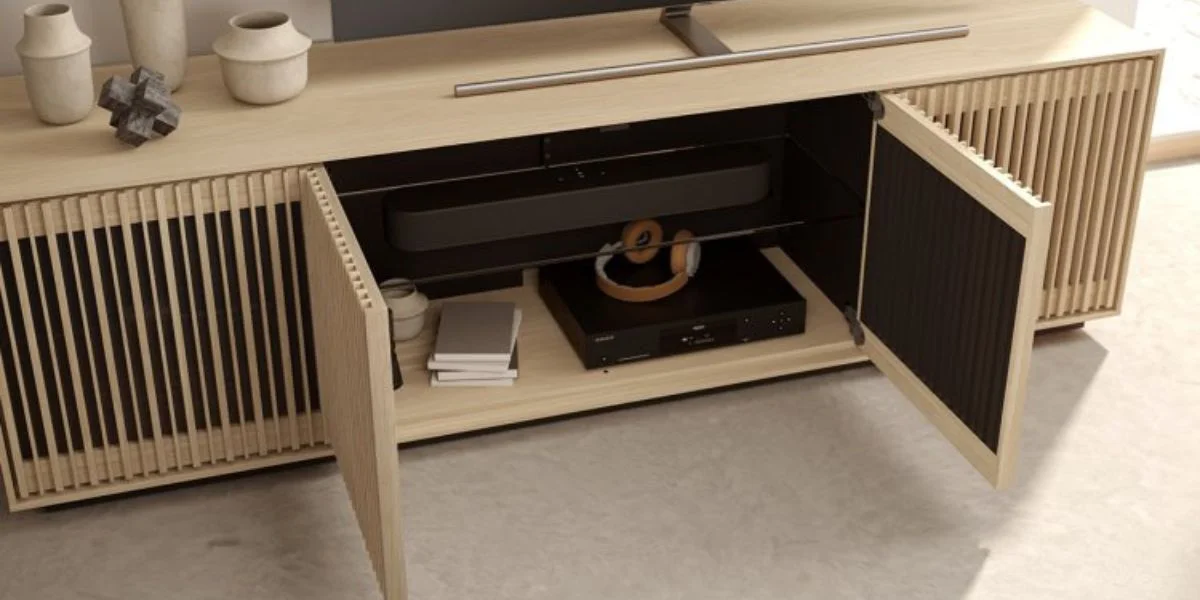
TV stands are also a great storage solution for game consoles, games, physical media collections and more. At a minimum, your TV stand should have shelving for your cable box or streaming device (like an Apple TV). However, there are TV stands with multiple shelves, whether you need storage for the items mentioned or if you want to add decorative elements. If you want plenty of storage but want to maintain a certain aesthetic, look for a stand or console that has cabinets or doors to hide your Blu-ray collection. If you're storing a cable box or game console on your stand, be sure it has open shelving, or holes or clips in the back for cable management.
Shop for Your New TV Stand at Abt
Shop our selection online or visit our Glenview store to see select TV stands in person. If you have questions about measuring for a stand, which material is best or anything else, reach out to Abt's experts at 800-860-3577.
TV Stand FAQs
Where can I buy a TV stand near me?
Abt offers a wide selection of TV stands online and at our store in Glenview, IL.
How high should a TV stand be?
The height of your TV stand depends on the eye level measurement of the people watching TV and the size of your TV. To determine how high a TV stand should be, measure the height of your viewing angle and the height of the mid-point of the TV screen. Subtract the mid-point height of the TV from the height of your viewing angle to determine how high your TV stand should be.
What size TV stand do I need for a 65" TV?
A TV stand for a 65" TV should be at least 57" wide.
Should a TV stand be wider than the TV?
Yes. Your TV stand should be wider than your TV by about 3" per side.
How much weight can a TV stand hold?
The amount of weight a TV stand can hold varies by model. Be sure to check any paperwork that comes with your TV stand to ensure it can hold the weight of your TV. TV stands are designed to hold the weight of a TV, but you should always check the weight limit before placing your TV on top.
Should a coffee table and TV stand match?
While your coffee table and TV stand don't have to match exactly, they should have similar styles. If you have a rustic wood coffee table, your TV stand should also have a rustic aesthetic to complement it, rather than an ultra-modern all-glass style.