THE OFFICIAL BLOG OF ABT


CES 2025: Samsung's Smart Homes for All
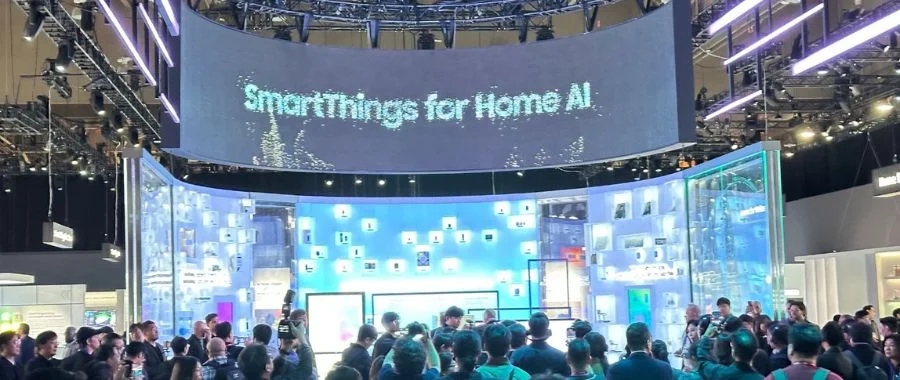

We're at CES 2025, and our team at Abt has been having fun in the Samsung booth with the latest smart device technology. If you have a Samsung appliance or TV, then you may be familiar with SmartThings, the brand's Wi-Fi connectivity system for smart devices. It's how you're able to monitor your dishwasher from your smartphone, for example. And in 2025, Samsung is leaping forward with SmartThings for Home AI, and their goal is to make AI devices and smart homes easier to access for all.
Samsung Hub
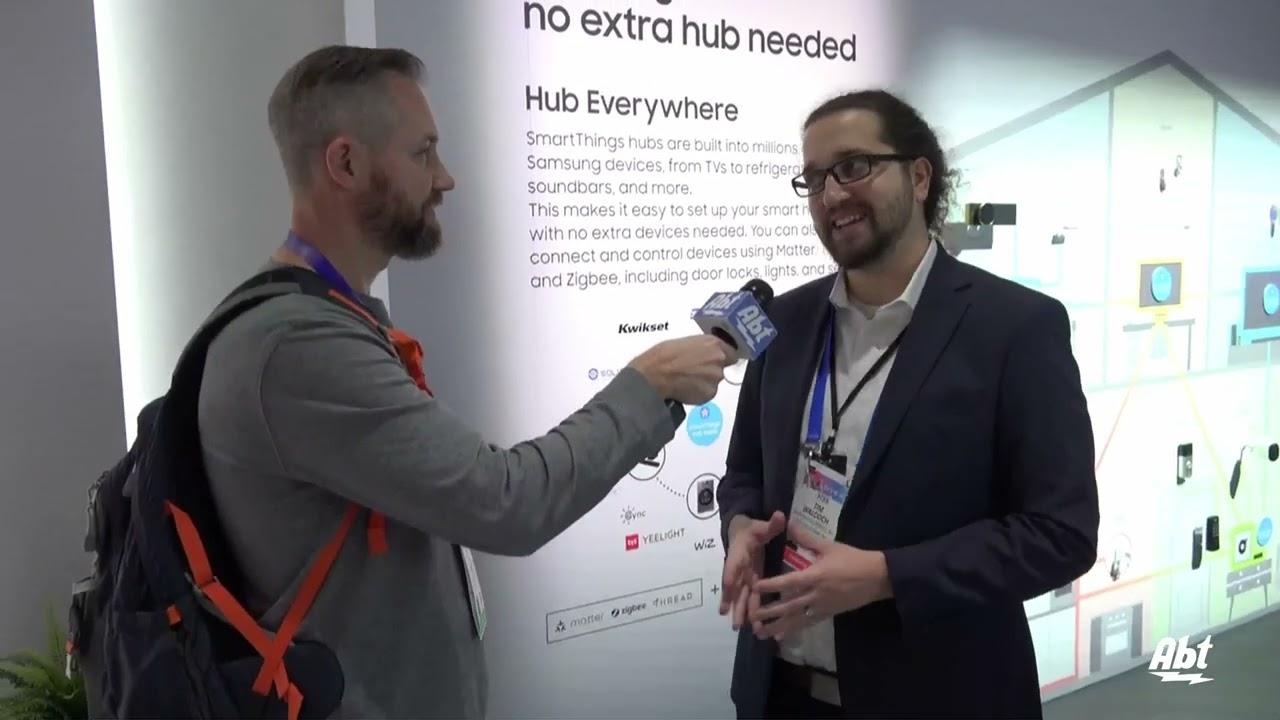
One of the top themes of CES 2025 is AI, and we're seeing that with Samsung's latest incarnation of the Hub. Here, the brand is using AI to make smart technology more accessible and easy to use. That's where the Samsung Hub steps in. Many smart devices "speak a different language", as Tim from Samsung CES 2025 mentions. But with the Samsung Hub, home implementation is easier than ever. Tim describes it as a "universal translator" between different devices, and Samsung tries to include a Hub in as many products as possible. Whether you have the Family Hub refrigerator or a Neo QLED TV, chances are that you're ready to begin your SmartThings journey. And with all of your devices "speaking the same language", it's easier than ever to start up with a smart home.
Samsung 3D Map View
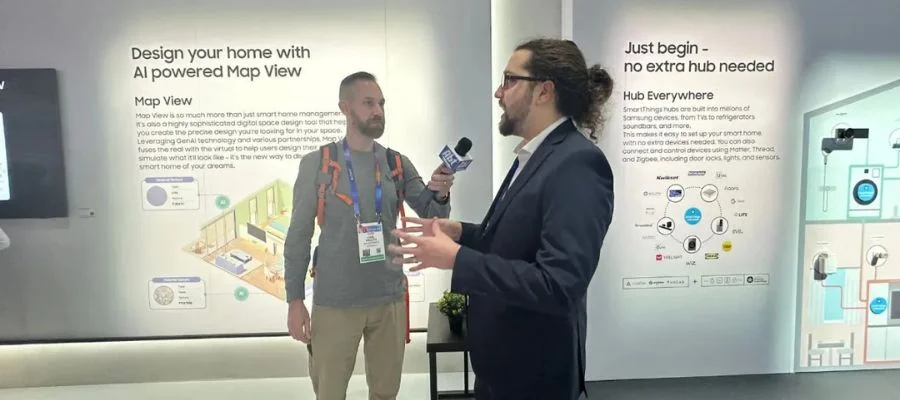
One of the most exciting things that our team saw at CES 2025 isn't terribly flashy or exotic: it's practical instead. Meet Samsung 3D Map View, a concept based around both AI and SmartThings. With 3D Map View, users can snap a photo of their floor plan to create a virtual version, then "place" their appliances and electronics where they belong inside their virtual home. No floor plan at your fingertips? Draw yours instead. The result is an easy-to-manage 3D picture of your space that you can easily adjust. Tap on your connected devices to manage them. It's all available through the SmartThings app.
So, why 3D Map View? Carl, one of our top technologists, went in-depth with Tim in the Samsung booth. "In traditional use cases, you're just looking at all of your devices in a list...this brings a much more visual, interactive interface...you get a much more visual, interactive, easy-to-use interface."
See more of Carl's 3D Map View chat with Tim in the video above.
Device Integration: Calm Onboarding
With some Wi-Fi-connected appliances and devices, connecting them together can be a hassle. That's why Tim walked Carl through Samsung's latest push towards device integration.
"When we think about the smart home, it can be kind of complicated and confusing. Samsung wants to make sure everyone knows that it's not complicated."
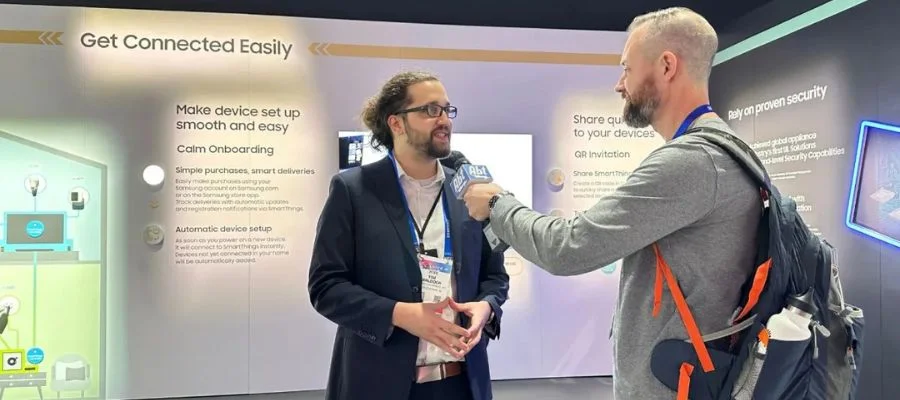
Tim showed the Abt team Samsung's new Calm Onboarding system. With Calm Onboarding, there's less pressure and an easier process when you add a new device to your smart home. Samsung SmartThings devices can connect via QR code or are automatically detected by the SmartThings application as soon as they power on. Instead of fiddling with your phone and the product for over an hour, new products just connect-it's that simple, all for an AI smart home that's made to be easy on the modern user. The next time you open your phone, you'll see your new product right there.
You can see more on Calm Onboarding in the section below's video.
Knox Matrix Protection
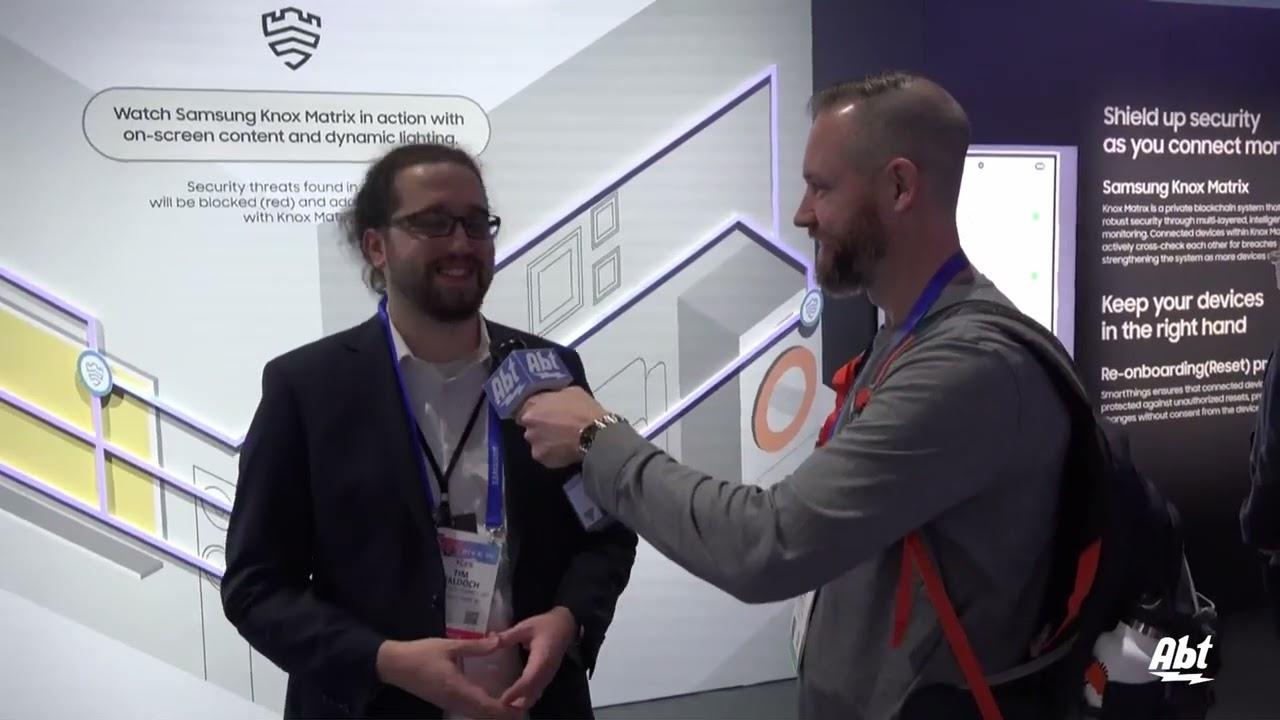
Everything's connected now, so there aren't any downsides, right? In some situations, each product in a smart home could be a weak link for a security breach. That's not true with Samsung and Knox Matrix protection. The goal here is to keep your home as secure as possible, and when Samsung SmartThings products connect, they form Knox Matrix and a strong, secure blockchain: in short, all of your devices keep each other safe.
Tim noted that "we're super happy with this service, and we continue to get certifications year after year on its security, and it's even a platform that's used by the U.S. Department of Defense."
More Energy Efficiency
So far, Samsung at CES 2025 has made it incredibly easy and fast to create your own smart home. But when you add many smart devices to your space, its likely to increase your energy usage. Would a home really be smart if it wasn't using its energy as efficiently as possible? That's why the brand has created an energy dashboard for the SmartThings app. From here, you can monitor the energy usage of all of the devices on your network, from the TV to your intelligent kitchen appliances. Samsung even suggests ways to save energy, like with automated routines or presence sensors. Those are real solutions to actual problems, and with the dashboard, you'll be one step closer to saving money on bills and saving the planet.
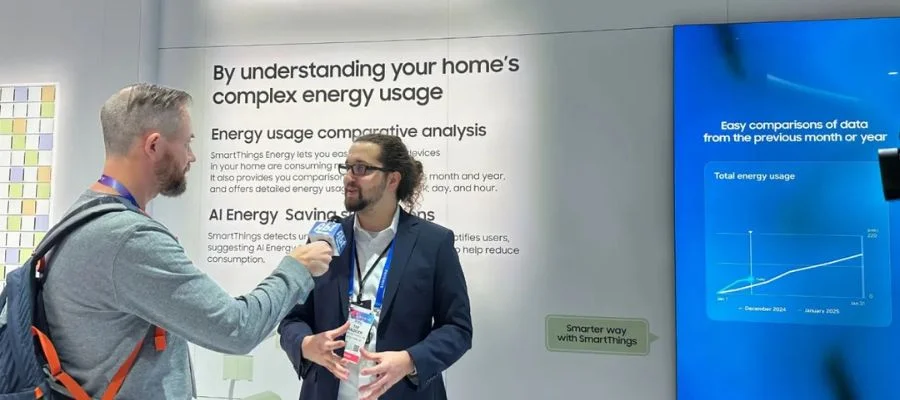
Samsung's latest presence-sensing technology is just one way to help lower your energy usage. Maybe it detects when you get home from the gym on a hot summer's day and will turn on the air conditioner. And when you leave, the sensor notices your absence and can turn it off. Alternatively, you can set yours to dim lights instead, or save energy in other creative ways. Presence sensors are designed to work with nearly all SmartThings products, too, ensuring that your smart home is ready to integrate a new, greener member.
Samsung at CES
While CES is always a fun space to show off robots, flying car concepts and other out-of-this-world designs, Samsung brought AI to the table in a powerful way this year: with AI for all. Their latest tech makes it easy to start and control your own smart home thanks to SmartThings, and we're excited to see more of what Samsung can do in 2025. Come back to the blog and our YouTube channel tomorrow to see more of our CES 2025 coverage!


