What Is an Art TV?

Art TVs: What Sets Them Apart?
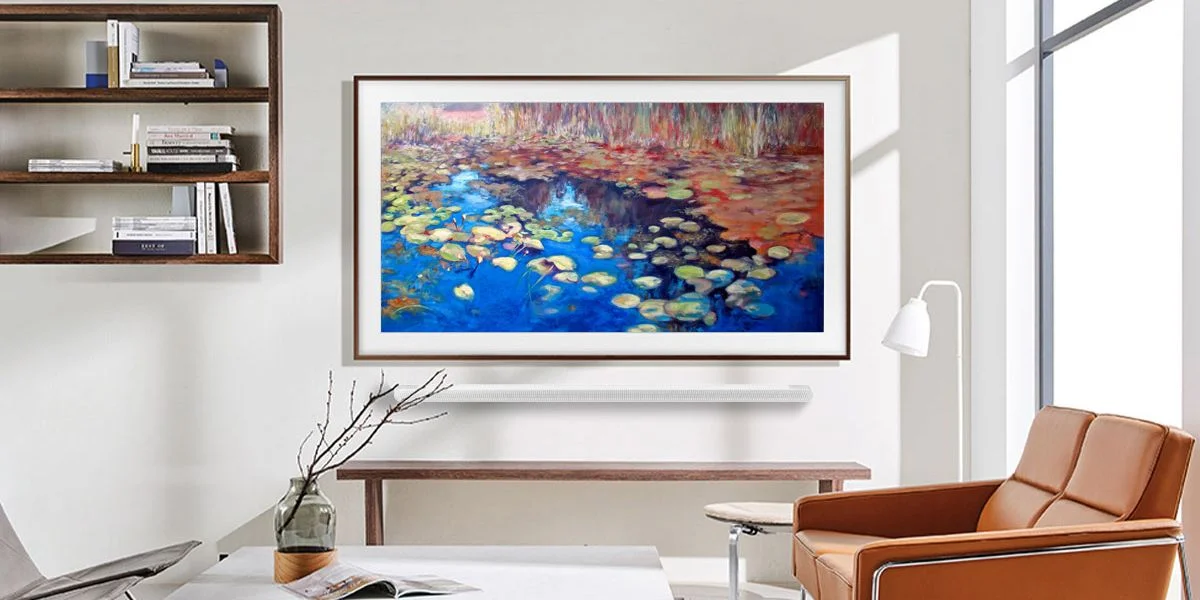
The Samsung Frame set a standard that nearly all other art TVs follow: these televisions are designed to be mounted on the wall, can feature a frame that fits your home's decor, sit close to the wall and are made to look as close as possible to a piece of art. That could be painting on canvas or a personal photograph, but the key is that the screen looks as little like a screen as possible, and more like a photograph or painting. There's been a drastic evolution in screen technology that makes an art TV unique over the years, and the question "What is an art TV?" now has a definitive answer.
Art TVs Are 2-in-1 Televisions
Art TVs are 2-in-1 TVs that double as a work of art when you're not watching the news, streaming shows and movies, catching up on sports or playing video games. When you're finished watching your shows or playing games, tuck the remote control in a nearby drawer and turn on the art TV's art mode to display your chosen artwork or personal photograph. To make things even better, many models are designed with the ability to add a frame, or easily swap them out. Choose a warm wood-style framed bezel, or opt for a metallic look that's very contemporary. The entire idea of an art TV is to make things look unique, artistic and yours, and a bezel adds to that feeling.
A Slim, Low-Profile Design
Unlike some screens that could be big and bulky, art TVs are crafted primarily with design in mind. What are art TVs? They're meant to be slim and fit as closely to the wall as possible, leaving little clearance-a design choice that's fantastic for any other TV, too. These can sometimes be set up on furniture as well, but the goal is to make them look like a piece of art that fits closely to the wall.
The Art Gallery
This is where the "art" part comes into the question of "What is an art TV?" Current art TVs have a gallery of imagery that users can explore, then pull their favorite professional paintings, 3D imagery and photographs to display on their screens. Choose from impressionist pieces, modern paintings, contemporary nature photographs, 3D works and more in the library. There is usually a fee to use the library's subscription, but with hundreds or thousands of works to choose from, it's well worth it. Look for an art piece that fits well with your space, furniture, walls and personality. And the best part? You can change it anytime you want. Swap from a classical work to a bright and colorful spray paint piece-all to show off different aspects of your home and your personality.
The Screen Itself
This is the info that television enthusiasts will want to know about. The latest and greatest art TVs are designed to prioritize their canvas-like look with aspects like a matte finish, anti-reflective screen and the ability to blend in with other artwork. That's different from many other modern televisions, which hold peak brightness, deep blacks and great contrast as some of the most important aspects to strive for. Glossy, bright screens clash with the anti-reflective coating that make art TVs so unique, and peak brightness and deep blacks can make paintings and photographs look unnatural. Finally, many art TVs are edge-lit, meaning that the LEDs that illuminate the screen are arrayed around the edge (or frame) of the television itself. That's instead of a fully-lit panel that you'd find on a classic LED TV. The result is that art TVs can look dimmer than you'd expect from a classic television, something you'd notice when it's not in art mode and you're watching in a lit room.
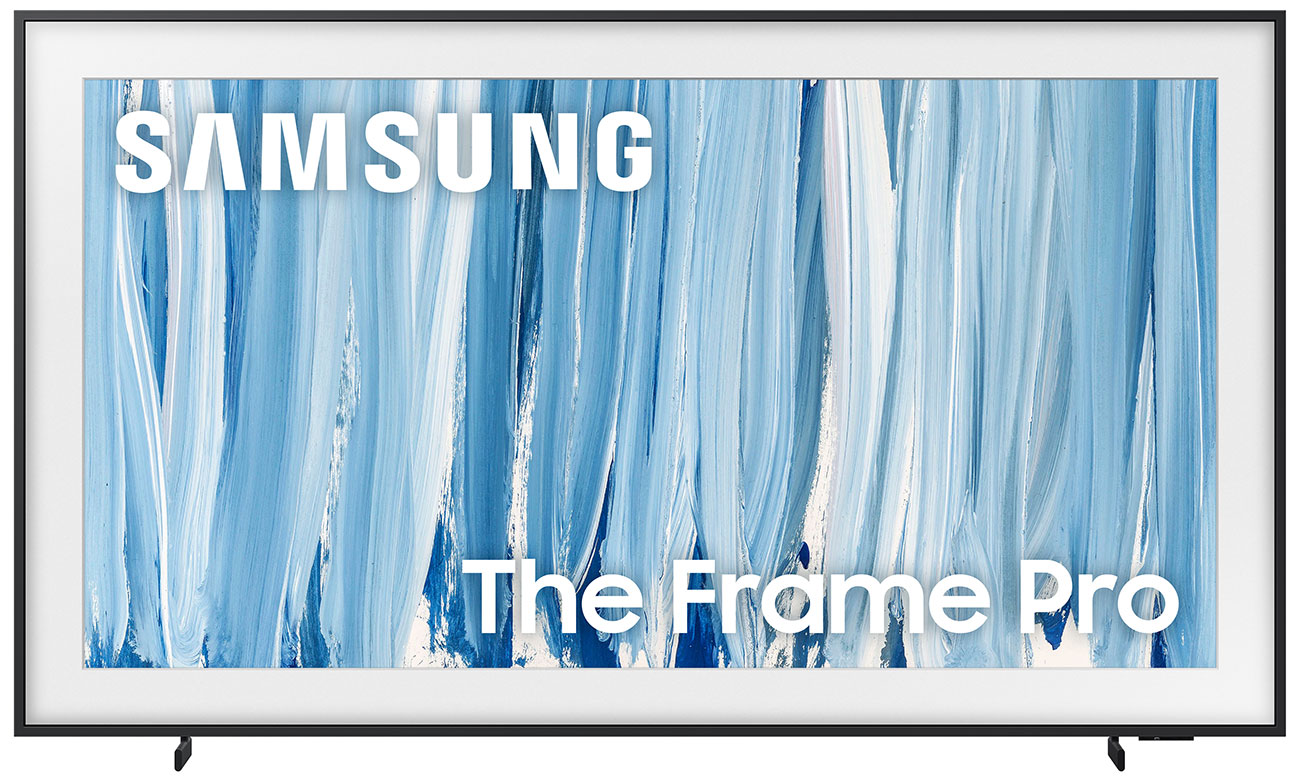
Newer TVs like the Samsung Frame Pro are working to merge the technologies to bring viewers the best of both worlds. Their latest art TV uses Neo QLED tech and mini LEDs for edge-lit local dimming, a departure from other art televisions on the market. If you're focused more on having the art aspect of an art TV in your home, you won't mind having a classic edge-lit TV. But if you're searching for the brightest possible option, look for new models and the panel/lighting technology they use to create images.
Wireless Capabilities
No matter how canvas-like your art TV is, a tangle of cords hanging down from your mounted TV is a dead giveaway that 1. This isn't a piece of art and 2. This is a television with some ugly cords that interrupts the flow of the room. That's why it's crucial to hide cords: the idea is to keep your art TV looking like a painting or a framed photograph. There are a few ways to do that, and our experts go over ways to hide cords in our Learn Center. That being said, more and more TVs are going for wireless functionality. While TVs will always need a power cord, devices like the Samsung One Connect Box are the solution to plugging in multiple HDMI cables, an optical cord and more. The OneConnect Box is the place where you plug in gear like soundbars and speakers, favorite video game consoles, Blu-Ray disc players and more, and the Box broadcasts the signal across the room to your TV. LG has the Zero Connect Box as well: this tech is becoming more and more popular across different brands, and it's a great way to keep your art TV looking as clean as possible.
What Isn't an Art TV
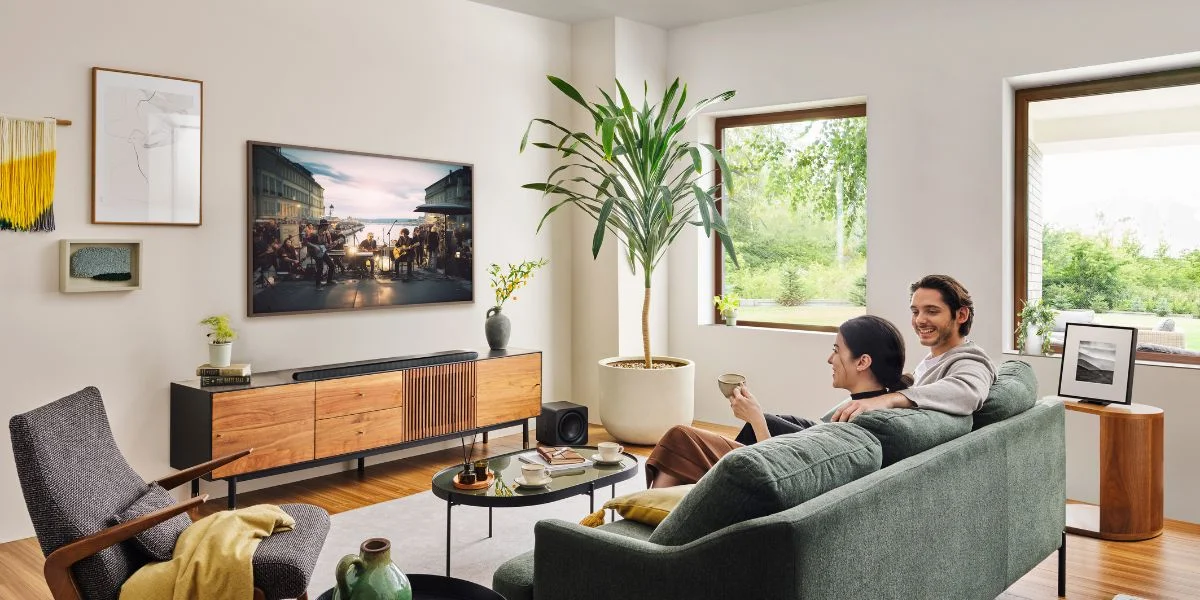
The popularity of art TVs has led to more and more demand, and one of the easiest ways that TV manufacturers have been able to provide that feature has been with an Art Mode on a regular television. You may own an OLED, a QLED, a Mini-OLED or just a classic LED TV-more and more brands are integrating an Art Mode into their TVs. That gives users access to the gallery library of paintings and artwork you'd find on a classic art TV ... without the classic glare-free and edge-lit treatments you'd find on an art TV. The result is a TV that displays paintings and photos, but it's still very clearly a television-and without any other art-forward features you'd find in an art TV. It may have a large bezel or sit on top of furniture: even with an Art Mode it's not an art TV.
Now, if you're more interested in a TV that has top-tier brightness, great black levels, a full OLED, QLED or mini-LED panel, HDR and just about everything a modern screen can offer you, that may not be an issue for you. You can just have fun with the perks of Art Mode, while enjoying your television for its primary use-watching TV. But we wouldn't call every screen with an Art Mode an art TV.
Which Is Right for You?
So, what is an art TV, and is it right for you? We've discussed that art TVs are televisions that are made to look as much like artwork as possible, whether that's with the help of anti-glare or matte technology, an edge-lit LED panel or a combination-as well as a gallery of artwork to choose from. Then there are other television technologies that aim to bring you the deepest blacks and brightest colors-aspects that don't lend themselves to the look of authentic artwork, depending on what you're hoping to display. It's hard to reconcile the two differences, but some brands are trying-and getting closer with each new model. So, do you want a TV that brings you artwork, or one that brings you the most lifelike entertainment? That's for you to decide. If you want the best balance of both, look for the latest models, or "Pro" versions, like the Samsung Frame Pro.
Art TVs aren't a trend, either-these are here to stay. More will be coming from different brands soon, too, so get excited for new technology and great innovations for a TV that could soon be mounted on the wall in your living room. If you're not sure or still feel like you still don't know "What is an art TV?" our experts can help. Call us at 800-860-3577, check out our guide to televisions or come see one of these in person on Abt's showroom floor.
Art TV FAQs
-
To make your art TV look like art, find the art television's art gallery and start browsing through the existing collection of photos, paintings, nature photos and more. To make it look more like art, search for settings that either reduce brightness and increase warmth, then pair it with a frame that matches your home's aesthetic.
-
Art TVs are televisions that can act as both art when they're off and full TVs when you need them to. There's no empty black rectangle mounted to the wall; instead, art TVs are active pieces of decor in your home.
-
At the time of publishing, these are the steps to add your own photographs and art to the Samsung The Frame TV. You can use the SmartThings app, tap Art Mode, then add your own photos. Alternatively, use a USB drive and connect to the One Connect Box, then navigate to the TV's Art Mode, choose My Collection, select your USB device and save your images to the television's own internal storage. For the best experience, make sure your photos are cropped to 3840 x 2160 pixels.