
THE OFFICIAL BLOG OF ABT


How To Choose An Air Conditioner


Now that we're in the thick of summer, we've had more than enough time to break in our air conditioners all over again. With all the heat and humidity June brought us, you should know by now whether or not your appliance is performing up to par. Noticing hot spots at home? Starting to break a sweat when lounging around your space? It may be time for an upgrade. We understand how hard it can be to pick a unit when there are hundreds of options. Keep reading to learn more about these machines and what's most important to look for, so you know how to choose an air conditioner next time you shop at Abt.

What Type Of Air Conditioner Is Best?
One of the best ways to narrow down Abt's wide selection of air conditioners is to decide which type to invest in. We've broken down the four most popular options so you can learn more about what each has to offer.
Window Air Conditioners
Window units are one of the most popular air conditioner options, as they are simple to install and lower in cost. These air conditioners reside in the opening of a double-hung window and sit on the frame. Once your unit is resting on the sill, all you need to do is close the window to secure the air conditioner in place. This completely eliminates the need for ductwork. These air conditioners work great for those who live in an area with moderate temperatures. They're also perfect for those who reside in a small home or apartment.
Once autumn and winter come, you can also remove your unit from the window for energy conservation. However, this is a recommendation, not a requirement. So how do these machines work? Window units take the warm or hot air from your home and run it through a refrigerant/cooling coil before it blows back into the room. The cooling coil also has the power to pull moisture from the air too. That moisture is then turned into dew that's funneled outside. While window air conditioners are fairly easy to maintain, they do not have the capacity to cool larger spaces like multiple-room homes. Also, their location in your window allows them to block natural sunlight.
Wall Air Conditioners
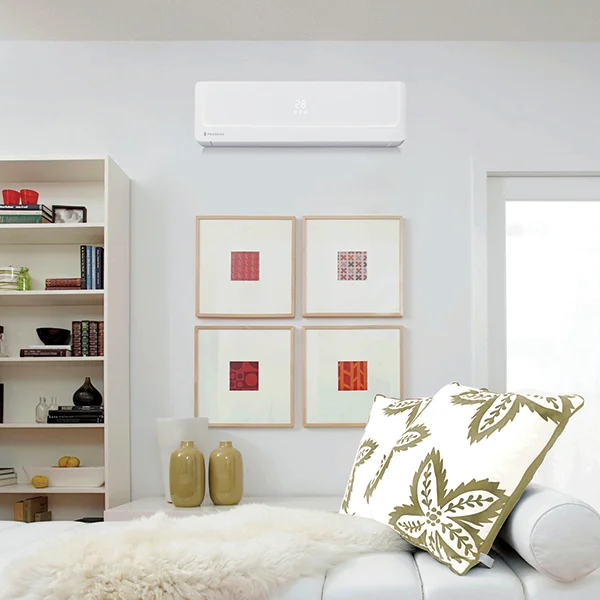
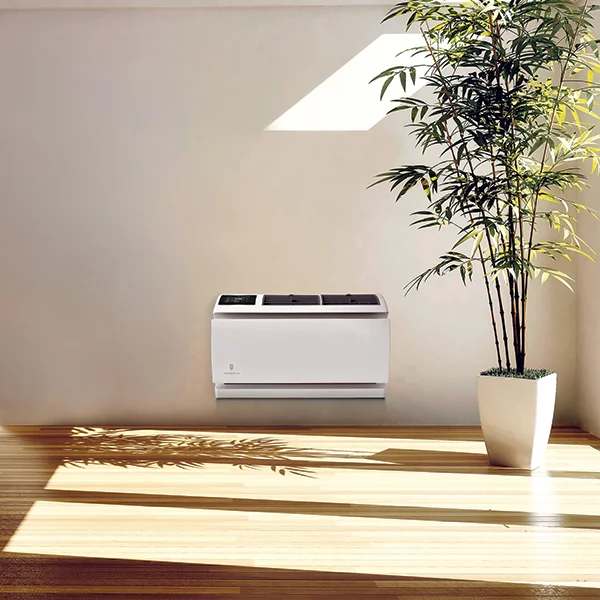
Wall units are more permanent. You must attach them to a metal sleeve installed in the wall and slide them into an A/C chassis. Because these units require an opening cut into your wall, installation can add much more to the initial cost of your air conditioner. If you purchase a larger wall unit, you may even need a dedicated 220-volt line. It should be noted too that not every model comes with the exterior metal sleeve needed for installation. These accessories can be purchased separately and they cost anywhere from $90 to $260, depending on the model and brand.
On the bright side, wall air conditioners do not call for the sacrifice of your window. You also don't need to remove them during off seasons and they don't block sunlight. In fact, wall units are much more efficient than standard window models. Wall units can also be bought as a PTAC or a Packaged Terminal Air Conditioner. PTACs can both cool and heat your home and they stay in-wall year round. No need for two separate appliances.
Portable Air Conditioners
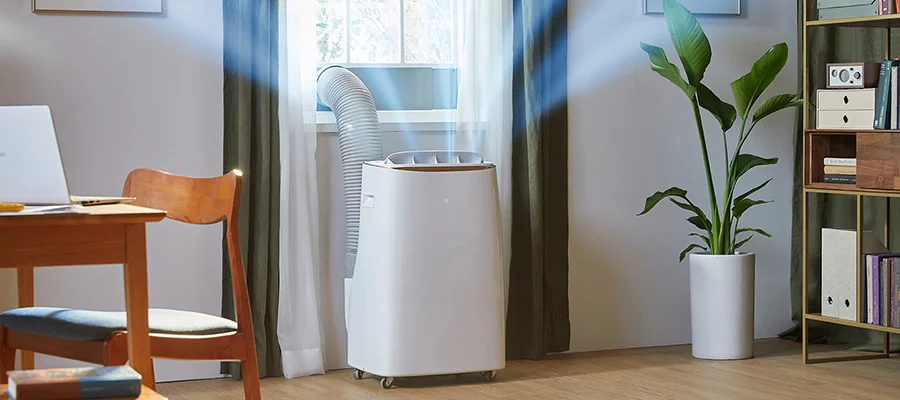
Portable air conditioners share the same function as any average air conditioner, only they're mobile. They often feature wheels that allow the appliance to be rolled from room to room. They also come with a tube or hose that exhausts the heat from your home through an opening in the wall or through a window. Note: you will have to reinstall this tube each time you move the unit. Just like window units, they do not require ductwork and they are completely self-contained. If installing a unit in your window is not possible (this often applies to renters), portable air conditioners are a fantastic alternative.
Just like any other appliance, portable units have their benefits and drawbacks. They're simple to store during cold months and they are the most flexible air conditioning option out of all types. They also remove moisture from the air, but as they are unable to drip outside, they often utilize water tanks that require manual emptying. Even if you invest in a self-evaporating model, hands-off operation isn't quite possible; you'll just need to empty it less often. Some units, however, are compatible with a drainage hose (purchased separately). Portable air conditioners tend to be noisier, less energy efficient and they cost more than window units.
Central Air Conditioners
Central air conditioners can cool whole homes, while the appliance sits in one single location. Because of how powerful these units are, we recommend them for larger households, not small apartments. These appliances pump through the vents and ducts in your house in order to circulate and balance cool air in every single room. Often, homeowners will combine their central A/C units with a furnace system to enjoy both cooling and heating.
Some central air conditioners also feature zone controls. This calls for thermostats in each room that allow you to adjust and control the temperature in each individual space. Even better, you can regulate these systems from a single control panel. This is the same versatility that's offered by portable and window units. It's also extremely helpful in sunny rooms and poorly insulated rooms. While the initial installation fee can run quite expensive, central air will save your energy costs down the line. It should also be noted that these units require regular maintenance for optimal performance.
What Size Air Conditioner Do I Need?
Once you've chosen a type of air conditioner, it's time to consider size. If you choose a unit that's too strong or large, you'll waste power you don't need to use by overcooling. If you choose a unit that's too small or weak for your space, you'll be continuously running the machine in an attempt to cool your home. This frequent cycle will inevitably raise your energy bills and cause unnecessary wear and tear on your appliance. While opting for something a bit larger is the safest way to go, there are plenty of details to consider when choosing the size of your next air conditioner.
The biggest player in your decision will be the size of the space or room you're trying to cool. The general rule of thumb is: for every square foot of space, your unit should provide 20-25 BTUs of energy. The square footage of a room can be found by measuring both the length and the width of the room and then multiplying those numbers. Take your final square footage and multiply it by 20 and you will have the minimum BTU measurement your ideal air conditioner should offer. But this value is just something to begin with.
Additional Factors For Air Conditioner Size
You should consider investing in a larger or more powerful air conditioner if:
- You have high ceilings. Rooms with higher ceilings (typically 8 feet or higher) have more space, which means your unit will need more cooling capacity to handle the volume of air. If you don't wish to splurge on a larger air conditioner, you can also consider investing in a ceiling fan to assist with air circulation.
- You live with a lot of people, or you have a high-traffic home. If you have a large family or entertain guests a lot, you may need more cooling power as more and more bodies in one place will generate more heat.
- Your home gets a lot of sun. Whether you live in a hot area like Arizona or Florida, or you have a lot of windows that face the sun, this exposure will require more cooling power.
- Your unit is going to be located near the kitchen. Kitchens are naturally high-traffic rooms, plus they're full of heat-generating appliances like ranges, cooktops and microwaves. Anyone who cooks at home knows how warm the room can become once you start making your next meal. Getting a bigger unit to combat this is a smart choice.
- Your home is not well insulated. Insulation is the material that's housed between your walls and the exterior of the home. It's responsible for creating a barrier from the elements and retaining heat inside. Homes that aren't insulated well tend to fluctuate in temperature much more easily than other homes, so a more powerful system may be needed.
On the flip side, you may not need a super powerful air conditioner if your home gets a lot of shade. If you're living in a wooded area with a lot of trees or a stereotypically cloudy location like Washington, you won't have to worry about the sun creating additional heat in your space.
Pay Attention To A/C Energy Usage
Every air conditioner on the market has an EER, or an Energy Efficiency Rating. The general consensus is that the higher the rating, the less money spent on electricity bills. Therefore, investing in an energy-efficient model can reap monetary benefits. There is also a unit of measurement called SEER, or a Seasonal Energy Efficiency Ratio. The SEER measures the cooling output of the appliance while directly comparing it to the appliance's energy consumption.
Same as EER, the higher the ratio, the more energy efficient your air conditioner is. The U.S. Department of Energy requires that residential air conditioners have a minimum SEER of 14, but you can find models with ratings as high as 25. Air conditioners can also be Energy Star certified, meaning the unit meets strict energy efficiency guidelines established by the EPA. Energy Star-certified appliances save you energy and money on utility bills. Just look for the little blue box with the white star as you browse.

Additional Air Conditioner Features
While type and size are two of the most important decisions to make when purchasing a new air conditioner, there are several smaller, more specific features to look for. Some users seek out more versatile appliances, so if this sounds like you, take a look at our list. We'll briefly review some options if you're interested in narrowing down your selection further.
- Airflow: Air conditioners aren't necessarily designed to direct cold air where it's needed most. That's why some models have taken the extra step of providing adjustable louvers or oscillating vents. The louvers are the movable slats in the front of the machine that allow you to direct airflow horizontally or vertically. Oscillating vents, on the other hand, refer to an internal motor in the unit that automatically moves the airflow from side to side. Having either of these options is great if you have wall or furniture obstructions in front of your unit.
- Amperage: Most homes have a circuit breaker, and most rooms within the home have circuits rated for 15 total amps of electricity. With this in mind, take note of your air conditioner's amps, typically ranging from five to 15 or even more. Larger units with higher amp ratings can possibly trip the circuit breaker. If you still want to opt for the larger unit, you may need a dedicated electrical line to prevent this.
- Check Filter Light: Some air conditioner models come with a check filter light. This will notify you if the filter needs cleaning or complete replacement, making appliance maintenance much easier.
- Dehumidification: While most air conditioners remove moisture from the air, some provide a dehumidification measurement. This estimates exactly how much moisture is getting removed from the environment. You can typically expect one pint to ten pints of water to be collected. If you live in a humid area, investing in a unit with a high dehumidification measurement is a smart choice.
- Plug Type: Before bringing an air conditioner home, knowing the plug type of your unit and your home is vital. Most units feature three-prong, 125V plugs. Larger units may have 250V plugs or an even higher voltage. If you wish to invest in a larger air conditioner but don't have the plugs to support it, you'll need to contact an electrician to upgrade your circuits.
- Remote Control: Most A/C units come with knobs and/or buttons on the front of the appliance. Other air conditioner models come with a remote control. Remotes offer the convenience of adjusting the airflow and temperature without having to move or disrupt your activity. This is especially handy after getting into bed for a good night's sleep. If you browse the smart air conditioners at Abt, you may even find models that can be controlled with smartphone apps or voice assistants like Amazon Alexa.
- Sleep Mode: Some air conditioners feature Sleep Mode, which is a low-power setting that helps regulate the temperature of a room, allowing you to stay comfortable and sleep throughout the whole night. Typically, this mode gradually increases the temperature by 0.9-1.8°F every hour or a maximum of 5.4°F per hour.
- Timer: If your air conditioner comes with a timer, you'll be able to set the unit to power on or off at a specific time, even if you're not home.
This is just the beginning of all there is to know about air conditioners. Looking to become a pro before you take your unit home? Explore our air conditioner buying guide, which is packed full of information guaranteed to help you make the best decision for you and your space. Any additional questions you may have about air conditioners can be answered by our HVAC experts at 800-860-3577.


