How To Get Great TV Sound

Upgrade your entertainment space with boosted audio from a soundbar, home theater system or wireless speakers. Which is best for you? Find out below.
How To Get Great TV Sound
Whether you love watching live sports, streaming TV shows or playing action-packed video games, the visuals are only one part of the television experience. While screen technology keeps getting better with 4K and even 8K resolution, TV sound is just as important. And it's a crucial element to feeling immersed in your entertainment. When it comes to expanding (or creating) your audio system, you've got options. Here, we'll talk you through the audio equipment that's best for different users.
Soundbars: Popular, Budget-Friendly & Rich Audio
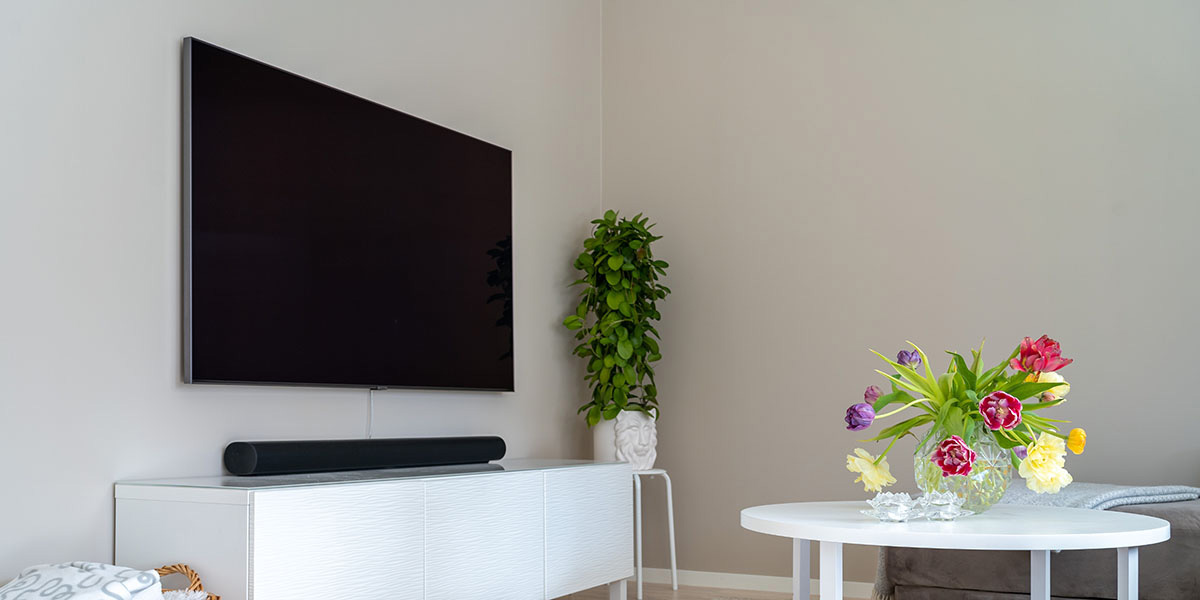
Soundbars are the most popular way to enhance your home's entertainment audio setup. Unlike a multi-speaker setup, soundbars are usually a one (maybe two) piece affair. In the classic setup, all you have to do is plug a soundbar into the screen to get great TV sound. Just plug and play for better quality and more volume in one slick package. Soundbars are more than just giant speakers, though: these TV sound devices aren't all the same and they can be complicated. You'll want to make sure you buy the perfect pick for your home. Some soundbars come with separate subwoofers included—these are a great choice for those looking for extra bass. Others are extra wide to make room for more channels, while some are small to better fit smaller TVs and homes. Whatever you're looking for, you should consider how many channels you need from your soundbar. A 2.1-channel soundbar has a left and right speaker as well as a subwoofer. You'll want to go further: the higher the first number, the more speakers there are in your soundbar. The second number reflects how many subwoofers you have. And if there's a third number, it mentions how many upward-facing drivers there are. The more speakers and soundbars there are, the more immersive your TV sound system should be.
Home Theater Systems: Cinema-Level Sound
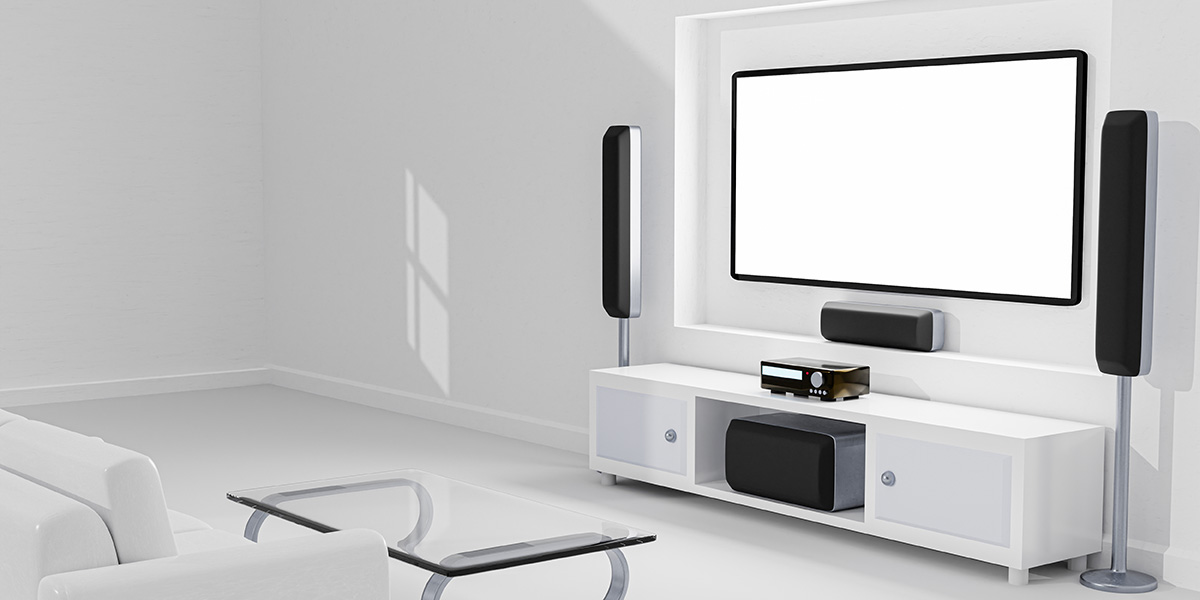
If you're hoping to get great TV sound, you can't get any better than complete home theater systems. A pre-packaged home theater system consists of several separate speakers and a subwoofer that users position individually throughout their space. Sometimes an AV receiver comes included as well. With speakers placed properly, movie-watchers should be in the "sweet spot", or the center of where the TV sound "lands". With the surrounding speakers and subwoofer working in harmony, the result is a surround-sound system that envelops listeners completely. Whether you have your own home theater complete with comfy recliners and a projector or are installing audio components in your TV room, home theater systems are a good option for more people than you might think. These systems are especially good for those who want to build their own TV sound setup while keeping costs relatively low (compared to what you might pay for separate speakers and subwoofers). When everything is installed, you'll hear the enveloping roar of audio that you'd normally only find in a theater.
Surround Sound Speakers: Listening in 360 Degrees
If you're hoping for a larger-than-life audio sensation that swallows listeners whole, you'll want to get great TV sound with surround sound speakers. Some home theater systems and even some soundbars offer different versions of surround sound. Soundbars sometimes offer what's called "digital surround sound", where soundwaves bounce off of walls and ceilings to come at listeners from multiple directions. In real, physical surround sound, listeners are encircled on multiple sides by physical speakers. To be called true surround sound, you'll need a system that has at least five channels: the most common are 5.1 and 7.1. In larger rooms, you'll want to go for more channels and thus, more speakers. Listeners will even have a speaker positioned behind them in many cases. Now, do you need a surround sound system? If you want great TV sound, it's definitely something to consider. Especially if you love watching action-packed movies, tuning in to sports and playing video games. In these realms, sound effects have a real effect—missing them means you're missing out on some of the best parts of your entertainment.
Subwoofers: Added Depth & Bass
Subwoofers are a necessity for anyone hoping to get great TV sound, or great sound in general. Subwoofers are designed to highlight the low-frequency bass in whatever you're listening to. These sonic boomers often look like boxes or rectangles and tend to be larger than classic TV sound speakers. Large drivers are able to produce lower frequency tones, often going as low as 20-30Hz. And with lower frequencies, you'll be feeling things more than hearing them for an experience you won't find with any built-in TV sound speaker. With a proper subwoofer, you'll hear the rumble of a car engine, explosions of special effects, and a richer soundscape than speakers alone can deliver. Keep in mind that subwoofers need to be placed in the right spot to deliver the best sound. You'll need to experiment with placement, moving it around until things sound the best from your seating space. Experts note that placing a sub in the corner can bring extra volume, though setting one right up against a wall will give a rough, scratchy sound instead of smooth bass. Once you find the perfect spot for your subwoofer, you're one step closer to great TV sound.
Wireless Home Speakers: True Convenience
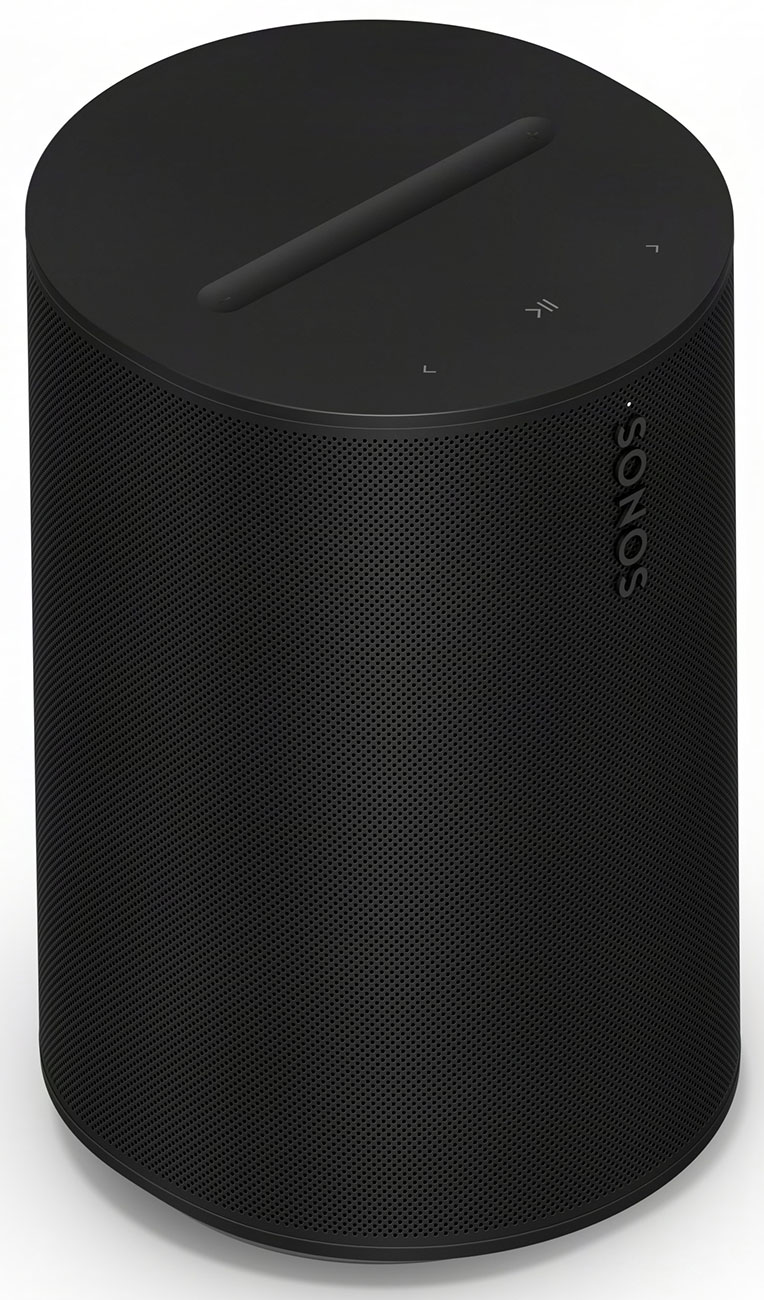
If you're looking for an easier approach to improving your TV sound, consider the flexibility of wireless speakers. Instead of using optical cables and HDMI cords, these next-gen speakers communicate with your television via systems like Wi-Fi or Bluetooth. And just like a home theater system, you can pick out multiple speakers and position them throughout your space. Depending on the speaker, it may not be designed to work in a group to create multiple channels. However, brands like Sonos create high-tier multipurpose speakers that can function both on their own and as a member of a multi-channel system when organized correctly. When shopping, consider your options as well as what you want out of a wireless speaker. And no matter what smart speaker(s) you pick, they'll all be versatile and come packed with features. Move them around your home for different occasions—many speaker systems support multi-room audio, especially when they connect via Wi-Fi. With speakers in the living room, kitchen and dining room, you'll be able to create the perfect environment for a holiday meal. And when it's time to watch the season's best blockbuster from home, reposition your smart speakers for TV sound in your entertainment space and enjoy the film.
Bookshelf Speakers: Made for the Audiophile
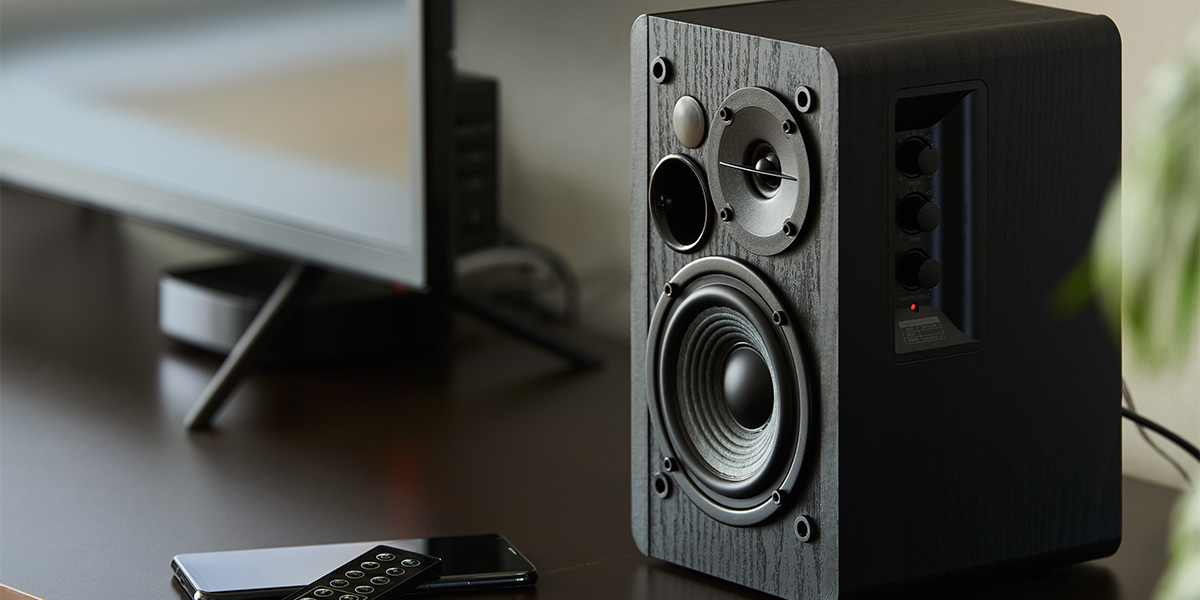
If you're looking for audiophile-quality sound, a soundbar or pre-packaged system likely isn't going to do it for you. Turn to classic bookshelf speakers instead. A pair of these tends to deliver high-quality TV sound and they're larger than many of the other options, but not as huge as the supreme floorstanding speaker. There's a broad range of prices and features here, offering listeners a bevy of options. For example, some are made specifically for TV watching, making them the perfect pick for TV connection. Meanwhile, others are tailored toward listening to music (a great choice for those who love their turntable and record collection). But our goal is great TV sound. A pair of stereo bookshelf speakers are a great place to start, and you can often expand upon them to create a well-tailored sound system complete with a separate subwoofer, floorstanding speakers and more as time goes on. Before choosing yours, keep in mind that these aren't meant to sit on the ground. Instead, they should be at "bookshelf" level, like on a table or shelf, to bring the sound directly to a listener's ears. Equip your new bookshelf speakers with a proper AV receiver for pristine sound quality.
Smart Speakers: Intelligent Functionality
While traditional speakers can bring a strong level of fidelity to anything you watch, you may prefer some smarter abilities and extra convenience. Using smart speakers as your main source of TV sound ushers in an element of interactivity to entertainment. Smart speakers are most often equipped with voice assistants such as Amazon Alexa or Google Assistant. With that in mind, you can often use these to control connected television settings with your voice. Simply ask for lower or higher volume, move between audio modes and search for content with just a few words. Before purchasing, it's a good idea to check whether your TV can connect, as many need to be able to connect via Bluetooth. There are some downsides here, too. Since your speakers will be connected using Bluetooth, you can run into issues with latency. But the conveniences are unbeatable—the smart speakers also offer integration with streaming platforms, letting you play music, podcasts and more. If voice control is a necessity for your improved TV sound system, connecting to smart speakers might be the best choice for you.
Cords & Connections: Surge Suppressors, Line Conditioners and HDMI Cords
The audio equipment you choose is important, but none of it works if it isn't powered or connected correctly. Make sure you have all of the cords and connectors you need, like surge suppressors. Surge suppressors (similar to surge protectors) protect your speakers from power spikes and surges. Audio equipment can be particularly sensitive to power, so connecting speakers directly to the wall is a danger, and it's better to protect your investment in audio equipment by hooking your equipment up to a surge suppressor. Next up, line conditioners. Power line conditioners are designed to boost the quality of the power that your speakers, subwoofers and other audio equipment receive. It can also protect from power surges, and correct distortions and electrical noise. The result is power that's perfectly conditioned for your TV sound system. Finally, there are HDMI cords. These are popular and common, and often connect one component to another, like a TV to a soundbar or a TV to an AV receiver. HDMI cords are renowned for high data transfer rates and high-quality data delivery. When you send sound from one source to its destination, it'll arrive quickly and with little degradation. That being said, there's a vast array of HDMI cable quality. And while not all instances require a high-quality HDMI cord, if you're trying to get the most out of a multi-speaker array in your home entertainment system, you should spring for a high-quality HDMI cord. Look for a speedy model that has a high bandwidth of at least 18 or 48GBps.
When it comes to giving your TV sound system a complete overhaul, the right audio equipment makes a big difference. And everyone has their own preferences: if you're hoping for better volume and sound quality, try a soundbar. If you'd prefer a more enveloping experience, a home theater system or surround sound speakers will place you in the middle of the action. And if you're a little more particular, a wireless speaker or smart speaker system may be the right solution for you. When choosing, don't rush—consider your entertainment space, preferences and desired audio features and select the speakers and subwoofers that fit your vision of exceptional TV sound. If you still have questions about finding the right audio configuration for your space, give us a call at 800-860-3577 or stop in our Glenview, IL store. And for a personalized experience, you can schedule an appointment for custom audio installation for your TV sound system. Our in-house experts will make sure that you have your dream audio system purchased, installed, and functioning just the way you're hoping. Pick out a movie, grab some snacks and lounge on the couch, because your next film is going to be a good one.
Q&A Summary
How do you get the best sound quality from TV?
Choosing to add a soundbar to your TV is one of the ways you can get the best quality from your TV sound. Soundbars bring more volume and often better sound quality to your listening experience. For better lows, consider adding a soundbar with a subwoofer. You'll hear better bass and great sound effects.
How can I hear my TV better?
Apart from adding a soundbar for boosted volume and sound quality, make sure your TV sound settings are tailored to meet your needs. Many recent televisions have sound settings that can be fine-tuned, from EQ preferences to different sound modes like Filmmaker mode. Sometimes, simply turning the bass down will make things feel less muffled.
Why are TV shows so hard to hear?
TV shows could be hard to hear from your television for many reasons, but the main one is likely because of your TV itself. As televisions have grown slimmer and slimmer, they've had to sacrifice the extra room that high-quality speakers would normally take up. It's just one of the reasons why soundbars are so prevalent. Some also blame poor mixing and modern microphones.