How to Keep Food Fresh Longer

We put food and beverages in our cabinets and refrigerators daily, but how can you ensure that your food stays fresh as long as possible? Check out our proper food storage tips and find out.
Getting The Most Out Of Your Groceries
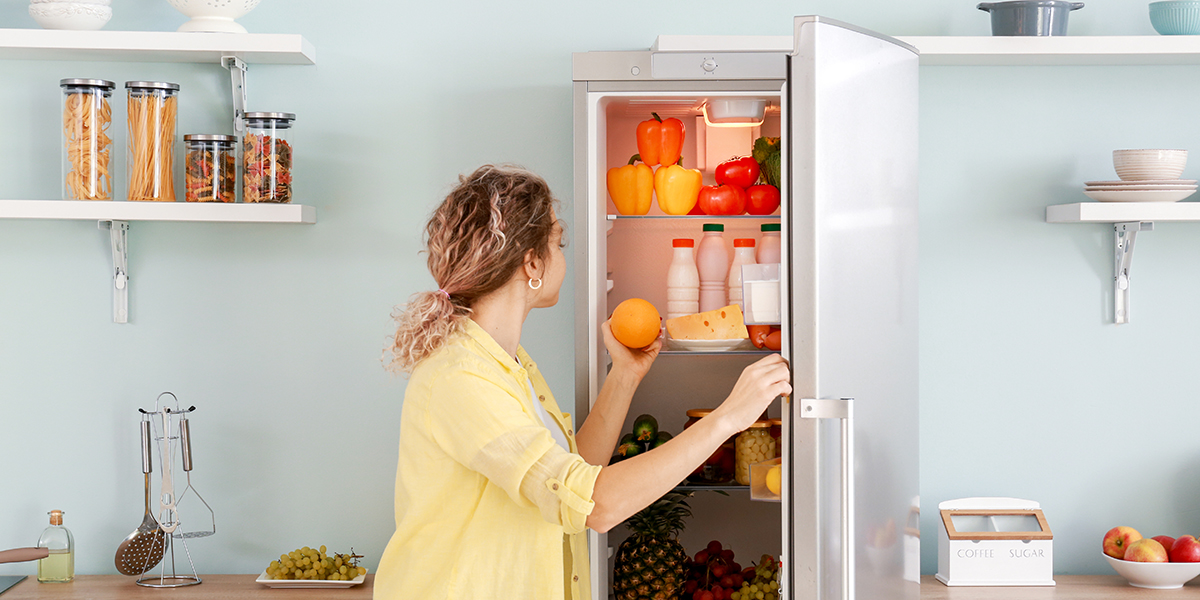
So you've arrived home from your majorly successful grocery trip. What now? You have all this fresh food, which means it's time to store it. What should be on the counter? What should be in the cabinet? What should go in the fridge or freezer? How do you store different foods? Do you wrap an item or put it in a container? These are the questions you should be asking yourself as you organize your kitchen. And if you're not, you may just be putting food away as quickly and conveniently as possible. While this saves time, it's likely that your system isn't saving you cash. By not learning proper food storage methods, your meals and snacks will spoil faster and inevitably waste your money. Interested in working smarter? Let us tell you how to keep food fresh longer with proper food storage so you can continue eating and enjoying your produce and leftovers as safely as possible.
Maintain Proper Refrigerator Temperature & Settings
The refrigerator is the most helpful home appliance when it comes to keeping groceries fresh with proper food storage. That's why keeping it operating at peak performance is so important. The temperature your fridge should be set at for proper food storage is 40 degrees Fahrenheit or colder. If your model includes a freezer, then be sure to keep the freezer at zero degrees. If your refrigerator temperature begins to creep up above 40 degrees, you are increasing the possibility of bacteria growth. While modern refrigerators come with a built-in thermostat, for proper food storage, we recommend investing in an appliance thermometer for the most accurate reading. Plus, if the power ever goes out in your home, you'll still be able to track the temperature of your food when your appliance stops working. What if you set your refrigerator to 40 degrees, but it's not holding? There are several reasons why your fridge temperature could be fluctuating, whether it's a broken thermostat, dirty condenser coils, blocked air vents or some other culprit. Check out our DIY fixes for the most common refrigerator issues to get your appliance under control as fast as possible. It's also important to note that overfilling your refrigerator can inhibit cold air circulation and sometimes lead to temperature fluctuation. While there's nothing wrong with a nice, full fridge, an over-crowded fridge should be avoided at all costs to prevent food spoil.
Create Refrigerator Zones
While your refrigerator works on maintaining a single temperature, it's still true that different spots inside the fridge will be colder and/or warmer. For example, the back and the bottom of your kitchen appliance will be the coolest, while the door will be the warmest. Why? Because the door is the component of the fridge that gets opened the most, exposing it to the warm, room-temperature air in your home. With this in mind, proper food storage will require you to pay attention to which foods you want to preserve longer, or what foods go bad quicker, like milk and other dairy products. These may be the snacks and ingredients you want to keep in the colder spots. That's why the crisper drawers in most refrigerator models are lower within the appliance, as vegetables and fruits expire faster. Other foods like condiments, sauces, dressings and beverages typically have a longer shelf life, which is why proper food storage calls for placing them in the door.
Understanding Expiration Dates & Food Labeling
All packaged food you purchase at the grocery store will have an expiration date listed somewhere on the product. First, it's important to note that expiration dates refer to the quality of the food, not food safety. Expiration dates are a manufacturer guarantee that symbolizes the ongoing quality of the food, though most mistake it for a sign that it's now unsafe to eat said item. That's not necessarily the case. Some expiration dates are expanded upon with phrases like "best by" or "sell by". Some have no words at all and instead, just list the month, day and year. Understanding the differences between all of these dates is important when taking steps toward proper food storage, so let us break it down for you.
- Sell By: A "Sell By" date is more for the store or retailer to take note of, as it indicates how long the product can be displayed for sale, the exact date on the label being the final day the food can be housed on shelves. However, some foods can still be ingested after the "Sell By" date has passed. For example, most refrigerated foods are typically safe to eat for about 10 days post "Sell By" date.
- Use By: A "Use By" date is a warning for the consumer from the manufacturer, as it signifies the day the food is no longer at peak quality. The "Use By" expiration date is the final day you can use the ingredient or eat the item, as recommended by the manufacturer.
- Best By: If we put the "Sell By" date and "Use By" date on opposite ends of a sliding scale, the "Best By" date would land somewhere in the middle. "Best By" refers to the time at which the food reaches its most optimal quality and flavor. The item can very well be eaten after the "Best By" date, but it's up to the consumer to evaluate the item before ingestion. Especially because factors like distribution and temperature can play a part in the quality of every food.
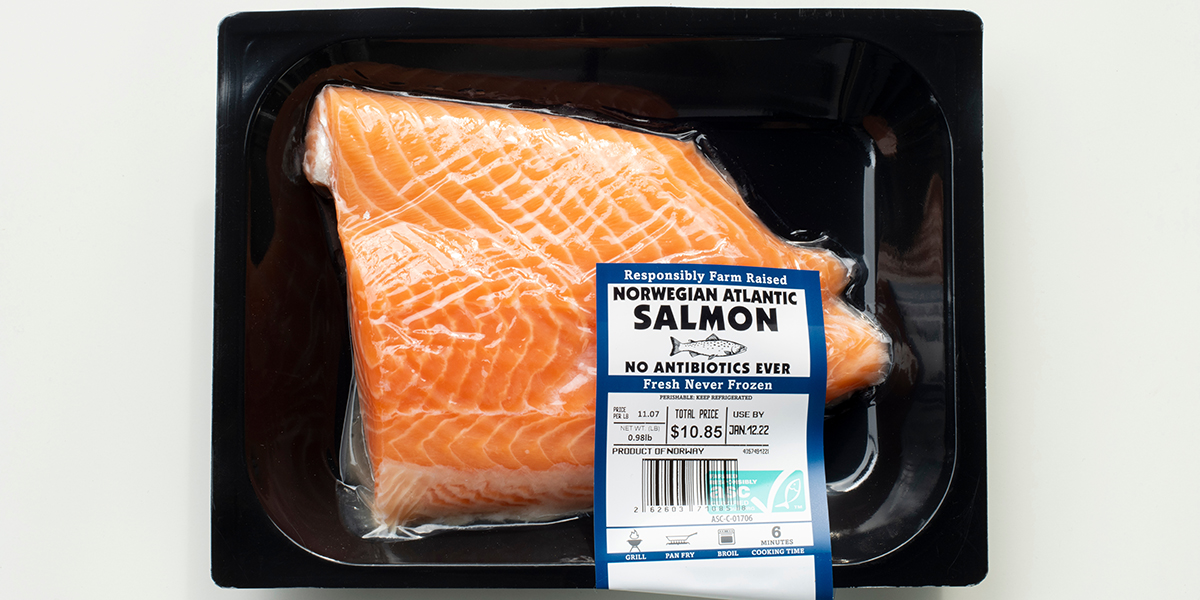
While manufacturers have been evaluating food for years, making these expiration dates as trustworthy as possible, every consumer is also responsible for inspecting their "expired" items before eating them. If the food isn't visibly moldy or rotten, there are still plenty of signs to look for like a foul scent or a difference in texture. Overall, expiration dates can be used as a guide on proper food storage and how best to use your groceries so you get your money's worth each time you prepare a meal. Using your items from soonest expiration to furthest expiration is one way to eat smart and it keeps all your remaining food as fresh as possible. If this system sounds appealing to you, then we recommend meal prepping ahead of time. Take note of each expiration date and plan each course or snack accordingly.
At this moment, you might be wondering, "What about the foods that don't have printed expiration dates? How do I practice proper food storage with something homemade?". How does one gauge how long food can last without a manufacturer guiding you? The answer to this question becomes even more complicated once you factor in that the shelf life of food changes once it's been opened or unsealed. This applies to products like canned goods, jarred sauces and more. Lucky for you, we have an answer to those questions and a proper food storage hack that works for both homemade leftovers and canned goods. Once you've put the remainder of your food into a storage container, apply a sticker label on the container and on it, write the date it was opened and/or initially cooked. This will help you keep track of how much longer you have to eat it. Typically, leftovers can hold up for three to four days in the refrigerator.
Take Advantage of Refrigerator Organization
Not a fan of using labels? There is another proper food storage solution for your leftovers, though it's not nearly as specific as marking the exact date. It's a kitchen organization practice called FIFO, which stands for "first in, first out". To put it simply, every time you go grocery shopping, you should put the newest items in the back of the fridge and keep the older items near the front. This will visually keep your eyes focused on the foods that have less time before expiration. We often get swept up in the excitement of bringing something new and delicious home, but with FIFO, you'll be giving your fresh food more time to reach its peak flavor, all while saving money by reducing food waste.
Start Learning What Your Food Needs Most
The key to keeping food fresh is not just tossing it in the refrigerator and forgetting about it though. Plenty of foods don't belong there whatsoever, like cereal or canned soup. However, several foods can handle both a refrigerator and a countertop environment. This flexibility calls into question, where is your food better off living? Which location or type of proper food storage will prolong the life of your favorite meals and snacks? To begin, let's discuss fresh and/or hot meals, the breakfasts, lunches and dinners that actively sit out on a plate for you to eat. Perhaps, once you're finished eating, you want to relax and chat with your table mates. Or maybe you wish to enjoy your meal outside. No matter what the circumstances are, food should not be left sitting on the counter or table for more than two hours. If you're eating in the backyard and the temperature is 90 degrees Fahrenheit or higher, all food, especially meat, should be put into the refrigerator within an hour. Warmth is what helps harmful bacteria grow on your food, expediting the rotting process. Now we can go over what you should and should not refrigerate. Opinions on this proper food storage matter differ, as every food is so different, so take a look at our infographic and use it as a starting point next time you go grocery shopping.
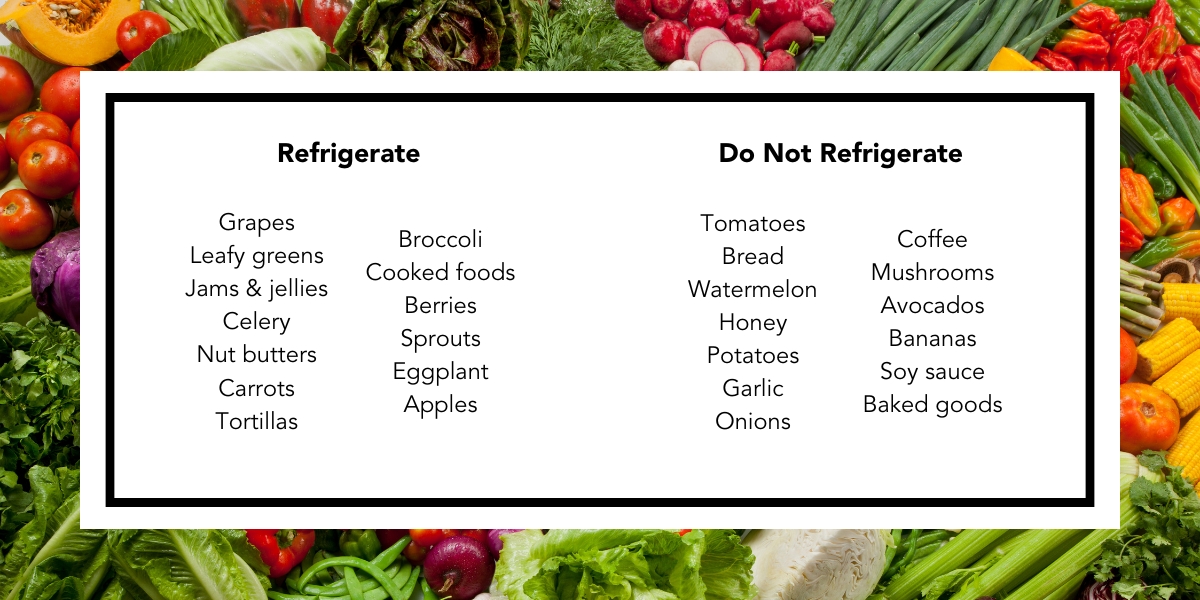
While each food has its own unique reaction, especially after it's been opened or unsealed, keeping fresh items in a dry, cool proper food storage area instead of the refrigerator can make a big difference in their longevity. Produce and other fresh foods can be temperamental due to varying moisture needs, temperatures and humidity. On the topic of produce, it's also important to note that some produce is ethylene-rich and ethylene-sensitive. What does this mean? Ethylene is a gas that is present in certain fruits and vegetables and it helps begin the ripening process as it's released. When ethylene-rich produce, like bananas, apples, melons, avocados, tomatoes and stone fruits, and ethylene-sensitive produce are placed next to each other, it can cause the ethylene-sensitive produce to ripen faster, which means it deteriorates faster as well. When it comes to proper food storage, it's recommended to keep these produce items completely separate. Simultaneously, ethylene is a smaller-scale problem when we speak about your average household refrigerator. Plastic bags and crisper drawers are more than enough to create a barrier and keep your food safe.
Maintaining Proper Food Storage At Home
Putting your food in an optimal location will help keep it fresh longer, but how you store said food can make an impact as well. While both plastic and glass storage can do the job, glass containers with tight-fitting lids tend to help leftovers and produce items last much longer. Plus, they don't "absorb" food odors or stains like plastic does, and if you're using it for leftovers, you can just pop the container into the microwave for easier reheating. Worried about making space for all of these proper food storage possibilities? Try finding stackable glass containers, as they'll take up less room in your cabinetry. If you don't feel like investing in an entirely new set of proper food storage containers, you can also raid your recycling bin. Plenty of pasta jars, Mason jars, jam jars and more can be washed and reused for homemade sauces, dressings, salsas, soups and more. Freezing food, on the other hand, comes in handy when you don't feel like eating the same leftovers for a week or two straight. Meals like lasagna, meat, casseroles, chili and more can be easily tossed in the freezer and defrosted a month later. Note: If your freezer is set to 0°F, your leftovers should be safe to eat indefinitely, but the quality of your food will begin to deteriorate after about three months. When the time does come to freeze your food, we recommend resealable freezer bags, as their durable design takes longer to break down and you can even reheat food in the bag (in 30-second increments).
More Proper Food Storage Tips & Tricks
- Take Advantage of Paper Towels: Looking to make your favorite fruits and vegetables last longer? When you put your produce into a proper food storage container, throw in a paper towel too. The towel will absorb the excess moisture that contributes to food rot. Once the whole paper towel has absorbed the condensation, just be sure to replace it with a fresh one.
- Wrap Your Cheese In Paper: While you may already know that cheese is best stored wrapped, you may not be aware of what material is best: paper. Porous paper, to be more specific, like baking/parchment paper. Porous paper is better for proper food storage as it allows the cheese to breathe, in contrast with cling film/plastic wrap.
- Revitalize Your Fresh Herbs: Treating your fresh herbs the same as you would a bouquet of flowers can truly benefit their longevity. Upon bringing the herbs home, we recommend clipping the ends of the stems, putting them in a glass storage container with a little water and refrigerating them.
- Wash Your Fruit In Vinegar: Before we dive into this proper food storage tip, it should be noted that this applies to some fruits, so be sure to do a quick internet search before washing. Vinegar can be an amazingly helpful substance for fruits with edible skins and smaller fruits that can be submerged. The solution has the power to kill plenty of bacteria living on fruit in order to remove pesticides and reduce contamination. This also means the chances of anything growing on your fruit after washing and refrigerating are much lower. When you're ready to wash, you'll want to mix a solution that's three parts water and one part vinegar. So long as you measure precisely, you won't have to worry about your strawberries tasting like vinegar.
- Wrap Up Your Bread: While you may think placing your loaf of bread in the refrigerator or freezer is the best way to prolong its life, storing bread in cold temperatures can actually make it go stale much faster. Proper food storage calls for wrapping the bread in a paper bag or dish towel and then placing it in a dry area.
- Remove The Roots From Your Root Vegetables: Plenty of organic root vegetables like turnips, beets, radishes, carrots and parsnips can be found in the grocery store with the roots still attached. Should you decide to keep the roots, they will continue stealing nutrients from your vegetables over time in storage, expediting their rotting as well. Before placing them on the counter or in the fridge, prevent this food waste and practice proper food storage by removing the roots.
- Let Your Bananas Hang, Not Sit: Sitting bananas on the countertop can cause unnecessary bruising. Hanging the fruit instead can help delay the spoiling process.
Put Our Proper Food Storage Tips Into Action
Why waste any more time (or food)? While your leftovers and your produce will inevitably go bad down the line, there are so many steps you can take right now to keep your food fresh longer and eat your money's worth year-round. Whether you're creating refrigerator zones, investing in proper food storage containers or making homemade labels, your efforts are bound to extend the life of your precious groceries. If you're ready to put our tricks to use, start shopping at Abt for proper food storage containers and other kitchen essentials. We also have a wide selection of refrigerators and freezers if your current appliances aren't cutting it. Keeping food fresh relies on proper food storage, and proper food storage begins with a top-notch fridge. We can even help guide you to your perfect model when you read our refrigerator buying guide. Any additional questions you may have about proper food storage or major kitchen appliances can be answered by our experts at 800-860-3577.
Keeping Food Fresh FAQs
Do glass containers keep food fresh longer?
Glass containers can potentially keep food fresh longer. They offer a good barrier to oxygen and moisture that can accelerate ripening, whereas plastic, which is porous, can let in unwanted air or moisture.
Can aluminum foil keep food fresh?
While aluminum foil is a convenient way to cover food in a pinch, we don't recommend it for keeping food fresh.
How do I reduce food waste?
Ways to keep food fresh and thus reduce food waste include keeping your refrigerator below 40°F, utilizing your freezer more often, and learning the proper way to store different types of produce. For example, once fruit on your counter has ripened, it should be stored in the refrigerator to slow the over-ripening process.