Micro RGB vs. OLED TVs: Which Is Best for You?

The Starting Point: A Normal LED TV
Before we compare, it's important to grasp the benchmark tech that these screens have evolved from: the LED TV. One of the most basic popular televisions, and the one you're likely most familiar with if you're just now looking for a TV upgrade, is an LED TV. LED TVs use an LCD, or liquid crystal display panel, to brighten the television, then features individual, extra-small LEDs, or light-emitting diodes, to boost the picture quality. It's more energy efficient than a simple LCD TV and lets brands create a thinner television. Let's consider this affordable screen as the starting point when comparing Micro RGB vs. OLED televisions.
What is OLED?
OLED televisions are some of the most popular (and beloved) screens you can find on the market today. OLED (or Organic Light Emitting Diode) models are different from a classic LED, diverging in one key way that makes these a true standout choice: every pixel operates on its own, with the ability to turn on, off, and change color independently. With an OLED screen, each pixel handles its own light, color and opacity-so there's no backlight at all. With no need for a backlight, screens are extra thin, contrast is boosted, and individual pixels turn off for the deepest blacks you can find in a television. These screens are hard to beat, so how do they stand up in a Micro RGB vs. OLED competition?
What is Micro RGB?
OLED has been around for over a decade, so what's Micro RGB technology, and how does it work? Unlike with an OLED, a Micro RGB TV is more similar to an LED television. It uses a white LCD panel that sits in front of a layer of tiny red, green and blue LEDs that are all independently controlled. The incredibly small and colorful diodes bring extra precision, infuse images with incredible color and push the boundaries of what white and black levels can be. Each tiny LED creates the perfect mix of red, blue or green at the pixel level, all while working together with the white LCD panel. It's a fusion of innovative technology and classic hardware, and the result is flaring color and brightness that you won't find anywhere else.
What's the Difference Between a Micro RGB, True RGB Mini-LED, and RGB-MiniLED TV?
If you've started researching RGB televisions, you've likely seen all three of these terms: Micro RGB, True RGB Mini-LED and RGB-MiniLED. These technologies are essentially the same at their core, just with different terms from different brands. While it can be confusing, if you like the concept, you have a wider pool of televisions to pull from now that you know that the tech is the same. The only difference is in the name. So, why have three different names at all? That's mostly due to branding, and some brands use the term RGB-MiniLED, though other brands choose to use the Micro RGB term instead, and True RGB Mini-LED is exclusive to Sony.
The Big Differences
So, what are the big differences, and which is best for you? That depends largely on your preferences, your home lighting, what you watch, and how you use your television. We'll cover techy specs, what both TVs excel at, or have as weak points. It's the Micro RGB vs. OLED TV match-up, and we're breaking them down by build, brightness, black levels, color and even burn-in.
The Build: Panels & Pixels
When it comes to the build, these two televisions couldn't be more different. Let's go back to the classic LED or LCD television; both of these need an LCD panel to brighten the television. A Micro RGB TV uses a bright LCD panel as well, but uses groundbreaking (and tiny) red, blue and green pixels behind the LCD panel. OLED TVs don't need an independent LCD light source. Instead, the organic LEDs are their own self-emitting light source, and can wink out at their own need to bring you those deep blacks. There's no other television technology that can give you that level of darkness and shadow.
Brightness
Brightness is one of the most important features in any television, and when we're pitting Micro RGB and OLED TVs against each other, there's a clear winner. While OLED tech has come far from its initial concepts and murkier colors, the brighter hues these televisions can now produce just can't match the brightness you'll find in a Micro RGB television.
Black Levels
We've mentioned black levels a few times already, especially with regards to OLED televisions. OLED technology is known for bringing perfect black levels to everything you watch, from streamed shows to gaming and beyond. That's because these pixels can be turned off, with any brightness or color disappearing, all to deliver perfect blacks and dark shadows when you need them. OLEDs are the gold standard when it comes to deep blacks. That being said, Micro RGB TVs aren't too shabby when it comes to displaying deep colors and blacks. They can reach near-OLED levels, but there's no better standard than an OLED. That's a point to consider when it comes to Micro RGB vs. OLED TVs.
Color
Who wins when it comes to color in the battle of Micro RGB vs. OLED TVs? This one is a bit tougher to answer. Colorful displays are important, whether you're watching nature documentaries, animated films, classic dramas or you're playing a colorful video game. You'll want to see everything in stunning color, so which type of TV will give you the best experience? On the one hand, Micro RGB TVs give viewers an incredible and vibrant colors. It's what these televisions were designed for, thanks to the combo of bright red, green and blue pixels. However, OLEDs display an impressive spectrum of color and still win when it comes to contrast. But Micro RGB TVs have the edge when it comes to color vibrance and purity, and that helps them perform better in bright, well-lit rooms. They're close in performance: if you like a cinematic watch party in the dark, you'll prefer the contrast of an OLED television. But if you tend to watch or play in bright spaces with lots of lighting, a Micro RGB TV will be better for your use.
Weak Spots
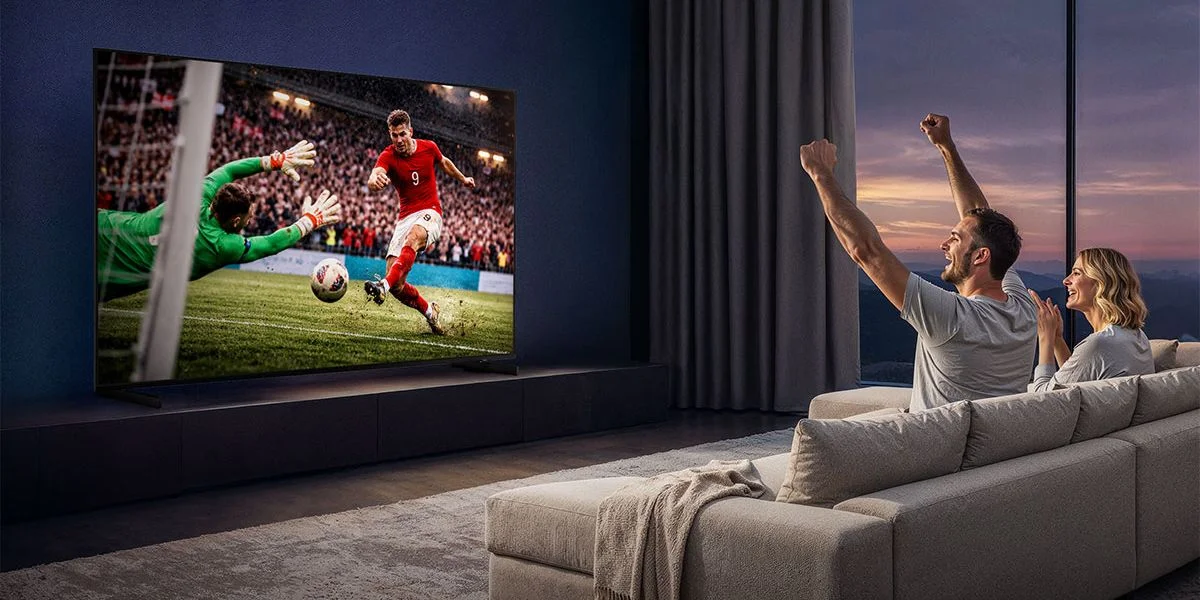
Finally, we'll cover a couple of areas where Micro RGB TVs and OLED TVs both run into trouble. If you're familiar with OLED televisions, you've likely heard the term "burn-in" before. It is a true problem, and we have a whole article on trying to prevent burn-in. TV burn-in mainly affects OLED TVs, especially older models, and this side effect can damage your product. When an unmoving image is left on an OLED TV for too long (especially when brightness settings are high), these organic pixels age and degrade. A good example of a static image? Think of the logo on a news network or weather channel, or the health bar on a video game. Even though other things are moving on the screen, those images stay static, and can cause burn-in. The result? A ghostly image of that logo, scoreboard or health bar. Unfortunately, it isn't reversible, but it's easy to prevent with a channel flip or by turning off your TV when you aren't using it. That being said, there are newer OLED televisions with features that fight off burn-in. Before you buy, look to see if the OLED you want has any of these burn-in-fighting features.
While Micro RGB TVs don't suffer from burn-in, there are other places where these bright and colorful TVs can suffer. One of the main issues watchers run into with these televisions? Some have noticed issues with light blooming, while others have experienced color crosstalk, where the red, blues and greens interfere with neighboring colors. Only the pickiest of viewers are likely to notice the color crosstalk, and any blooming is the result of the LCD screen. This is still a new television technology, and in the battle of Micro RGB vs. OLED TVs, OLEDs have had years to troubleshoot and improve. For a new technology, this spin on RGB televisions is impressive.
So, Which Is Right For You?
Now it's time to decide which television is right for you with our Micro RGB vs. OLED TV comparison. It all depends on the factors that are most important to you, like where you'll be watching, whether you prioritize a bright screen or love inky blacks, and whether issues like burn-in and light bloom are deal-breakers. If you like watching cinematic shows or playing games in dark spaces, an OLED is definitely for you. A Micro RGB TV does better in bright spaces, like living rooms with extra lighting that double as TV rooms. OLED TVs are best for showing off heavy contrast and deep blacks, while Micro RGB displays do an incredible job of bringing bright whites and unbeatable color to what's onscreen. The last aspect to factor in? Price. When OLEDs first hit the market, they were expensive enough to keep many would-be viewers away, and some of that is happening with larger sizes of Micro RGB TVs. That being said, Abt has several Micro RGB TVs at competitive price points that aren't far from what you'd pay for an OLED. Once you know which one is perfect for your entertainment space, order yours online, or call our team of experts at 800-860-3577 if you have any questions. To learn more before you buy, check out our guide to understanding what RGB Mini LED technology is, or read up with our tips on TV shopping.
Micro RGB vs. OLED TV FAQs
-
A Micro RGB TV uses a white LCD panel combined with miniature red, green and blue LEDs that are all independently controlled. Each tiny LED creates the perfect mix of red, blue or green, all combined with the white LCD panel for bright whites.
-
That depends. OLEDs still bring better shadows and black levels, though Micro RGB TVs win when it comes to the visible color spectrum, brightness and watching TV in bright rooms.
-
No, these are two different technologies. With Micro RGB, an LCD backlight works together with RGB pixels. In Micro LED screens, the pixels themselves create the light without a backlight.
-
RGB-Mini LED, Micro RGB and True RGB Mini-LED technology are the same. These are different terms for the same screen technology, which combines a white LCD backlight and RGB pixels to create a bright, colorful display.