How to Clean a Refrigerator for Odor-Free Food Storage

The Importance of a Clean Fridge
Whether you're looking to clean the refrigerator because of a funky smell or you're simply keeping up with routine cleaning, ensuring that this appliance remains clean is important. In most cases, the fridge is one of the most used appliances in the home. From storing fresh ingredients to having snacks and drinks at the ready, the doors are constantly opening as items are taken out and placed inside. With all of this movement, spills and accidents are bound to happen. Even if you clean the messes right after they occur, it's hard to fight against standard wear and tear constantly. No matter how often you wipe the shelves down, it's important to give your appliance a good, deep cleaning about once a season, or every three months. This keeps the space looking good and smelling fresh. Routine cleaning also helps fight against unwanted odors or bacterial growth. That's why learning how to clean the appliance properly is important. Below are the key ways to thoroughly clean the refrigerator for odor-free living.
What You'll Need
- Warm Water
- Dish Soap
- A Clean Cloth (or Two)
- Vinegar (Optional)
- Baking Soda (Optional)
Preparing Your Refrigerator
Before you begin, make sure you remove any foods or drinks from the internal cavity and place them into coolers to prevent spoilage as you clean the refrigerator. As items are removed, make sure to check the expiration dates and look out for signs of spoilage. If something has expired or is spoiled, this is a great time to throw it away. Once everything is out, unplug the appliance and let the interior come down to room temperature. While it warms, take out any removable drawers, bins or shelving, as they will be cleaned separately from the interior.

Cleaning the Interior and Removable Items
Before you clean the refrigerator interior, take the time to thoroughly wash the removable items so they have plenty of time to dry. To begin, create a concoction of warm water and dish soap. Then, grab a clean cloth before wiping down each item. Make sure to get each spot and crevice before letting them completely dry. If there are stubborn stains or grime, you may either use one part vinegar combined with three parts water or a mixture of two tablespoons of baking soda and one quart of hot water. Save your chosen mixture for later, as you might need it when cleaning the interior. Either spray vinegar or place the baking soda concoction onto the spot and let it sit for 5-10 minutes before wiping it away.
As the removable bins and shelves dry, it's time to clean the refrigerator interior. Again, you'll use warm, soapy water and a clean cloth to wipe down the internal cavity. If there are tough stains or grime that are difficult to remove, grab the mixture you made and repeat the process listed above. Whether you pick the vinegar or the baking soda method, let it rest on the stain for a full 10 minutes before wiping away. In place of these two methods, you may use a multi-purpose cleaner if you would like to; however, it's best to try and stay away from cleaners that contain bleach. Make sure to thoroughly wipe any cleaner and ensure the interior is dry.
Once everything is dry, place the drawers and shelves back into their designated places. If you've wanted to rearrange the layout, this is an excellent time to do so. Then, carefully place the food back into the fridge. As you put items back, wipe down the base of any Tupperware or other food container to keep your freshly cleaned appliance in peak condition.
Cleaning the Exterior
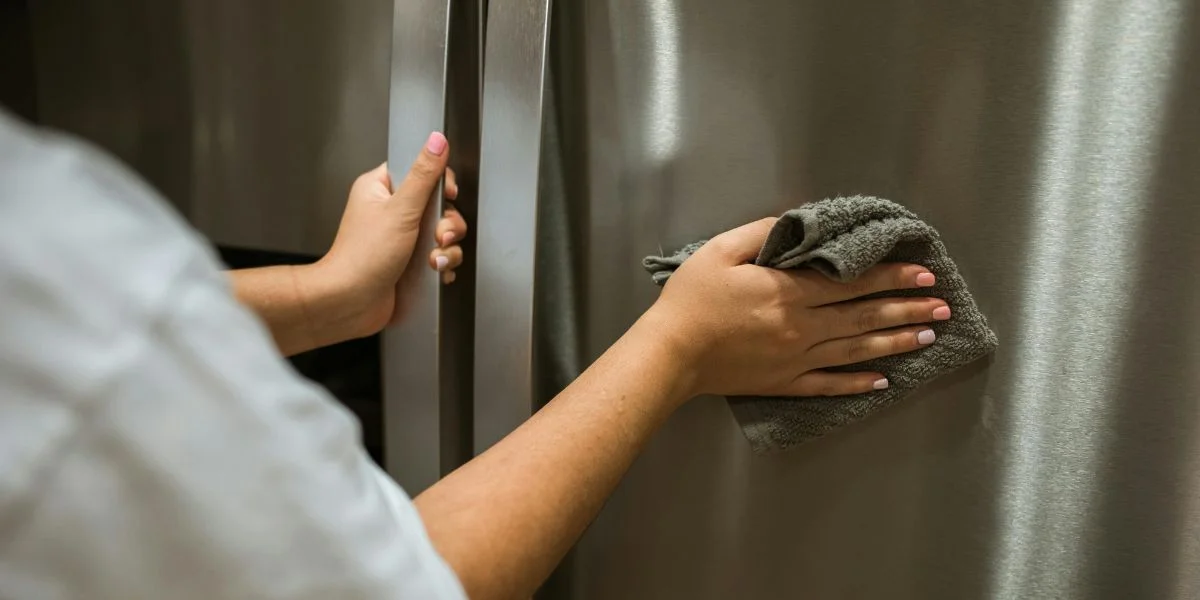
Depending on the finish of your appliance, there are different methods of cleaning the doors and sides. If you have stainless steel, you can either use a designated cleaner or make your own. If you plan to make your own, a recommended combination is to combine one teaspoon of dish detergent and one quart of hot water. No matter what you choose to use, make sure you use a soft, microfiber cloth to wipe down the exterior, as this prevents any scratches. Before you wipe, check which way the grain goes and wipe in the direction of the grain. Finally, make sure to use another dry microfiber cloth to dry it to prevent any streaks or watermarks as you clean the refrigerator exterior.
For most custom panels, like Lexan and wood, using your warm water and dish soap mixture works for general cleaning. If you have acrylic panels, you may also use an anti-static acrylic cleaner. Glass cleaners are not recommended, even on glass panels, as they tend to leave streaks behind as you clean the refrigerator doors. If you have Lexan panels, it's best to avoid using wax or appliance polish, as this can damage the panels. Regardless of which finish you have, make sure to get the hard-to-reach areas, like the top. If you feel comfortable doing so, make sure to clean the coils with a coil cleaning brush and empty the drip pan.
Keeping an Eye Out for Mold
As you clean the refrigerator, make sure to keep an eye out for any mold and remove it ASAP. Leaving mold to grow can cause allergic reactions or contaminate uncovered foods. To remove, spray undiluted vinegar onto the spot and let it sit for at least 10 minutes before removing with a clean cloth and warm soapy water. Repeat this process if the mold persists. Once the mold is removed, thoroughly dry with a clean towel.
Fighting Any Lingering Smells
If any odors or unwanted smells remain, place a box of baking soda into the refrigerator as it will absorb any odors. You can also place unscented cat litter, fresh coffee grounds or activated charcoal instead; however, you might need to change them out more often. A good rule to follow is to always make sure to clean up spills or remove spoiled food immediately, as this not only prevents odors but also reduces the risk of mold. For more tips and tricks, head to our Learn Center and check out our article on article on keeping food fresh.
How to Clean a Refrigerator FAQs
-
To remove any unwanted smells within your refrigerator, take out any expired or spoiled foods and either place baking soda, unscented cat litter, fresh coffee grounds or activated charcoal to soak up remaining scents.
-
Use undiluted vinegar to remove mold from the interior of your refrigerator and let it rest on the spot for 10 minutes before wiping away with a mixture of warm water and dish soap. Completely dry the spot with another cloth. Repeat steps if the mold persists.
-
To clean the condenser coil, use a coil cleaning brush to carefully remove dust and other unwanted particles.