![]() |
|||
|
Whether you're putting in time at the gym, blocking out the cubicle noises around you, or just waiting for your bus, life sounds a lot better when you have your own music to keep you company. Traditional tape and CD players, new digital music devices, and even TVs and DVD players are available in portable versions. Take your music--or your video--on the road with a portable player.
Overview
Portable radios Whether you're looking for a classic Sony Walkman or a bargain brand, make sure that your purchase includes reception for both AM and FM stereo, as well as a comfortable pair of headphones. The headphone cord often doubles as an antenna, improving station reception. Some portable radios also include expanded digital reception features that let you tune in to programming on frequencies commonly used outside the U.S.--particularly useful for frequent travelers. Personal radios generally sell for $10-$50, depending
on features and quality. If you want to share your favorite broadcasts
with others or fill your surroundings with music, you might want to check
out portable boomboxes--see our section below.
Portable cassette
players Some models also come with a record feature that lets you use your player as a portable tape recorder. This feature comes in handy for recording late-night brainstorms, lectures, and you-gotta-get-this-on-tape-for-posterity karaoke sessions. For optimal sound quality, look for a model that offers bias control, which will automatically adjust the recording volume of your audio. Cassette playback quality varies from model to model. Portable cassette players normally have one head for playback and one for recording. However, some higher-end models may have an additional head for cleaner playback. While cassette playback is a considerable step up from the annoying "clack" of the obsolete 8-track, the format is still notorious for its omnipresent hissing sound. Fortunately, there are several technologies that can effectively reduce this noise. Dolby Laboratories has developed some of the most frequently used noise reduction systems, including Dolby B, Dolby C, and Dolby S. Dolby B, which is the most common form of noise reduction, is found on almost all cassette players. It offers 10 dB of noise reduction, effective mostly at high frequencies where hiss is most prevalent. Dolby C offers double the amount of noise reduction at 20 dB; look for Dolby C noise reduction in most mid-priced cassette players, as well as some higher-priced devices. Dolby S offers top-of-the-line noise reduction at 24 dB to satisfy the most discriminating of audiophiles. It also reduces low-frequency noise by about 10 dB. Portable cassette players sometimes offer extra features,
such as virtual surround sound and a stereo equalizer. Other common extras
include buttons for auto reverse and hold. Depending on the feature mix,
noise reduction and playback quality, and recording capabilities, prices
for personal cassette players usually range from $15-$100.
Portable CD players In addition, CDs last longer than tapes, which degrade in sound quality after multiple playbacks. Unlike cassette players, CD players give you single-button direct access to a specific track. With a cassette, you have to wait for the tape to rewind or fast forward to reach a desired tune. In addition to basic playback capabilities, many portable CD players also offer advanced features such as track programming, random play, and repeat play. Many models offer a bass boost feature, which lets you enhance the lower frequencies--especially useful for music with heavy beats such as hip-hop and dance. If you plan to copy music from CDs to cassettes, look for a CD synchronization record feature, which lets you automatically duplicate your disc to a blank cassette tape with the push of a button. While made for portable use, most personal CD players can also easily connect to your home or car stereo system. A cassette adapter will let you plug most portable CD players into any car equipped with a cassette-based stereo system. A disadvantage to portable CD players is that they are still subject to annoying skips that result from the normal jiggles of on-the-go users. Many models offer anti-shock technologies that aim to minimize this problem. CD anti-skip technologies generally work by storing a portion of CD audio in a digital memory cache built into the portable player. As the laser reads the CD audio, it stores the music in cache memory before the human ear can hear it. This provides audio buffering in the event of an abrupt bump or other force that causes the CD to skip. During this buffering time, the CD laser can re-read the error portion of the disc so that the listener does not experience any interruption in their audio. The amount of buffering time stored varies by CD player models, but a general rule is that the larger the cache memory size, the less likely a CD player is to skip. An additional anti-skip feature is more visibly evident to the naked eye--some CD players are built with a rugged exterior that helps protect the interior laser and technology by absorbing the shock of exterior forces. Even if a CD player has both electronic and physical shock protections, however, you'll still experience occasional skipping with hard knocks (sometimes a problem when running or participating in other fitness sports). While there are several compelling reasons to choose a CD player over a tape player, you should think about what personal CD features are suitable for your lifestyle. For example, if you have no plans to go to the beach or jog in rainy weather, then you probably won't need a waterproof CD player. While it is nice to have fancy features, you may find that a lower-priced CD player with minimal extras meets your needs just fine. Fortunately for consumers, prices for portable CD
players have plummeted over the past few years. You can find basic portable
CD players priced only slightly higher than cassette-based players. In
general, prices range from $20 to more than $200, depending on the features
and extras. In the $20-$80 price range, expect to get basic player functionality
without CD track programming features. For $80-$140, you should get some
anti-skip features and additional options such as a digital radio tuner
and CD track programmability. Once you get in the $140-$200 price range,
you should expect higher-quality CD playback, a car adapter, advanced
anti-skip technologies, and an equalizer.
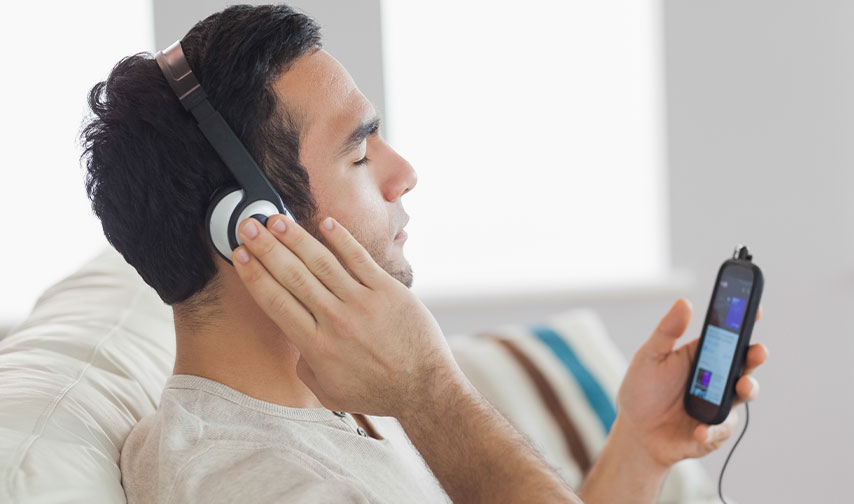
Digital music players In most cases, portable music players work with any downloadable music format, including MP3, Liquid Audio, Microsoft Windows Media Technologies, and a2b music. These players play music files that have been saved on your computer hard drive. The files are transported to your portable player via a docking station that attaches to either a parallel port or a USB connection. Like MiniDisc players, you can use portable digital music players to create your own personalized music mixes. There are several customizable playlist and music management programs that let you organize your downloaded music into any sequence for playback. These programs, such as MusicMatch Jukebox and RealJukebox, are often packaged with new players; however, they can also be downloaded free from the Internet. The price of digital music players has dropped significantly
since their debut; you can now find good-quality players priced between
$99-$300. See our Digital Music Buyer's Guide for a more detailed summary
of the pros and cons of digital download players.
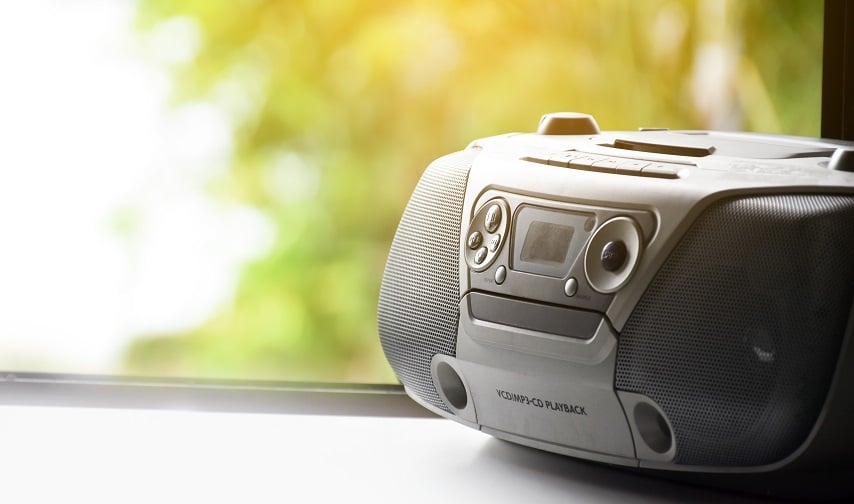
Boomboxes Low-end boomboxes ($30-$90) generally come with small speakers, a CD or cassette player, radio tuner, and basic volume controls. Standard features on mid-priced boomboxes ($90-$150) include larger speakers, 20-40 watt amplifiers, a CD player and/or dual cassette decks with dubbing capability, auto-reverse playback, and recording capability. Some higher-end models ($150-$300) include detachable speakers, which let you get closer to a traditional audio system's stereo separation. Better models might also include a graphic equalizer, a 40-50 watt amplifier, a remote control, CD player, and a dual cassette deck with high-speed dubbing capability. If you are looking for a compact music system that
will probably stay in one location, you might want to consider getting
a bookshelf stereo system instead of a boombox. Bookshelf stereo systems
contain the same compact features of a boombox (sans the handle), but
generally offer higher audio quality than boomboxes.
Portable TVs As with larger TV sets, the quality of television
reception on a portable TV greatly depends on where you are. While these
units come with an external antenna, it will be of little use if you are
located inside a building that does not receive strong broadcast signals.
Portable DVD players One drawback to portable DVD players is price; cost
ranges from $900-$1500. One option worth considering is to buy a lightweight
notebook computer equipped with a DVD-ROM drive instead. Although this
option might be more expensive, if you have a need for a portable computer,
the extra investment could prove to be a bargain since you get both a
portable DVD player and a computer.
Battery issues
Water resistance
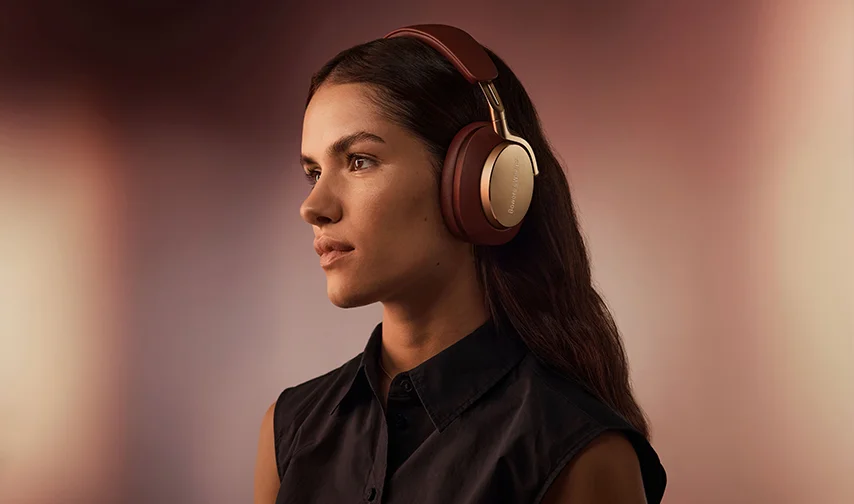
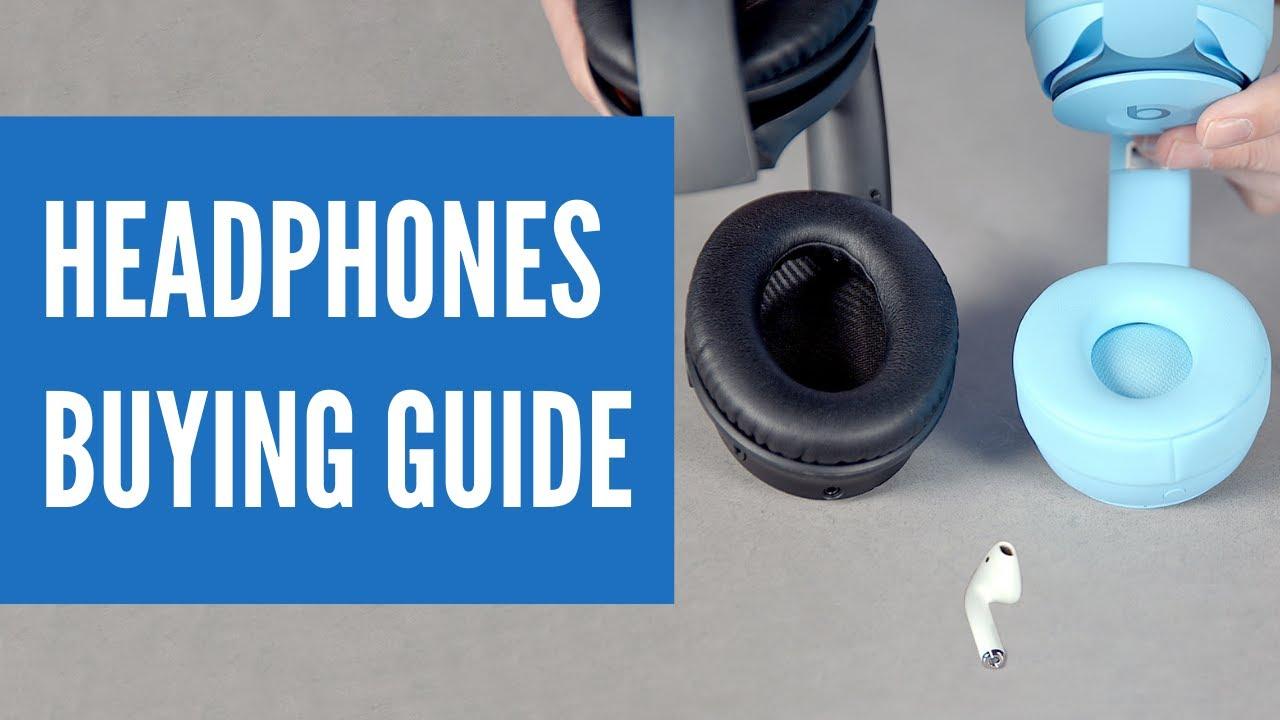
Headphones Most personal audio/video players come equipped with
headphones. If you want to upgrade, however, expect to pay between $5-$50
for a set. If you're looking for the very best audio quality, consider
investing in a high-quality, lightweight set of more professional audio
headphones, which run in the $60-$300 range. Click here to view all Audio Video Players. Click here to view MP3 player Buying Guide Click here to view all Buying Guides. |
|
||