


Sony Bravia 8 vs. Bravia 8 II: An OLED Comparison
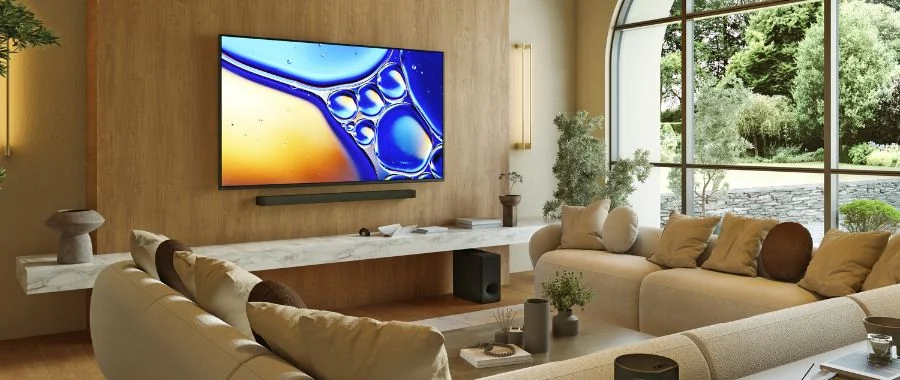

We're pitting some of Sony's favorite OLED TVs against each other in our latest comparison: the Sony Bravia 8 vs. Bravia 8 II. If you've been following the TV technology of the year, you know that all eyes are on RGB televisions, a rival to the classic OLED technology that fuels the picture on both of these TVs. But RGB is still new, and many love the deep blacks and great color contrast you'll find in an OLED like both of the televisions below. So if you know you want an OLED from entertainment experts like Sony, which of these two is for you?
Our Top Two OLED Sony TVs


Why So Few Screen Sizes?
In both the Sony Bravia 8 and the Bravia 8 II, only a couple of sizes are available. They both come in a 55-inch and a 65-inch size, and there's a 77-inch Bravia 8 as well. When compared to other types of TVs (including RGB) that's fairly few, and there's a good reason. OLED TVs are expensive to create, and 55-inch and 65-inch are two of the most popular sizes of TV, so if you're looking for one for your home, you'll likely want one of those. And if you need something larger, it's good to keep the Sony Bravia 8 at the front of your mind in this comparison. But if you're dead-set on a massive OLED screen for your entertainment space, be ready to shell out for one of very few options, neither of which is the brand's flagship OLED.
What Really Matters: The Picture Quality
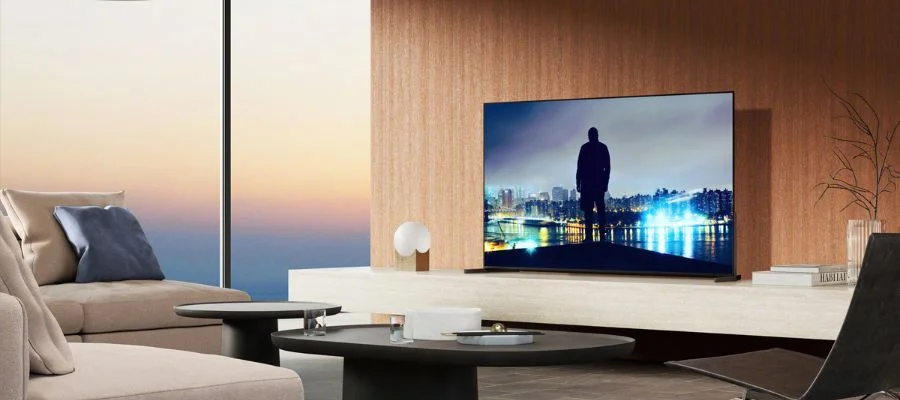
It's the Sony Bravia 8 vs. Sony Bravia 8 II, and the two OLED TVs differ primarily in picture quality. And they should. The Sony Bravia 8 was first released in 2024, and the Bravia II a year later in 2025. The Bravia II is technically more of a follow-up to one of Sony's most popular OLEDs, the iconic A95L. Both of the Bravia TVs feature incredible cinematic enhancements like Dolby Vision® and Atmos®, IMAX® Enhanced, and DTS:X®. But here's where they differ, picture-wise.
The Panel: WOLED vs. QD-OLED
The panel is the main space where the two televisions stand apart. The Bravia 8 TV uses a WOLED panel, while the Bravia 8 II uses a new, brighter QD-OLED panel. TV enthusiasts will know the difference between WOLED and QD-OLED, but we'll break it down quickly. WOLED stands for white organic light-emitting diode, and it passes white light through red, green, and blue filters. A final white subpixel brings even more brightness to the final image onscreen. These are the original, classic OLED panels, and they're part of what makes the Sony Bravia 8 TV an amazing TV.
Then there's the QD-OLED panel, which you'll find in the Sony Bravia 8 II. The QD stands for "Quantum Dot", a type of nanocrystal that filters light differently. A layer of quantum dots delivers extremely precise colors and a higher brightness level than the classic WOLED TV can. Instead of a white light, a QD-OLED panel begins with blue light across all pixels, then a layer of red and green quantum dots works to reach the perfect level of red, green and blue with low color distortion and boosted saturation.
So, in the Sony Bravia 8 vs. Bravia 8 II battle, which has the better panel: is it WOLED or QD-OLED? While WOLED has been the standard for years, QD-OLED is the (relative) newcomer to the scene, and many agree that the impressive color vibrance is something that you won't find in a WOLED panel no matter what settings you tweak. That being said, some may still prefer WOLED for a key reason: WOLEDs like the Bravia 8 tend to do better in well-lit spaces, and QD-OLEDs tend to perform at their best in darker areas, though settings can be tweaked to make them perform well in bright rooms as well. If you're placing your OLED TV in a well-lit living room, keep the Bravia 8 in mind. But if you're building a darker entertainment space, a QD-OLED like the Sony Bravia 8 II is the better choice.
The Brightness Factor
OLED TVs are famed for their deep blacks, but that shouldn't have to come at the expense of bright whites and saturated colors. In our Sony Bravia 8 vs. Bravia 8 II comparison, we're comparing how well they produce bright whites and color highlights. If you come into Abt and look at the TVs side by side, it's easy to see the winner here. In the Bravia 8 II, Sony's XR Triluminos Max pushes the technology to its limits in both color volume and bright whites to deliver a 50% boost over its predecessor in this realm. The Bravia 8 is still an impressive television when it comes to contrast and perfect blacks, but it can't reach the same heights in brightness as the Bravia 8 II with its limitations in panel and technology.
Deeper Blacks & Natural Colors
So we talked about the brightest whites, but which television brings the darkest inky blacks ... something that most people absolutely want out of their next OLED TV? In the battle between the Sony Bravia 8 vs. Bravia 8 II, they should both share those perfect black levels, making this a place the televisions won't need to battle it out in. They both achieve black at the pixel level. That being said, moving between that deep black and the incredible brightness of a QD-OLED screen can actually be overwhelming for some people, and they may prefer a more natural look. If you're searching for an OLED TV with more natural colors and impressive picture accuracy, the Sony Bravia 8 TV may be the better choice for you.
Differences in Processing
One of the most important aspects of any smart TV is its processor. Sony is loved for its XR Processor, a chip ahead of its time that can upscale everything you watch, from older films and streamed shows to live sports. The Bravia 8 features the XR Processor, pushing elements like color, contrast and scene clarity to the brink in every scene. The Bravia 8 II and its new XR Processor get an upgrade with extra AI technology, too. The improved AI-boosted processor upscales realism, taking things up another level. The new chip also features an AI scene recognition system; it takes in the data of everything onscreen, optimizing the picture to make things look as real as possible. So, which is better in our comparison between the Sony Bravia 8 vs. the Bravia 8 II? The XR Processor is no slacker, and even without AI, it's an incredible chip that fuels many of their smart TVs' systems. You're getting more with the AI features in the Bravia 8 II, but in our opinion, the difference isn't enough to tip the scale too much.
Which Has Better Audio?
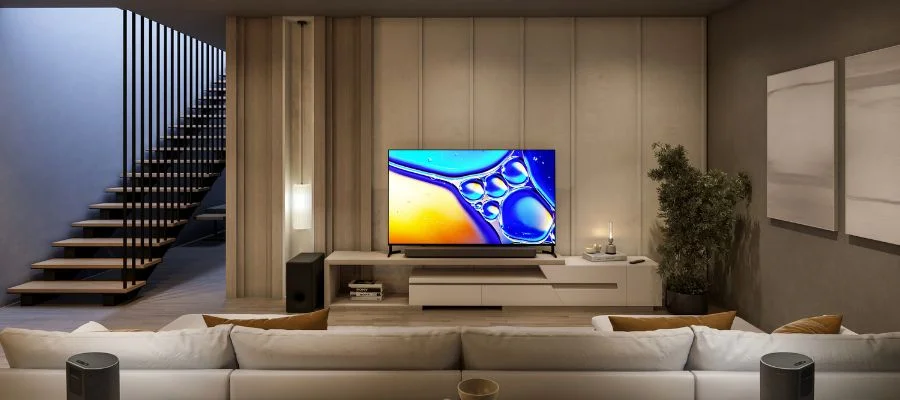
We've gone through aspects like picture and processing, so how do these two TVs sound, and which one is better for your needs? Both televisions use Acoustic Surface Audio+, technology. It brings a cinematic, immersive surround sound experience to your space with help from actuators within the screen itself. If a car speeds from one side of the TV to another, you'll hear the sound follow the action. You'll find that feature on both the 8 and the 8 II. The Sony Bravia 8 II takes things up a notch with two subwoofers compared to the Bravia 8's single subwoofer. Both TVs support Dolby Atmos as well, and hearing dialogue is easy thanks to Voice Zoom. The Bravia 8 II goes further with Voice Zoom 3 for even more clarity in dialogue. While they both share the same audio technology, the added subwoofer and improved Voice Zoom push the Bravia II ahead of its sibling. For even better audio, consider adding other speakers for a complete home entertainment system.
Connections & Gaming
Video gamers, you'll appreciate both of these TVs, but which is better? Let's go over key factors. When it comes to connections, both of the televisions have 4 HDMI inputs; two are HDMI 2.1, two are HDMI 2.0, and one 2.1 port doubles as the eARC connection for uncompressed audio. That gives you a bit of room for a console or two, but if you're using the eARC HDMI 2.1, you'll want to use the other 2.1 for gaming to enjoy faster frame rates and higher resolution support. Both of these TVs are "Perfect for PlayStation 5," where the television automatically calibrates its settings when connected to a PlayStation 5. Instead of tweaking settings to reach that ideal HDR setting. In the battle between the Sony Bravia 8 vs. Bravia 8 II, both rule thanks to HDR support for HDR10, HLG and Dolby Vision, all of which work to bring you better contrast and color, whether you're gaming or watching. That being said, there's no HDR10+ support on either TV. For gaming, they're both amazing televisions, and you'll love the synergy between a PlayStation and one of these televisions.
Statistics, Compared
We compare some of the picture features below, especially the ones that gamers and cinephiles will care about the most.
| Gaming Feature | Sony Bravia 8 | Sony Bravia 8 II |
|---|---|---|
| Inputs | 4 x HDMI, 2 x USB, 1 x RS-232C, 1 x Ethernet | 4 x HDMI, 2 x USB-A, 1 x Ethernet, 1 x RS-232C |
| Resolution/Hz | 4K/120 | 4K/120 |
| VRR | Yes | Yes |
| ALLM | Yes | Yes |
| Dolby Audio | Dolby Audio With Dolby Atmos | Dolby Audio With Dolby Atmos |
| Speaker Channels | 2.1 | 2.2 |
| Game Menu | Yes | Yes |
| Operating System (OS) | Google TV | Google TV |
Stands and Glare Reduction
Finally, let's talk about the form factor: what do these TVs look like, what are their stands like, and do they feature any glare-reducing technology? They're both slim, though the Bravia 8 II is designed with the brand's Slim One Slate concept, where screen and bezel fuse for a theater-like experience. In the Sony Bravia 8 vs. Sony Bravia 8 II fight, there's some flexibility when it comes to positioning the stand. Both televisions come with two feet, and that's where the similarities end. The Bravia 8's feet can adjust to give you four different viewing positions, lifting the television high to make room for a soundbar or letting it sit lower to the ground, as well as moving the feet closer to the center or out to the side. In all, this television has four different positions for a stand, making it great for anyone who needs a bit of flexibility. That is, unless you're mounting it to the wall. The Sony Bravia 8 II has two positions as well, one that lowers it flat, all the way down, and one that raises it just a bit to accommodate a soundbar. The feet sit all the way at the edge of the television, so you'll need a surface that's as wide as the TV to rest it on unless you're mounting it on the wall.
Now, the glare reduction. This is a relatively new consideration, with brands investing in anti-glare or anti-reflective coatings on some of their higher-tier TVs in recent years. The classic glossy Bravia 8 doesn't have any of these coatings, and many will appreciate that; some find these treatments and coatings can negatively affect the picture or even wash out what you're watching. Next, the Sony Bravia II. The 2025 TV does have an anti-reflective treatment that helps minimize the effects of glaring reflections you might see on other glossy televisions. With a little help from this coating, you won't have to turn off every light in the room, to watch your shows, and lights won't make it hard to see what's onscreen from different angles.
Which Is Best for You?
It's the Sony Bravia 8 vs. the Bravia 8 II, and we've covered all the ways these TVs are different ... and many of the ways they're not. From top gaming features to operating systems, these televisions have a lot in common, but it's the differences in picture technology that truly drive home why one might want the newer 8 II instead of the classic Bravia 8. We think that the slightly older Bravia 8 is an incredible television, and one worth buying ... plus it's much more budget-friendly than some of the other OLED TVs you'll find on the market today. That being said, it doesn't have some of the features that make the Sony Bravia 8 II such an amazing TV, like the QD-OLED panel, anti-glare coating and some AI features. It all comes down to what you value more, but they're both incredible TVs, so it's hard to make a bad move. Order yours from Abt, or if you're mulling over whether you want one of these or a new RGB version, check out our article comparing the two TV types: micro RGB vs. OLED TVs.
Sony Bravia 8 vs. Bravia 8 II FAQs
-
No, the Sony Bravia 9 uses a WOLED panel instead of a QD-OLED panel like the Sony Bravia 8 II.
-
Yes. The Sony A95L was Sony's flagship OLED TV, but was replaced with the Bravia 8 II. It's both newer and brighter, but the A95L does come in a larger 77-inch size.
-
The Bravia line is one of Sony's premium television collections, with TVs that feature OLED, RGB, mini-LED and LED TVs. Bravia stands for "Best Resolution Audio Visual Integrated Architecture".


